Unearthing History with the 1883 CC Morgan Dollar
What Is the 1883-CC Morgan Dollar — and Why Do Collectors Love It?
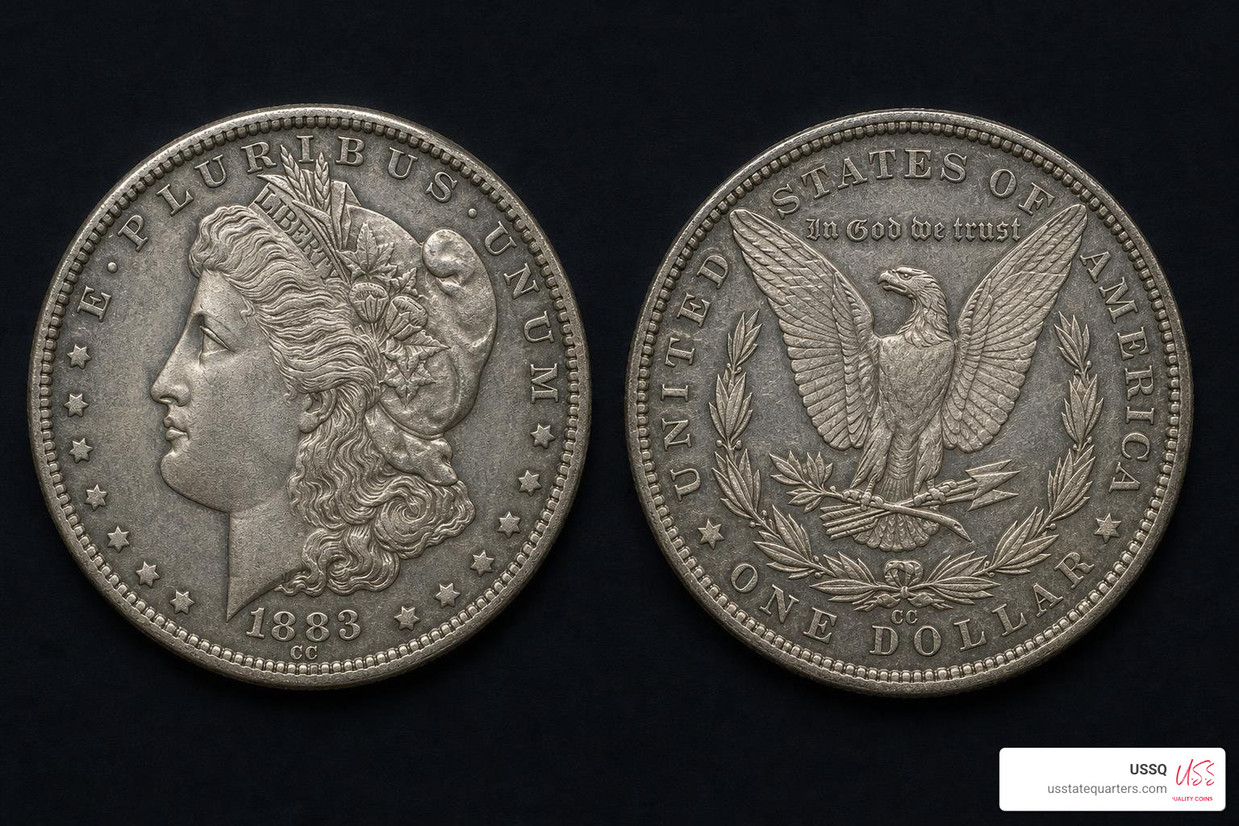
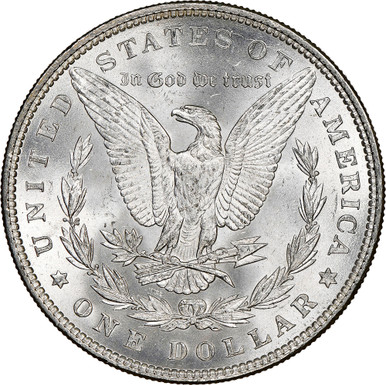
The 1883 CC Morgan dollar is one of the most popular silver coins in American numismatics. Here's a quick snapshot for collectors:
| Feature | Detail |
|---|---|
| Mintage | 1,204,000 |
| Mint | Carson City, Nevada (CC) |
| Designer | George T. Morgan |
| Composition | 90% Silver, 10% Copper |
| Weight | 26.73 grams |
| Diameter | 38.10 mm |
| Survival Estimate (All Grades) | ~700,000 |
| Survival Estimate (MS65+) | ~34,000 |
| GSA Hoard Disbursed | 755,518 coins |
| Auction Record | $80,500 (MS68, 2012) |
| Current MS65 Value | ~$569 |
The 1883-CC sits at a sweet spot for collectors — it's historic and desirable, yet still obtainable. It came from the Carson City Mint, a small facility in Nevada that ran on silver pulled from the famous Comstock Lode. Most of the original mintage sat untouched in U.S. Treasury vaults for nearly a century before the government sold them off through the GSA in the 1970s and '80s. That's a big reason so many high-grade examples still exist today.
Whether you're new to Morgan dollars or adding a gem-grade example to a serious collection, this coin rewards closer study.
I'm Chris Sistrunk, owner of USSQ and a commercial specialist in rare coins and precious metals — I've handled countless 1883-CC Morgan dollars across grades, from raw circulated pieces to PCGS-certified gems. In this guide, I'll walk you through everything you need to make a confident, informed decision.
Historical Background of the 1883-CC Morgan Dollar
To truly appreciate the 1883 cc morgan, we have to take a quick trip back to the late 19th century. Carson City, Nevada, was a bustling hub of activity, fueled by the massive silver deposits of the Comstock Lode. The Carson City Mint, established to convert this local treasure directly into coinage, operated on a much smaller scale than the main facility in Philadelphia or the booming branch in San Francisco. Because of its limited capacity, annual mintages from "CC" were naturally lower, which immediately gave these coins an air of exclusivity.
In 1883, the Carson City Mint struck exactly 1,204,000 Morgan silver dollars. While this might sound like a massive number, it was a drop in the bucket compared to Philadelphia's mintage of over 12 million coins that same year.
But what happened next is what makes the 1883-CC a legend in the coin collecting community. Instead of entering active circulation to buy groceries, train tickets, or mining supplies, the vast majority of these freshly minted silver cartwheels were packed into canvas bags and hauled directly into U.S. Treasury vaults. They sat there, undisturbed and forgotten, for decades.
Fast forward to the 1960s. As silver prices rose and the government stopped redeeming paper certificates for physical silver coins, audit teams cleared out the old Treasury vaults. To their amazement, they discovered millions of uncirculated Carson City Morgan dollars.
Rather than dumping them into the market at face value, the federal government decided to hold a series of mail-bid sales managed by the General Services Administration (GSA). This historic distribution, known as the GSA Hoard, disbursed 755,518 of the 1,204,000 minted 1883-CC dollars to eager collectors between 1972 and 1980. This monumental event completely reshaped the availability of the coin, turning what would have been an incredibly rare issue into a beautifully preserved, highly accessible piece of history. For a deeper look into this fascinating era, you can explore the Historical context of the Carson City Mint.
Rarity, Survival Estimates, and Population Reports
When evaluating any classic coin, numismatists look at survival estimates rather than just the original mintage. Because of the GSA Hoard, the survival profile of the 1883 cc morgan is highly unusual.
While many Morgan issues saw millions of coins melted down under the Pittman Act of 1918, the 1883-CC was largely spared because it was safely tucked away in federal storage. Today, experts estimate that roughly 700,000 examples of the 1883-CC survive across all grades.
What is even more remarkable is the condition of these survivors:
- MS60 or better: Approximately 500,000 coins survive in Mint State.
- MS65 or better: Around 34,000 coins survive in Gem condition.
Because so many coins spent a century protected in canvas bags inside vault walls, they avoided the wear and tear of daily commerce. However, they did not escape "bag marks"—the minor nicks and scratches caused by coins rubbing against one another during transport. This is why finding an example with minimal marks is so highly prized today.
To see how these numbers stack up in the modern market, you can review the Detailed population data from PCGS CoinFacts. If you are looking to add one of these historic treasures to your vault, browse our Morgan Silver Dollars Category.
Grading and Condition Census
Grading the 1883-CC Morgan is an art form. The coin is famous for having an exceptionally strong strike and deep, frosty luster. Because the dies used in Carson City were often fresh and well-prepared, the details on Liberty's hair and the eagle's breast feathers are usually incredibly sharp.
Here is what to expect across the major Mint State grades:
- MS63: A highly attractive coin with typical bag marks on the cheeks and fields. A very popular and affordable grade for collectors.
- MS64: Noticeably cleaner fields and fewer distracting marks on Liberty's face. The luster on these is often brilliant. PCGS alone has certified over 15,000 examples in this grade, making it highly accessible.
- MS65 (Gem): Exceptional eye appeal, booming luster, and very few, non-distracting marks. This is the sweet spot for collectors who want a premium coin without a five-digit price tag.
- MS66: Extremely clean. Only minor, microscopic imperfections are visible under magnification.
- MS67: Virtually flawless to the naked eye, boasting spectacular luster and incredible eye appeal.
- MS68: The absolute pinnacle of preservation. Only 7 examples have been certified at this level by PCGS, with another 2 certified by NGC.
The current auction record for a PCGS-graded MS68 example stands at an astonishing $80,500, which occurred during a 2012 auction. To understand how other branch mints compare in quality and grade scarcity during this era, take a look at our 1887 O Morgan Silver Dollar feature.
Prooflike (PL) and Deep Mirror Prooflike (DMPL) Varieties
When the Carson City Mint prepared brand-new, highly polished dies, the first few hundred coins struck exhibited a beautiful, mirror-like finish on the fields, contrasted by heavily frosted devices. These are known as Prooflike (PL) and Deep Mirror Prooflike (DMPL) coins.
For the 1883-CC, PL and DMPL examples represent roughly one-seventh of the total surviving population.
- DMPL Survival Estimate: Around 9,500 coins exist in all grades.
- Gem DMPL (MS65 or better): Only about 2,300 coins survive, making them highly sought after by registry set collectors.
A true DMPL 1883-CC looks almost like a presentation proof coin, with deep, liquid-black fields and stark white details. The auction record for an MS67 DMPL example reached a stunning $27,600 back in 2008. If you want to learn more about the strict criteria used to certify these reflective beauties, check out the PCGS DMPL Guide.
Market Values and Price Trends
The market value of the 1883 cc morgan has shown remarkable stability and steady long-term growth, largely because demand for Carson City silver dollars never goes out of style. While ungraded or well-circulated examples can occasionally be found at lower price points, certified Mint State coins are the standard for today's collectors.
As of June 2026, retail market values across the primary grades are highly competitive:
| Grade | Estimated Retail Value (USD) |
|---|---|
| Uncirculated (MS60-62) | $340 |
| MS63 | $380 |
| MS64 | $400 |
| MS65 | $569 |
| MS66 | $2,409 |
| MS67 | $13,495 |
As you can see, there is a massive price jump between MS65 and MS66, and an even larger leap to MS67. This reflects the extreme difficulty of finding coins that escaped the bag-handling process without microscopic surface marks. For a comparison of how other regional issues of the late 1880s perform in the marketplace, see our 1887 S Morgan Silver Dollar Guide.
Key Die Varieties
For variety collectors, the 1883-CC offers some exciting treasure hunting opportunities. The Leroy Van Allen (VAM) numbering system catalogs these variations, with two of the most famous being:
- VAM-4 (Doubled Date): This variety features clear doubling on the digits of the date, most notably on the "18" and the "83". Under a 10x loupe, you can see distinct secondary lines on the left side of the numbers.
- VAM-5B (Clashed Dies): This dramatic variety occurs when the obverse and reverse dies struck each other without a blank planchet in between. This left impressions of the reverse design on the obverse (and vice versa). On the VAM-5B, you can often see a partial image of the eagle's wing feathers clashed near Liberty's neck, along with other neat die cracks.
Finding a designated VAM variety adds a layer of history and value to your coin. To explore a full breakdown of these die characteristics, refer to the NGC Coin Explorer Analysis.
Comparing the 1883-CC to Other Carson City Dollars
How does the 1883-CC stack up against its siblings from the Carson City Mint? In the grand scheme of "CC" dollars, the 1883-CC is considered one of the more common and affordable dates, alongside the 1882-CC and 1884-CC.
Let's look at how it compares to some of the tougher dates in the series:
- The 1879-CC: A legendary key date. With a survival estimate of only around 25,000 coins across all grades, an 1879-CC in MS65 will easily demand five figures, making the 1883-CC a much friendlier option for collectors on a budget.
- The 1881-CC: Though it has a lower mintage (only 296,000), a massive percentage of the mintage survived in the GSA Hoard, meaning it carries a similar price profile to the 1883-CC in lower Mint State grades, though it gets pricier at the Gem level.
- The 1885-CC: This is a highly coveted date with a tiny mintage of 228,000. It is significantly scarcer and more expensive than the 1883-CC in all grades.
The main advantage of the 1883-CC is its strike quality. While some Carson City issues (like the 1890-CC or 1891-CC) are notorious for flat, weak strikes, the 1883-CC is celebrated for its deep, frosty luster and sharp, bold details. It is the perfect "representative" coin if you want just one high-quality Carson City Morgan in your collection.
Frequently Asked Questions about the 1883-CC Morgan Dollar
How many 1883-CC Morgan Dollars were distributed in the GSA Hoard?
During the Treasury vault discoveries, a staggering 755,518 uncirculated 1883-CC Morgan dollars were found. These were sold directly to the public by the General Services Administration (GSA) during the 1970s and 1980s. They were packaged in hard, black plastic holders with a "Carson City Uncirculated Silver Dollar" insert. Today, these original GSA holders are highly collectible in their own right. If you want to own a piece of this historic government release, check out our 1883-CC Morgan Silver Dollar GSA Hoard Product.
What is the auction record for an 1883-CC Morgan Dollar?
The auction record for a standard business-strike 1883-CC is $80,500, set in August 2012 for a breathtaking example graded MS68 by PCGS. For the ultra-reflective Deep Mirror Prooflike (DMPL) variety, the record is $27,600 for an MS67 DMPL specimen sold in July 2008.
How can I verify the authenticity of an 1883-CC Morgan Dollar?
Because Carson City Morgan dollars command a premium, counterfeits do exist. The safest way to buy an 1883-CC is to purchase an example certified by a major third-party grading service, such as PCGS or NGC. If you are examining a raw coin, check the weight (it should be 26.73 grams, though heavily worn coins may weigh slightly less) and use a magnet (silver is non-magnetic). Additionally, study the mint mark on the reverse under magnification; counterfeiters sometimes glue a fake "CC" mint mark onto a common Philadelphia-minted coin.
Conclusion
The 1883 cc morgan is more than just a piece of 90% silver; it is a tangible piece of the American Wild West. Born from the riches of the Comstock Lode and preserved for nearly a century in the dark corners of government vaults, its journey to the modern collector is nothing short of miraculous.
At US State Quarters (operating online as Coins Online LLC), we have been helping collectors build their dream portfolios since 1999. Based in New Orleans, Louisiana, we proudly serve coin enthusiasts throughout the United States and Canada with an inventory of over 5,000 products, competitive pricing, low shipping costs, and a worry-free 14-day return policy.
If you have questions about grading, GSA holders, or are looking for a specific grade of this spectacular Carson City classic, please don't hesitate to Contact USSQ for Rare Coins. Our numismatic team is always happy to help you find the perfect addition to your collection!
Happy collecting! — The USSQ Numismatics Team
Recent Posts
-

Walking Liberty Half Dollar Value Guide: Key Dates, the 1921 Problem, and What Yours Is Really Worth
Ask a room full of collectors to name the most beautiful U.S. coin and the Walking Liberty half doll
-
The 2026 Semiquincentennial Proof Set: What's in It, Why It Costs $107, and Whether to Buy One
On October 6 at noon Eastern, the U.S. Mint puts the 2026 Semiquincentennial Proof Set on sale at $1