Eisenhower Dollar Value: Which Ike Dollars Are Worth Money (and Which Aren't)
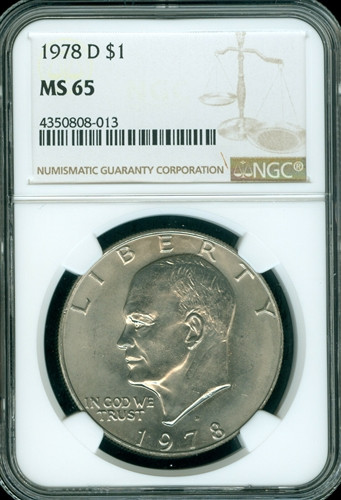
Pull an Eisenhower dollar out of a dresser drawer and the first question is always the same: is this big coin worth anything? The honest answer for most of them is no — a circulated clad Ike is worth exactly one dollar. But a meaningful minority of the series carries real value, and telling the two apart takes about thirty seconds once you know what to check. Here's how.
A Quick Refresher on the Series
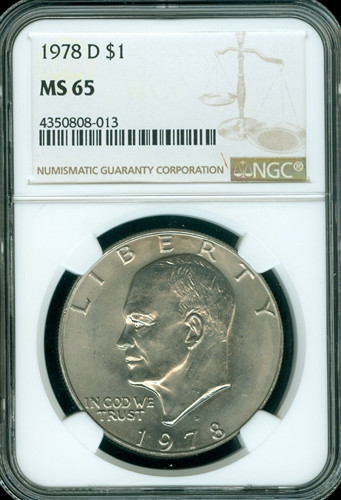
The Eisenhower dollar ran from 1971 through 1978, honoring two events from 1969: the death of Dwight D. Eisenhower and the Apollo 11 moon landing. Chief Engraver Frank Gasparro designed both sides — Ike's portrait on the obverse, and a reverse adapted from the Apollo 11 mission insignia showing an eagle landing on the moon. At 38.1mm, it was the last of the large-size U.S. dollar coins, which is a big part of why collectors have warmed to the series after years of treating it as an afterthought.
One quirk worth knowing: there are no 1975-dated Eisenhower dollars. Coins struck in 1975 and 1976 all carry the dual date 1776–1976 with Dennis R. Williams' Liberty Bell-and-moon Bicentennial reverse.
Step One: Check the Mint Mark
Look just below Eisenhower's neck. No mint mark means Philadelphia; a D means Denver. Both struck copper-nickel clad coins for circulation, and in circulated condition these trade at face value or a token premium. That's not a knock on the coins — it's just supply. Denver alone struck over 68 million in 1971.
An S mint mark is where it gets interesting. San Francisco struck collector issues, and many of them are 40% silver.
The Silver Ikes: Blue and Brown
From 1971 through 1974, and again for the Bicentennial, the Mint sold 40% silver Eisenhower dollars in two formats collectors nicknamed by their packaging: Blue Ikes (uncirculated coins in a blue envelope) and Brown Ikes (proofs in a brown wood-grain box). Each contains roughly 0.316 troy ounces of silver, so these always carry a floor value tied to the silver spot price, plus a numismatic premium that grows with grade.
Mintages were modest by modern standards — the 1973-S silver uncirculated came in under 2 million, and the 1974-S uncirculated at about 1.9 million. You can see the full run of silver and clad Eisenhower dollars here, including certified examples.
Important caveat: not every S-mint Ike is silver. The 1977-S and 1978-S proofs are clad, as are some Bicentennial S coins. When in doubt, check the edge — silver Ikes show a solid silver-colored edge, while clad coins show a visible copper stripe.
The Variety Everyone Asks About: 1972 Type 2
The most valuable circulation-strike Ike is the 1972 Philadelphia Type 2. In 1972, Philadelphia used three different reverse hubs, and the Type 2 — identifiable by an Earth with no distinct islands below Florida — was struck in relatively small numbers. Even in circulated grades it commands a serious premium over the other two types, and mint state examples do well at auction. Current figures move around, so check the PCGS or NGC price guides rather than trusting a fixed number from any article, including this one.
Other Dates Worth a Second Look
1973 and 1973-D
These were never released to circulation — the Mint sold them only in annual mint sets, giving them the lowest mintages of any clad business-strike Ikes. Nice uncirculated examples are the ones to hold onto.
1976 Type 1 vs. Type 2
Bicentennial dollars come in two lettering styles: Type 1 with bold, flat lettering on the reverse and Type 2 with thinner, sharper lettering. The 1976-P Type 1 had a mintage of just over 4 million — low for a circulation issue — and is the better of the two in most grades.
High-grade anything
Ikes were struck on big planchets that picked up marks easily, so genuinely gem-quality coins are scarcer than mintage figures suggest. A common date certified MS66 or better can be worth many multiples of a raw example. This is the sleeper angle in the whole series.
The Honest Bottom Line
Worth face value: circulated clad P and D coins from every year, including most Bicentennials — hundreds of millions were struck and saved. Worth real money: 40% silver issues (always), the 1972 Type 2, the 1973 mint-set-only dates, and any Ike in certified gem condition. Silver Ikes also pair naturally with the classic silver dollars that preceded them — if you're building a type set of large dollars, Peace dollars are the logical companion, and the silver proof Ikes sit comfortably alongside U.S. Mint silver proof sets.
For authoritative background on the series, the U.S. Mint maintains historical program information, and the PCGS price guide is the standard reference for current values by grade. A complete high-grade Ike set remains one of the most affordable ways to collect a finished U.S. dollar series — eight years, one design, and every coin still within reach.
Recent Posts
-

Walking Liberty Half Dollar Value Guide: Key Dates, the 1921 Problem, and What Yours Is Really Worth
Ask a room full of collectors to name the most beautiful U.S. coin and the Walking Liberty half doll
-
The 2026 Semiquincentennial Proof Set: What's in It, Why It Costs $107, and Whether to Buy One
On October 6 at noon Eastern, the U.S. Mint puts the 2026 Semiquincentennial Proof Set on sale at $1