Kennedy Half Dollar Value: Silver Years, Key Dates, and What Yours Is Really Worth
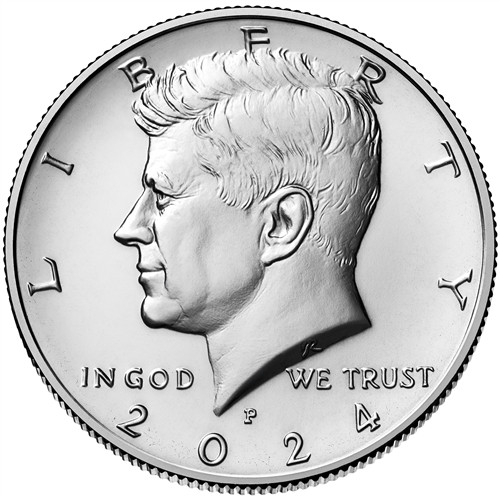
Ask ten people what a Kennedy half dollar is worth and you'll get ten confident wrong answers. The truth is simpler and less romantic: value in this series comes down almost entirely to the date on the coin, because the date tells you whether there's silver inside. Here's how to sort a jar of halves in five minutes, and which handful of dates deserve a closer look.

The Quick Answer: Check the Date First
Three compositions, three very different answers:
- 1964 — 90% silver. Every one is worth well above face value for the metal alone.
- 1965–1970 — 40% silver. Less metal, but still always worth more than 50 cents.
- 1971 to today — copper-nickel clad. A circulated example is worth exactly what it says on the coin: half a dollar. There are exceptions, covered below.
1964: The Coin a Nation Saved
The Kennedy half dollar was rushed into production within months of President Kennedy's assassination, with Gilroy Roberts' portrait on the obverse and Frank Gasparro's presidential seal on the reverse. The public saved them by the roll, and the Mint responded with enormous production — over 270 million from Philadelphia and over 150 million from Denver. That's the honest catch: 1964 halves are silver, but they are not rare. A worn example trades close to its silver melt value, which moves with the spot price. Uncirculated rolls and high-grade certified pieces do better; check the PCGS price guide for current graded values rather than trusting a number that will be stale next month.
One 1964 coin is worth pulling out of any inherited proof set: the Accented Hair proof, an early-die variety with noticeably heavier hair detail above Kennedy's ear. Only a small fraction of that year's proofs — commonly estimated around 100,000 — carry it, and collectors pay real premiums for nice ones.
1965–1970: The 40% Silver Years
When silver was pulled from dimes and quarters in 1965, the half dollar kept a reduced 40% silver composition through 1970. These are the coins most often missed in a coin jar because they look like ordinary halves. All are worth a solid premium over face for their metal.
The key date of the entire circulating series lives here: the 1970-D, struck only for that year's U.S. Mint Set with a mintage of about 2.15 million — tiny by Kennedy standards. If you own a 1970 mint set, that half is the reason it's worth keeping intact.

The Clad Era: Mostly Face Value, With Real Exceptions
From 1971 on, circulated Kennedy halves are worth fifty cents, and anyone offering to sell you a “rare” circulated 1974 half is not doing you a favor. The exceptions worth knowing:
Bicentennial halves (1776–1976)
The dual-dated Independence Hall halves are the most hoarded coins in the series, and the ones people most often believe are valuable. Common clad versions from circulation are worth face value. The exception is the 40% silver version sold by the U.S. Mint in special collector sets, identifiable by the S mintmark.
Mint-set-only and collector-only dates
In 1987 the Mint struck no halves for circulation — the roughly 2.9 million from each mint exist only because of that year's mint sets. Then from 2002 through 2020, no Kennedy halves were released to circulation at all; the Mint sold them directly to collectors in rolls and bags, keeping mintages low across two decades. Circulation strikes resumed in 2021. None of these are expensive coins, but nice uncirculated examples from the low-mintage years carry honest premiums.
Modern standouts
The 1998-S matte finish proof (sold only in that year's Kennedy Collectors Set) and the 2014 50th anniversary issues — including high-relief and gold versions — are the modern pieces graded examples of which command meaningful money. Again, grading-service price guides from PCGS or NGC are the place for current figures.
Sorting the Jar: A Collector's Checklist
Pull anything dated 1970 or earlier — that's silver. Check 1964 proofs for the Accented Hair. Keep 1970 and 1987 mint sets intact. Everything else clad and circulated is spending money, and there's no shame in spending it.
If the sorting leaves holes in your collection, we keep individual dates in stock — browse our Kennedy half dollar selection by year and mint. And if the 90% silver proof strikings appeal to you, the silver Kennedys in our silver proof sets are among the most affordable ways to own them.
Recent Posts
-

Walking Liberty Half Dollar Value Guide: Key Dates, the 1921 Problem, and What Yours Is Really Worth
Ask a room full of collectors to name the most beautiful U.S. coin and the Walking Liberty half doll
-
The 2026 Semiquincentennial Proof Set: What's in It, Why It Costs $107, and Whether to Buy One
On October 6 at noon Eastern, the U.S. Mint puts the 2026 Semiquincentennial Proof Set on sale at $1