The Most Beautiful State Quarters Gallery and Visual List

The Complete List of State Quarters with Pictures (1999–2009)
A list of state quarters with pictures is one of the most searched topics among coin collectors — and for good reason. Here's a quick reference to all 56 quarters in the series:
| Year | States / Territories Featured |
|---|---|
| 1999 | Delaware, Pennsylvania, New Jersey, Georgia, Connecticut |
| 2000 | Massachusetts, Maryland, South Carolina, New Hampshire, Virginia |
| 2001 | New York, North Carolina, Rhode Island, Vermont, Kentucky |
| 2002 | Tennessee, Ohio, Louisiana, Indiana, Mississippi |
| 2003 | Illinois, Alabama, Maine, Missouri, Arkansas |
| 2004 | Michigan, Florida, Texas, Iowa, Wisconsin |
| 2005 | California, Minnesota, Oregon, Kansas, West Virginia |
| 2006 | Nevada, Nebraska, Colorado, North Dakota, South Dakota |
| 2007 | Montana, Washington, Idaho, Wyoming, Utah |
| 2008 | Oklahoma, New Mexico, Arizona, Alaska, Hawaii |
| 2009 | D.C., Puerto Rico, Guam, American Samoa, U.S. Virgin Islands, N. Mariana Islands |
Each quarter features a unique reverse design tied to that state's history, landmarks, or symbols — while sharing the same George Washington portrait on the front.
The U.S. Mint released five new designs every year from 1999 to 2008, in the order states ratified the Constitution or joined the Union. In 2009, the program expanded to include Washington D.C. and five U.S. territories, bringing the total to 56 unique coins.
An estimated 147 million Americans collected these quarters — making it the most successful coin program in U.S. history. Whether you're filling a collector map or hunting for rare errors, knowing every design in the series is the best place to start.
The 50 State Quarters Program: A Numismatic Revolution
When the 50 State Quarters Program launched in 1999, it wasn't just another coin release; it was a cultural phenomenon. Authorized by Public Law 105-124, the program was designed to honor each of the 50 states with a unique design on the reverse (tails) side of the quarter. Before this, the quarter design had remained largely static for over 25 years.
The program was inspired by the massive success of the 1992 "Canada 125" quarters. While the U.S. Treasury was initially hesitant, the potential for public engagement and profit eventually won them over. The results were staggering. The program generated approximately $3 billion in seigniorage (the difference between the face value of the money and the cost to produce it) for the U.S. government. Additionally, the Mint earned $136.2 million in direct numismatic profits from collectors buying special sets.
At its peak, nearly half of the U.S. population—about 147 million people—was actively collecting these coins. This massive participation turned millions of Americans into amateur numismatists overnight. For a detailed look at the program's impact, you can visit this Guide to the 50 State Quarters Program.
The 2009 Extension to DC and Territories
While the original program was slated to end with Hawaii in 2008, the excitement was so high that Congress authorized a one-year extension. In 2009, six additional quarters were minted to honor the District of Columbia and the five U.S. territories: Puerto Rico, Guam, American Samoa, the U.S. Virgin Islands, and the Northern Mariana Islands. These coins followed the same design philosophy, featuring iconic symbols like Duke Ellington for D.C. and the hibiscus for American Samoa.
Complete List of State Quarters with Pictures by Release Year
The release sequence was not random. Quarters were issued in the exact order that the states ratified the Constitution or were admitted into the Union. This chronological approach turned the collection into a rolling history lesson. Every ten weeks, a new design hit the streets, totaling five states per year.
To help you track your collection, we recommend checking out this State Quarter Image Gallery which provides high-resolution visuals of each coin. Below is a look at the mintage figures, which show how the "rarity" of these coins evolved over the decade.
1999-2003: The First Half of the List of State Quarters with Pictures
The early years of the program saw massive mintage numbers as the public's hunger for the new coins was at an all-time high. Virginia, released in 2000, holds the record for the highest mintage in the entire series, with over 1.5 billion coins produced.
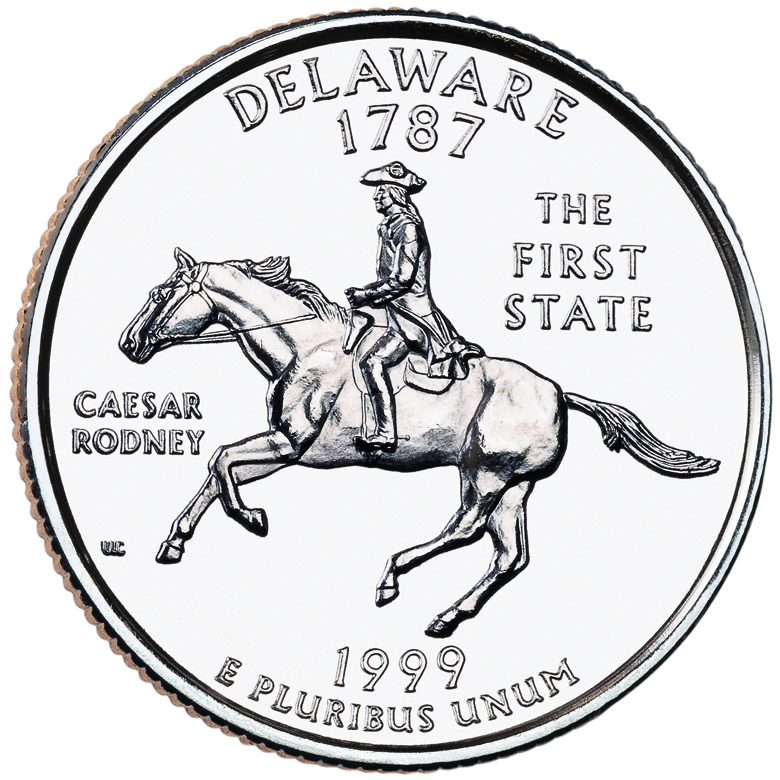
- 1999: Delaware (Caesar Rodney), Pennsylvania (Commonwealth Statue), New Jersey (Washington Crossing the Delaware), Georgia (Peach), Connecticut (Charter Oak).
- 2000: Massachusetts (Minuteman), Maryland (State House), South Carolina (Palmetto Tree & Bird), New Hampshire (Old Man of the Mountain), Virginia (Jamestown 1607-2007).
- 2001: New York (Statue of Liberty), North Carolina (First Flight), Rhode Island (Sailboat in Narragansett Bay), Vermont (Maple Sap Tapping), Kentucky (Federal Hill Mansion).
- 2002: Tennessee (Musical Heritage), Ohio (Birthplace of Aviation Pioneers), Louisiana (Louisiana Purchase), Indiana (Indy 500), Mississippi (Magnolia).
- 2003: Illinois (Land of Lincoln), Alabama (Helen Keller), Maine (Pemaquid Point Light), Missouri (Corps of Discovery), Arkansas (Rice, Diamond, and Mallard).
2004-2009: Completing the List of State Quarters with Pictures
As the program moved into its second half, mintage numbers began to normalize, and in some cases, drop significantly. Oklahoma, for instance, has one of the lowest mintages in the series, making it slightly harder to find in pocket change today.
- 2004: Michigan (Great Lakes State), Florida (Gateway to Discovery), Texas (The Lone Star State), Iowa (Foundation in Education), Wisconsin (Forward).
- 2005: California (John Muir and Yosemite), Minnesota (Land of 10,000 Lakes), Oregon (Crater Lake), Kansas (Buffalo and Sunflower), West Virginia (New River Gorge).
- 2006: Nevada (Wild Horses), Nebraska (Chimney Rock), Colorado (Rocky Mountains), North Dakota (Badlands), South Dakota (Mount Rushmore).
- 2007: Montana (Big Sky Country), Washington (The Evergreen State), Idaho (Peregrine Falcon), Wyoming (The Equality State), Utah (Crossroads of the West).
- 2008: Oklahoma (Scissortail Flycatcher), New Mexico (Land of Enchantment), Arizona (Grand Canyon), Alaska (The Great Land), Hawaii (King Kamehameha I).
Design Elements: Obverse vs. Reverse and Notable Engravers
Every state quarter is a two-sided masterpiece. The obverse (heads) features the familiar portrait of George Washington. However, to make room for the state-specific information on the back, the inscriptions "United States of America," "Liberty," "In God We Trust," and "Quarter Dollar" were all moved to the obverse.
The obverse design was a restoration of the original 1932 portrait by John Flanagan, modified slightly by William Cousins. On the reverse, the designs were often the result of statewide contests. Governors would submit three to five concepts to the U.S. Mint, where artists from the Artistic Infusion Program would turn them into coin-ready art.
You won't find portraits of living persons on these coins—that's strictly prohibited. Instead, you'll see a List of State Quarters featuring historical figures like Helen Keller (Alabama) or Caesar Rodney (Delaware), alongside natural landmarks and state symbols. Notable engravers like Don Everhart and Phebe Hemphill were instrumental in bringing these miniature bas-relief sculptures to life.
Mint Marks, Mintage Figures, and Collectible Value
If you look closely at the obverse of your quarter, just to the right of Washington’s ponytail, you’ll see a tiny letter called a mint mark. This tells you where the coin was born:
- P: Philadelphia Mint (produced coins for circulation)
- D: Denver Mint (produced coins for circulation)
- S: San Francisco Mint (produced high-quality "proof" coins for collectors)
Over the 10-year span, the Mint produced more than 34 billion quarters. While most of these are worth exactly 25 cents, certain versions are highly sought after. For example, the San Francisco Mint produced silver proof sets made of 90% silver rather than the standard copper-nickel clad composition. These silver versions, along with uncirculated sets in original Mint packaging, carry a premium. For those looking to expand their collection with certified or rare versions, you can find More info about our services on our main site.
Famous Errors and What Followed the Program
No massive production run is perfect, and the 50 State Quarters program had some famous "happy accidents." The most legendary is the 2004 Wisconsin "Extra Leaf" error. Some quarters show a small leaf on the corn stalk pointing up (High Leaf) or down (Low Leaf) that wasn't in the original design. These can sell for hundreds or even thousands of dollars depending on their condition.
Other interesting stories include:
- New Hampshire: The "Old Man of the Mountain" featured on the quarter tragically collapsed naturally just a few years after the coin was released.
- Missouri: Designer Paul Jackson was so unhappy with how the Mint simplified his original artwork that he launched a "sticker protest," placing stickers of his original design on 250,000 quarters and putting them back into circulation.
Once the state quarters concluded, the Mint launched the America the Beautiful Quarters® Program. Running from 2010 to 2021, this series honored 56 national parks and sites, following a similar release schedule of five per year. While very popular, it never quite reached the fever pitch of the original statehood series.
Frequently Asked Questions about State Quarters
Which state quarter is the rarest?
In terms of circulation mintage, the 2008 Oklahoma quarter has the lowest production number at roughly 416 million. However, "rarity" in this series usually refers to errors like the Wisconsin Extra Leaf or the 2005 Minnesota "Extra Tree" varieties.
How much is a full set of state quarters worth?
A standard circulated set of all 56 quarters is generally worth its face value ($14.00). However, a complete set in "Uncirculated" condition or a set of "Silver Proofs" can be worth significantly more, often ranging from $50 to over $500 depending on the packaging and silver content.
Why did the program include DC and territories in 2009?
The program was so successful at generating revenue and public interest that Congress passed the District of Columbia and United States Territories Quarter Purchase Act. This allowed the Mint to honor the millions of Americans living in these jurisdictions who weren't represented in the original 50-state run.
Conclusion
The 50 State Quarters program changed the face of American pocket change forever. It turned a simple 25-cent piece into a canvas for history, geography, and art. At Coins Online LLC, we’ve been helping collectors find these treasures since 1999. Whether you're a beginner looking for a simple list of state quarters with pictures or a seasoned pro hunting for 90% silver proofs, we are here to help.
We offer competitive prices and low shipping across the US and Canada. If you're looking to complete your map or start a new collection, Shop state quarters on our secure platform. Have questions about a specific coin? You can Contact us for more information or learn more About our coin collection today. Happy hunting!
Recent Posts
-

Walking Liberty Half Dollar Value Guide: Key Dates, the 1921 Problem, and What Yours Is Really Worth
Ask a room full of collectors to name the most beautiful U.S. coin and the Walking Liberty half doll
-
The 2026 Semiquincentennial Proof Set: What's in It, Why It Costs $107, and Whether to Buy One
On October 6 at noon Eastern, the U.S. Mint puts the 2026 Semiquincentennial Proof Set on sale at $1