How Much Is a 1944 D Penny Worth Today
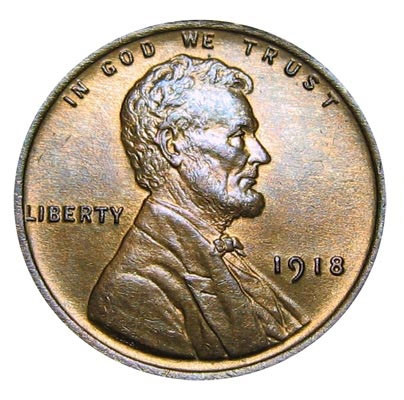
How Much Is a 1944 Wheat Penny Worth? (Quick Answer)
The 1944 wheat penny value ranges from just a few cents for common circulated examples to hundreds of thousands of dollars for the rarest error coins. Here's a fast breakdown:
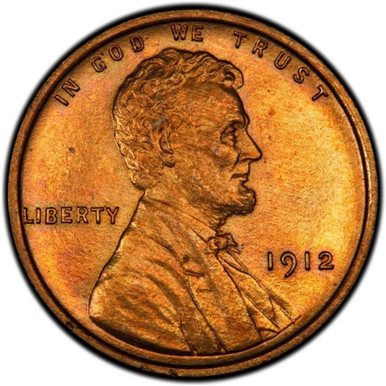
| Coin | Condition | Value Range |
|---|---|---|
| 1944 No Mint Mark (Philadelphia) | Circulated | $0.20 – $0.90 |
| 1944 No Mint Mark (Philadelphia) | MS65 Uncirculated | ~$2 – $6 |
| 1944 No Mint Mark (Philadelphia) | MS66 Uncirculated | ~$40 |
| 1944-D (Denver) | MS67 Red | ~$200 |
| 1944-S (San Francisco) | MS65 Red | ~$25 – $50 |
| 1944 Steel Penny (Philadelphia) | Any | $75,000 – $200,000+ |
| 1944-S Steel Penny | MS66 | Up to $408,000 |
| 1944-D/S Overmintmark | MS67+ Red | Up to $57,500 |
Most 1944 pennies you'll come across are worth very little — they're among the most common wheat pennies ever made, with over 2.1 billion struck across three mints. But a small handful of these coins are genuine treasures.
The coin that gets collectors excited is the 1944 Steel Wheat Penny — a rare minting mistake where leftover steel planchets from 1943 production were accidentally used in 1944. Fewer than 50 are known to exist across all mints. One example from San Francisco sold for a staggering $408,000 at auction.
So before you dismiss that old penny in your drawer, it's worth knowing exactly what you have.
History and Composition: From Shell Casings to Copper
To understand the 1944 wheat penny value, we first have to look at the world in 1944. World War II was in full swing, and the U.S. military needed every ounce of copper it could get for ammunition and wiring.
Just a year earlier, in 1943, the U.S. Mint had tried to save copper by making pennies out of zinc-coated steel. To put it mildly, the public hated them. They rusted quickly, looked too much like dimes, and—most annoyingly for the average person—they didn't work in many vending machines because their magnetic properties tripped the slug-detection sensors.
In 1944, the Mint decided to return to a copper-based coin, but with a patriotic twist. Rather than using "new" copper, much of the metal was sourced from recycled brass shell casings recovered from military training grounds. This unique 1944 Lincoln Wheat Penny History is confirmed by National Archives records, which show the delivery of spent ammunition to the Philadelphia Mint.
The "Shell Casing" Alloy
Technically, these coins are brass, not the traditional bronze. The Mint removed tin from the composition to further support the war effort. The final 1944 alloy consisted of:
- 95% Copper
- 5% Zinc
While the "shell casing" story is often treated as folklore, it is a historical reality. This recycled metal gives the 1944 penny a special place in the hearts of history buffs and numismatists alike.
Determining Your 1944 Wheat Penny Value by Mint Mark
The first step in valuing your coin is identifying where it was made. In 1944, three U.S. Mint locations produced a combined total of over 2.1 billion pennies—the first time in history a single denomination's mintage topped the 2 billion mark.
- Philadelphia (No Mint Mark): This mint handled the lion's share of production, striking 1,435,400,000 coins. Because they are so common, a circulated 1944 penny with no mint mark is usually worth only 20 to 90 cents.
- Denver (D): The Denver Mint produced 430,578,000 coins. You can find the "D" mark just below the date.
- San Francisco (S): The San Francisco Mint produced the fewest, at 282,760,000 coins. Look for the small "S" under the date.
While total mintage affects 1944 Wheat Penny Value: How Much Is Yours Worth?, the differences between the three mints are negligible in lower, circulated grades. The real value separation happens when we look at "Mint State" (uncirculated) coins.
1944 Penny Value by Mint and Grade (Table)
| Grade | Philadelphia (No Mark) | Denver (D) | San Francisco (S) |
|---|---|---|---|
| Good (G-4) | $0.05 | $0.05 | $0.05 |
| Fine (F-12) | $0.10 | $0.10 | $0.10 |
| Extremely Fine (EF-40) | $0.20 | $0.20 | $0.20 |
| Uncirculated (MS-63) | $1.25 - $6.25 | $5.00 | $5.00 |
| Gem Uncirculated (MS-65) | $15.00 | $15.00 | $25.00 |
Grading Standards for 1944 Wheat Penny Value
When we talk about high-value pennies, "condition is king." Professional graders use a 1-to-70 scale, but for 1944 copper pennies, the color designation is just as important as the numerical grade.
- Red (RD): These coins have retained at least 95% of their original mint orange-red luster. These are the most valuable. A 1944-D in MS67 Red can be worth around $200.
- Red-Brown (RB): These coins show a mix of original red and chocolate brown, usually between 5% and 95% red.
- Brown (BN): These coins have lost almost all their original red color and turned a solid chocolate brown. Most circulated coins fall into this category.
For example, a Philadelphia 1944 penny in MS68 Red is a true rarity and has sold for over $13,000 because so few have survived in that pristine, "fresh from the mint" state.
Rare Errors: The 1944 Steel Penny and D/S Varieties
Now we get to the "Holy Grail" territory. While billions of copper pennies were being churned out, a few mistakes happened that created six-figure rarities.
The 1944 Steel Penny: The Ultimate Error
In 1943, the mints were filled with steel planchets (the blank metal disks used to strike coins). When production switched back to copper in 1944, a few of those steel blanks were left stuck in the hopper or machinery. They eventually shook loose and were struck with the 1944 dies.
These are incredibly rare. It is estimated that:
- Philadelphia: 25–30 exist (Auction record: $180,000)
- Denver: 7 exist (Auction record: $115,000)
- San Francisco: Only 2 exist (Auction record: $408,000 for an MS66)
How to Identify a Steel Penny:
- The Magnet Test: A genuine 1944 steel penny is magnetic. If it sticks to a magnet, you might have a fortune. If it doesn't, it's just copper.
- The Weight Test: A standard copper 1944 penny weighs 3.11 grams. A genuine 1944 steel penny weighs approximately 2.7 grams.
- Visual Check: They have a silver-gray, zinc-like appearance rather than the reddish-brown of copper.
The 1944-D/S Overmintmark
Another famous error is the 1944-D/S. This happened when a die originally intended for the San Francisco mint (bearing an 'S') was over-punched with a Denver 'D' at the Philadelphia hub. If you look closely at the mint mark under magnification, you can see the faint curves of an 'S' underneath the 'D'. An MS67+ Red version of this coin has reached a value of $57,500.
Doubled Dies and Other Varieties
We also see varieties like the WDDO-022, a doubled die obverse error. While not as famous as the 1955 doubled die, a 1944 WDDO-022 in VF-35 condition has sold for as much as $300. Other errors to look for include:
- Lamination Cracks: Where the metal surface seems to be peeling or cracked.
- Off-Center Strikes: Where the design is not centered on the coin.
- Repunched Mint Marks (RPM): Such as the 1944-D/D.
Grading, Authentication, and FAQ
If you think you’ve found a rare 1944 penny, don't rush to the bank just yet. Because these coins are so valuable, many fakes exist. Some people take a 1944 copper penny and "plate" it in zinc or silver to make it look like a steel error.
Wait, my penny weighs 3.4 grams? If you have a 1944 penny that weighs 3.4 grams, it is likely not a steel error (which is lighter) but could be a different planchet error or simply have heavy environmental buildup. However, a weight of 3.4g is significantly higher than the standard 3.11g. It’s worth having a professional look at it, as it could be struck on a foreign coin planchet (the U.S. Mint often struck coins for other countries during the war).
Professional Certification
For any coin you suspect is worth more than $100, we highly recommend professional grading. Organizations like PCGS (Professional Coin Grading Service) or NGC (Numismatic Guaranty Company) will authenticate the coin, assign it a grade, and "slab" it in a protective plastic holder. This is the only way to guarantee the 1944 wheat penny value to a potential buyer.
Storage and Care
- Never clean your coins! We cannot stress this enough. Even "gentle" cleaning with soap or a soft cloth can leave microscopic scratches that ruin the numismatic value. If there is loose dirt, you can rinse it with pure water and pat dry, but leave the "patina" alone.
- Use Mylar Capsules: To prevent further oxidation (which turns Red coins into Brown coins), store your pennies in PVC-free Mylar flips or capsules. Keep them in a cool, dry place.
Frequently Asked Questions about 1944 Wheat Penny Value
How can I tell if my 1944 wheat penny is steel? The fastest way is a magnet. If it sticks, it's steel. Next, weigh it. A steel penny should be 2.7 grams. If it's magnetic but weighs 3.11 grams, it’s likely a copper penny that someone plated with steel or zinc as a prank or fake.
What is the most expensive 1944 penny ever sold? The current record holder is the 1944-S Steel Penny, which sold for $408,000 in 2021.
Why does my 1944 penny have no mint mark? This simply means it was minted in Philadelphia. Philadelphia was the main mint and, at the time, did not use a mint mark on pennies. It is the most common version of the coin.
Is it true they were made from shell casings? Yes! Due to the copper shortage in WWII, the 1944–1946 pennies were made from recycled brass shell casings salvaged from military shooting ranges.
Conclusion
The 1944 Wheat Penny is a fascinating piece of American history. Whether it’s a common "shell casing" penny worth a few cents or a legendary steel error worth a house, these coins tell the story of a nation at war.
At Coins Online LLC, we’ve been helping collectors find their next treasure since 1999. We offer a massive selection of over 5,000 products, including US state quarters, silver and gold coins, and all the supplies you need to protect your collection. We pride ourselves on competitive prices, low shipping to the US and Canada, and a 14-day return policy to ensure you're happy with every purchase.
If you’re ready to dive deeper into small cents, check out More info about Wheat Back Pennies to see what other gems might be hiding in your pocket change! Happy hunting!
See our Indian Head pennies for current prices.
Recent Posts
-

Mercury Dime Value Guide: Key Dates, Full Bands, and Why Weinman's Design Is Back in 2026
The U.S. Mint just put Adolph Weinman's Winged Liberty back on a coin. The 2026-W Palladium Eagle, r
-
The 2026 Trump Dollar Sold Out in Hours: What Happened and What It Means for Value
It took one business day. The United States Mint opened sales on the 1776–2026 President Donald J. T