A Guide to the Most Famous Historical Quarter Symbols
Why the Ohio Wright Brothers Are One of America's Greatest Quarter Symbols
The Ohio Wright brothers — Wilbur and Orville Wright — are celebrated on the 2002 Ohio Statehood Quarter as two of history's most important inventors. If you're looking for a quick overview of what makes this quarter special, here's what you need to know:
- Who: Wilbur and Orville Wright, aviation pioneers born and based in Dayton, Ohio
- What they did: Invented, built, and flew the world's first successful powered airplane
- Why Ohio: Dayton is where they lived, worked, and perfected practical flight at Huffman Prairie in 1905
- On the quarter: The 2002 Ohio Statehood Quarter features a Wright Flyer silhouette alongside astronaut John Glenn — two of Ohio's most famous sons
- Collector note: Ohio is also honored as the "Birthplace of Aviation", making this quarter a favorite among history-focused collectors
Ohio has a deep connection to flight history that goes far beyond the famous 1903 Kitty Hawk moment. The brothers built their ideas in a Dayton bicycle shop, tested them in an Ohio pasture, and turned an experiment into a practical flying machine — all before the world was paying attention.
As aviation historian Darrel Collins put it: "Before the Wright Brothers, no one working in aviation did anything fundamentally correct. Since the Wright Brothers, no one has done anything fundamentally different."
That legacy lives on in Ohio's coins, museums, and landmarks — and makes the 2002 Ohio Statehood Quarter one of the most historically rich pieces in the entire Statehood Quarters series.
The Legacy of the Ohio Wright Brothers in Dayton
When we talk about the ohio wright brothers, we are talking about a pair of self-taught geniuses who transformed the world from a small house at 7 Hawthorn Street in Dayton. Wilbur (born 1867) and Orville (born 1871) were raised in a household that prized intellectual curiosity. Their father, Bishop Milton Wright, and their mother, Susan Koerner Wright, encouraged them to explore and invent from a young age.
Interestingly, it wasn't a physics textbook that sparked their obsession, but a small toy helicopter brought home by their father in 1878. Made of cork, bamboo, and paper with a rubber band motor, the toy flew across the room and hit the ceiling. When it eventually broke, the boys didn't just cry—they built their own. This early fascination with "flying toys" laid the groundwork for what would become the Wright brothers (U.S. National Park Service) legacy.
Before they were "the fathers of modern aviation," they were successful businessmen in Dayton. They started a printing business in the late 1880s, even building their own printing press from junk iron and a gravestone! This business taught them mechanical engineering and the value of professional documentation—skills that would later prove vital when they began filing patents for their aircraft.
By 1892, the "bicycle craze" was sweeping America, and the brothers opened the Wright Cycle Company. It was here, amidst the gears and chains of West Dayton, that they developed the mechanical intuition required to solve the problem of flight. They didn't just sell bikes; they manufactured their own brands, like the Van Cleve and the St. Clair. Their experience with bicycles taught them a lesson: a flying machine, like a bicycle, didn't need to be inherently stable; it needed to be controllable by the pilot.
From Bicycle Shop to the Skies: The Ohio Wright Brothers' Innovation
The workshop at 1127 W. Third St. in West Dayton was the true laboratory of flight. While other inventors were trying to build massive, powerful engines to brute-force their way into the sky, the ohio wright brothers focused on balance and control. They realized that an airplane needed to move in three dimensions: up and down (pitch), left and right (yaw), and tilting side to side (roll). This "three-axis control" remains the standard for every fixed-wing aircraft flying today.
To test their theories, they built a six-foot wind tunnel in their shop. Using scrap metal and hacksaw blades, they created delicate balances to measure aerodynamic lift and drag. They tested over 200 different wing shapes, discovering that the existing scientific tables of the time were often wrong. This commitment to empirical data allowed them to build wings and propellers that were far more efficient than anything their competitors—including the well-funded Smithsonian Institution—could produce.
Their bicycle background also influenced their use of lightweight construction. They used spruce wood, muslin fabric, and bicycle-style spoke wires to keep their gliders and flyers light yet strong. Even their first engine was a masterpiece of "making do"; when no car manufacturer would build them a light enough engine, they built their own with the help of their shop mechanic, Charlie Taylor.
Why Dayton is the True Home of the Ohio Wright Brothers' Success
While North Carolina gets the credit for the first flight in 1903, Dayton is where the invention actually became useful. After their success at Kitty Hawk, the brothers returned to Ohio to perfect their design. They needed a place to fly closer to home, so they struck a deal with a local banker to use an 85-acre pasture known as Huffman Prairie.
It was in this swampy meadow, 8 miles east of Dayton, that the Wrights moved from "proof of concept" to a "practical flying machine." In 1904 and 1905, they flew hundreds of times, eventually achieving flights that lasted over half an hour. This period was so significant that it eventually led to a famous historical debate. For years, Ohio and North Carolina sparred over who could claim the brothers. Recently, however, the Ohio, North Carolina Call Truce On Wright Brothers' First Flight Feud allowed both states to celebrate their unique roles: North Carolina as the site of the first flight, and Ohio as the place where the Wrights learned to fly.
Dayton also became the site of the Wright School of Aviation, where the brothers trained the world's first pilots. Today, the Huffman Prairie Flying Field is a National Historic Landmark, preserved as part of the Dayton Aviation Heritage National Historical Park.
Huffman Prairie and the Birth of Practical Flight
If Kitty Hawk was the nursery of aviation, Huffman Prairie was the high school. In 1904, the brothers began testing the Wright Flyer II. On September 20, 1904, Wilbur Wright achieved a major milestone: the first complete circle in history flown by a manned, powered machine. He covered 4,080 feet in about a minute and a half, proving that the airplane could be steered back to its starting point.
By 1905, they had built the Wright Flyer III. This aircraft was a game-changer. After a few early crashes, they realized they needed to make the elevators and rudders larger and move them further away from the wings to improve stability. The results were staggering. On October 5, 1905, Wilbur flew for 38 minutes and 3 seconds, circling the prairie until he literally ran out of gas. He had covered 24.5 miles—more than the total distance of all their 105 flights in 1904 combined.
To help you understand the leap in technology, look at this comparison:
| Feature | 1903 Kitty Hawk Flyer | 1905 Wright Flyer III |
|---|---|---|
| Longest Flight | 59 seconds | 38 minutes, 3 seconds |
| Distance | 852 feet | 24.5 miles |
| Control | Difficult/Unstable | Practical and Reliable |
| Purpose | Experimental Proof | First Practical Airplane |
| Location | Kitty Hawk, NC | Dayton, OH |
The 1905 flights were so successful that the brothers stopped flying for nearly two years to protect their secrets while they negotiated contracts with the U.S. Army and European governments. They had done it—they had invented a machine that could actually go somewhere and do something.
Preserving History: Museums and Memorials in Ohio
Today, Dayton is a pilgrimage site for anyone interested in the ohio wright brothers. The most significant site is the Wright Brothers National Museum located within Carillon Historical Park. This museum houses more Wright artifacts than any other place in the world.
The centerpiece is Wright Hall, which houses the original 1905 Wright Flyer III. This isn't a replica; it is the actual plane the brothers flew at Huffman Prairie. Orville Wright himself considered this his most important aircraft and spent his final years supervising its restoration. It is the only airplane designated as a National Historic Landmark and is officially Ohio’s state plane.
Other must-visit sites in the Dayton area include:
- Wright Brothers Memorial (U.S. National Park Service): Located on Wright Brothers Hill overlooking Huffman Prairie, this monument was dedicated on Orville's 69th birthday in 1940. It was built with the help of the African American CCC Camp Vandalia.
- Wright-Patterson Air Force Base: The base actually encompasses the Huffman Prairie Flying Field. It stands as a massive testament to the brothers' legacy, serving as a global center for aeronautical research.
- Wright B Flyer Museum: Located in Miamisburg, this all-volunteer organization maintains flying look-alikes of the Wright Model B, allowing visitors to see what these early "air chariots" looked like in action.
- The National Aviation Heritage Area: This Congressionally designated area coordinates the preservation of aviation history across eight Ohio counties, ensuring the story of the ohio wright brothers is never forgotten.
Commemorating Aviation on the Ohio State Quarter
As coin collectors, we at USSQ particularly love how the 2002 Ohio Statehood Quarter captures this history. Released as the 17th coin in the 50 State Quarters Program, it is a masterpiece of symbolic design.
The coin features the silhouette of the 1903 Wright Flyer, representing the dawn of flight. But Ohio didn't stop at the brothers; the design also includes an astronaut in a spacesuit, honoring John Glenn (the first American to orbit the Earth) and Neil Armstrong (the first man on the moon), both of whom were Ohioans. The state outline serves as the backdrop, with the inscription "Birthplace of Aviation Pioneers."
This quarter is a favorite in our State Quarters collection because it bridges the gap between the first 120-foot flight and the exploration of the stars. Whether you are looking for a standard circulation strike or a beautiful colorized version that highlights the rich hues of the design, this coin is a "must-have" for any historical collection.
Numismatically, the Ohio quarter is significant because it was part of the era when the U.S. Mint began allowing states to submit their own concepts. It represents a shift toward coins that tell a deeper story about regional pride and global impact. You can find more info about state quarters and their unique symbols on our dedicated pillar pages.
Frequently Asked Questions about the Wright Brothers in Ohio
What is the significance of the Wright Flyer III?
The Wright Flyer III is widely considered the world's first practical airplane. Unlike the 1903 model, which was barely controllable and could only fly in a straight line for a short time, the 1905 Flyer III could turn, circle, fly figure-eights, and stay aloft for over 30 minutes. It is a National Historic Landmark and is preserved at Carillon Historical Park in Dayton.
Where can you see the original Wright Cycle Shop?
This is a bit of a trick question! The original Wright Cycle Shop from 1127 W. Third Street was actually purchased by Henry Ford in 1937 and moved to Greenfield Village in Dearborn, Michigan. However, you can visit a perfect replica at its original location in Dayton as part of the Dayton Aviation Heritage National Historical Park. The park also includes the Hoover Block, where the brothers ran their printing business.
What annual events celebrate the Wright brothers in Ohio?
The biggest celebration is Wright Brothers Day, held every December 17th. In Dayton, this often includes ceremonies at the Wright Brothers Memorial with flyovers by the U.S. Air Force. Carillon Historical Park and the National Museum of the U.S. Air Force also host special heritage events, lectures, and family activities to commemorate the anniversary of the first flight.
Conclusion
The story of the ohio wright brothers is a reminder that great things often start in small places—like a backyard or a bicycle shop. Their relentless pursuit of "the logic of flight" changed the course of human history, shrinking the world and opening the skies.
At USSQ, we are proud to help collectors preserve this history through the coins that honor these pioneers. From the 2002 Ohio Statehood Quarter to rare commemorative issues, our mission since 1999 has been to provide high-quality numismatic treasures at competitive prices. We offer a 14-day return policy and low shipping to our friends in the US and Canada, ensuring your collecting experience is as smooth as a flight over Huffman Prairie.
Ready to add a piece of aviation history to your collection? More info about USSQ is available on our site, or contact us for more information about our 5,000+ products. Happy collecting, and keep looking at the skies!
Recent Posts
-

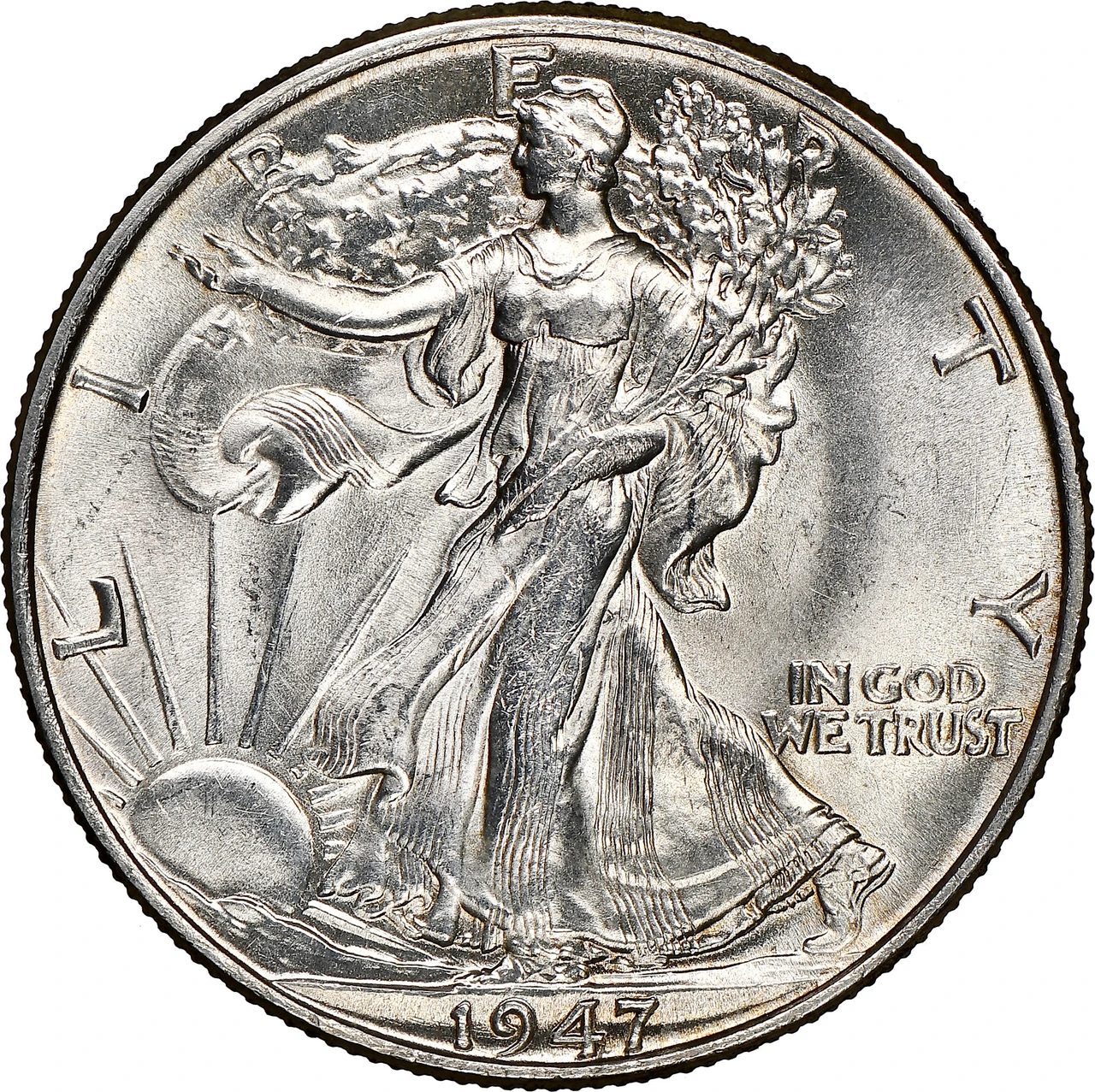
Walking Liberty Half Dollar Value Guide: Key Dates, the 1921 Problem, and What Yours Is Really Worth
Ask a room full of collectors to name the most beautiful U.S. coin and the Walking Liberty half doll
-
The 2026 Semiquincentennial Proof Set: What's in It, Why It Costs $107, and Whether to Buy One
On October 6 at noon Eastern, the U.S. Mint puts the 2026 Semiquincentennial Proof Set on sale at $1