The Ultimate Buffalo Nickel Price Guide for Savvy Collectors
What Is Buffalo and Indian Head Nickel Value? Quick Answer for Collectors
Buffalo and indian head nickel value ranges from as little as $0.20 for a heavily worn, dateless example to over $724,000 for the rarest high-grade specimens. Here's a fast reference to orient you:
| Coin Type | Condition | Approximate Value |
|---|---|---|
| Common date (e.g., 1937 P) | Good (G-4) | $1 - $3 |
| Common date (e.g., 1937 P) | Uncirculated (MS-63) | $30 - $50 |
| Semi-key date (e.g., 1926-S) | Circulated | $500+ |
| Key date (1913-S Type 2) | Circulated | $280 - $750 |
| 1937-D Three-Legged Buffalo | Circulated | $560+ |
| 1937-D Three-Legged Buffalo | Uncirculated | $3,300 - $110,000 |
| 1918/7-D Overdate | Any grade | $460 - $450,000 |
| 1916 Doubled Die Obverse | Any grade | $1,800 - $240,000 |
| Dateless Buffalo nickel | N/A | $0.20 - $1.00 |
Minted from 1913 to 1938, the Buffalo nickel — also widely called the Indian Head nickel — is one of the most iconic and beloved coins in American numismatic history. Sculptor James Earle Fraser designed it with a bold vision: "My first objective was to produce a coin which was truly American."
The result was a striking five-cent piece featuring a composite portrait of Native American chiefs on the obverse and an American bison on the reverse. It replaced the Liberty Head ("V") nickel and immediately captured public imagination.
For collectors today, these coins are still deeply popular — and prices vary wildly depending on date, mint mark, condition, and variety. That wide range is exactly why having a reliable price guide matters.
This guide walks you through every major factor that drives value, from key dates and error varieties to grading standards and collecting strategies. You can browse our current Buffalo Nickels for sale to see these factors in action.
History and Design of the Buffalo Nickel
The story of the Buffalo nickel begins with President Theodore Roosevelt’s "Renaissance of American Coinage." Roosevelt wanted U.S. currency to reflect the artistic beauty of ancient Greek coins. He commissioned renowned sculptor James Earle Fraser, a former student of Augustus Saint-Gaudens, to reimagine the five-cent piece.
Fraser, who grew up on the South Dakota frontier as the son of a railroad engineer, drew deep inspiration from his childhood. He didn't want a generic "Lady Liberty" in a headdress; he wanted a "truly American" design.
The Obverse: A Composite Portrait
The obverse features a dignified profile of a Native American man. While many individuals later claimed to be the "face" of the nickel, Fraser clarified that it was a composite portrait. He used three primary models:
- Chief Iron Tail (Sioux)
- Chief Two Moons (Cheyenne)
- Chief John Big Tree (Seneca)
By blending their features, Fraser created an image intended to embody the spirit and dignity of all Native American peoples.
The Reverse: The American Bison
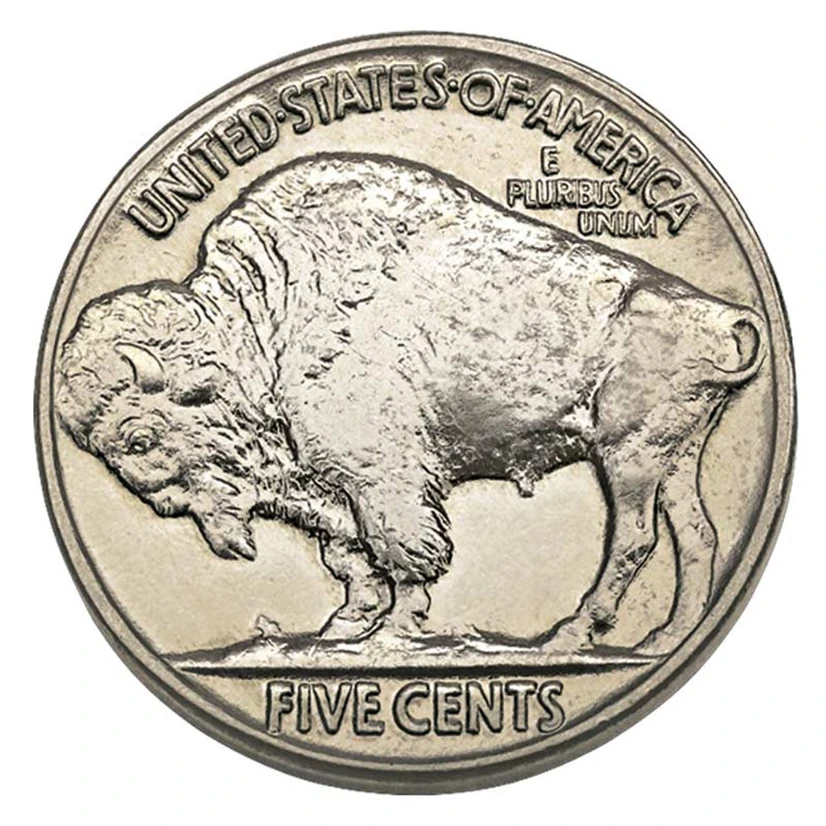
On the reverse stands a massive American bison. While often called a "buffalo," it is technically a bison (true buffalo are native to Africa and Asia and lack the iconic beard seen on the coin). The model for this design was reportedly Black Diamond, a 1,550-pound bison residing at the Central Park Zoo (though some sources suggest the Bronx Zoo).
The 1913 Redesign: Type 1 vs. Type 2
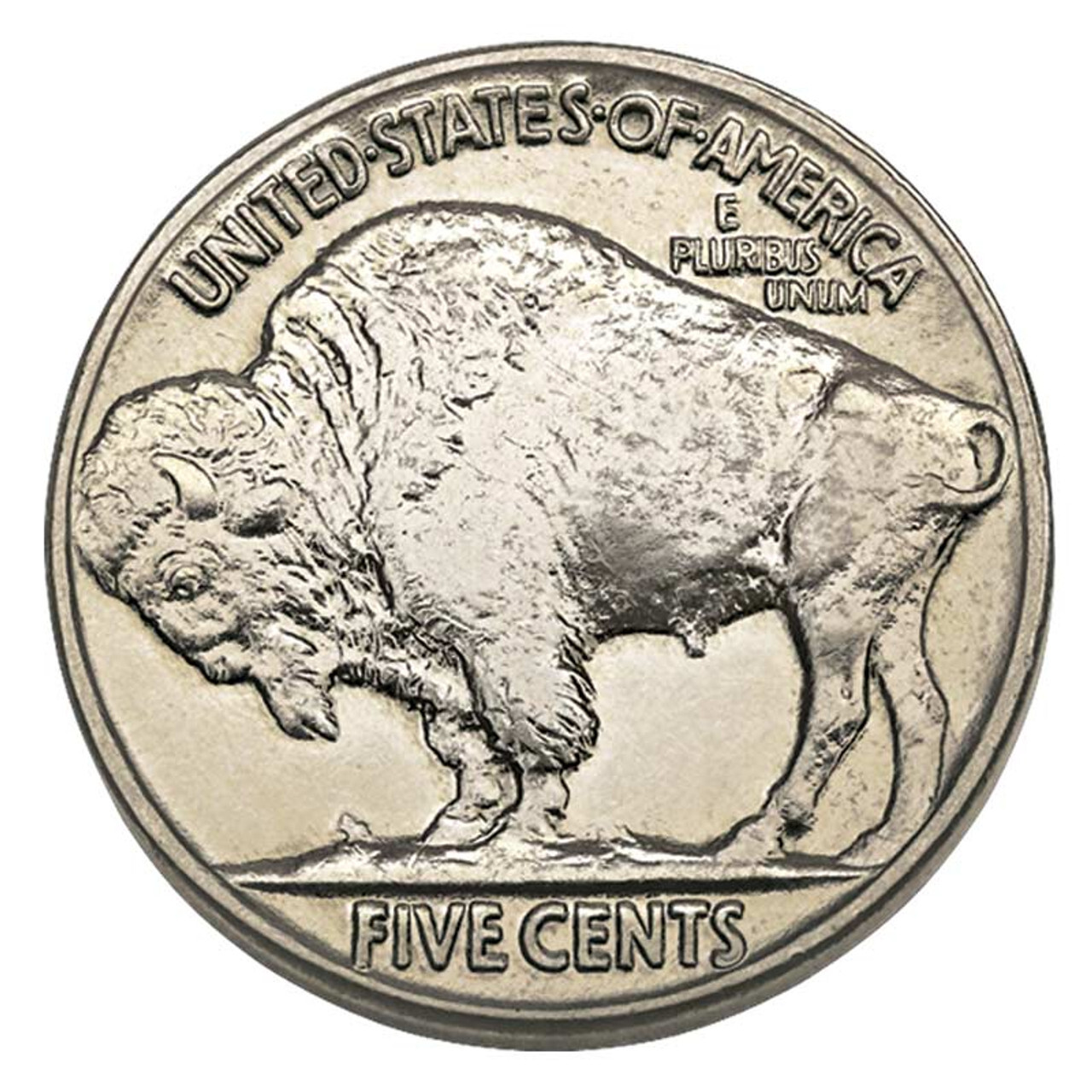
When the coin was first released in early 1913, the bison stood on a raised mound of dirt. This is known as the Type 1 (Raised Mound) variety. However, Mint officials quickly realized a fatal flaw: because the words "FIVE CENTS" were embossed on the highest part of the mound, they would wear away almost immediately in circulation.
By mid-1913, the design was modified. The mound was flattened into a straight line, and the denomination was recessed below the surface to protect it from wear. This is known as the Type 2 (Flat Ground) variety. This change is a massive factor in buffalo and indian head nickel value, as Type 2 coins from the San Francisco and Denver mints in 1913 are significantly rarer than their Type 1 counterparts. You can find both types in our Buffalo Nickel category. You can read more about these early variations in this Buffalo or Indian Head Nickel History and Design overview.
Understanding Buffalo and Indian Head Nickel Value Factors
Why is one 1937 nickel worth $1.50 while another is worth $50,000? It comes down to four critical factors: Date, Mint Mark, Variety, and Condition.
Mint Marks and Mintage
Buffalo nickels were struck at three locations:
- Philadelphia (No Mint Mark): Generally produced the highest volume.
- Denver ("D"): Located on the reverse, directly below "FIVE CENTS."
- San Francisco ("S"): Also located below "FIVE CENTS."
Because the Denver and San Francisco mints typically produced fewer coins, "D" and "S" mint marks often command a higher buffalo and indian head nickel value. We frequently carry these mint-marked coins in our inventory. For example, the 1926-S has the lowest mintage of the entire series at just 970,000 coins.
Strike Quality and "Full Horn" Detail
Unlike modern coins, Buffalo nickels were often "weakly struck," especially those from the 1920s. Collectors look for sharp details in specific areas to determine value:
- The Bison’s Horn: A "Full Horn" (where the horn is sharp and completely separated from the head) is a major value booster.
- The Native American’s Cheekbone and Feathers: High points that show wear first.
- The Tail and High Humps: Sharpness here indicates a superior strike.
Condition and Grading
Condition is everything in numismatics. Coins are graded on a 70-point scale:
- Good (G-4): Heavily worn, but the date and major outlines are visible.
- Fine (F-12): Moderate wear; the bison’s horn is about half visible.
- Uncirculated (MS-60 to MS-67): No trace of wear, with original mint luster.
As we see in the Buffalo Nickel Value Guide and Grading, a jump from MS-64 to MS-65 can sometimes double or triple the price of a coin.
Key Dates, Rarities, and Error Varieties
If you are hunting through an old collection, these are the "lottery tickets" of the series. Some of these errors occurred due to die mishaps at the Mint, creating legendary rarities.
1. 1937-D Three-Legged Buffalo
This is perhaps the most famous error in American history. A pressman at the Denver Mint, attempting to fix a damaged die, accidentally polished away the bison’s front right leg. Authentic examples will show a "moth-eaten" appearance on the bison's belly and a stream of "drool" (actually a die crack) coming from the bison's chin. These are highly valuable, ranging from $560 in circulated condition to over $100,000 in high-grade Mint State.
2. 1918/7-D Overdate
In 1918, a 1917 die was hubbed with a 1918 date, creating a clear "8" over a "7." This is an incredibly scarce variety, with values starting around $460 for worn copies and reaching nearly half a million dollars for pristine examples.
3. 1916 Doubled Die Obverse
Look closely at the date and the chin. On this rare variety, the "1916" is clearly doubled. This is one of the "Big Three" Buffalo nickel errors, often fetching six figures at auction.
4. Low Mintage Key Dates
- 1913-S Type 2: The "King" of the regular issues. With only 1.2 million made and the design changing mid-year, these are hard to find.
- 1921-S and 1924-S: Known for being notoriously weakly struck; sharp examples are extremely rare.
- 1926-S: The lowest mintage of the series (970,000). Even in low grades, this coin is worth hundreds. Check the 1925 Buffalo Nickel Values for a comparison of how values escalate during this mid-20s era.
5. Later Dates (1930s)
While many 1930s nickels are common, specific errors like the 1935 Doubled Die Reverse or the 1934 Buffalo Nickel Prices for high-grade specimens show that even "common" years can be lucrative. You can explore 1934 Buffalo Nickel Prices to see the difference between Philadelphia and Denver mint values, or check our Buffalo Nickel inventory for these dates.
| Key Date / Variety | G-4 (Good) | MS-63 (Unc) |
|---|---|---|
| 1913-S Type 2 | $280 | $2,200 |
| 1914-D | $75 | $1,100 |
| 1918/7-D Overdate | $750 | $65,000+ |
| 1921-S | $75 | $2,500 |
| 1926-S | $500 | $15,000+ |
| 1937-D 3-Legged | $560 | $3,300 |
Collecting Strategies and Market Trends
Whether you are a beginner or a seasoned pro, we recommend having a clear strategy. The "Buffalo" series is uniquely satisfying because a complete set is actually achievable for most collectors.
Popular Collecting Paths
- The Date-Mint Set: Collecting one coin for every year and every mint (64 coins total, excluding major varieties). A basic circulated set can be assembled for under $1,000, while an uncirculated set can exceed $700,000.
- The Type Set: Simply owning one Type 1 (1913) and one Type 2 (1913-1938). This is a great way to appreciate the design without the pressure of a full set.
- The Error Hunter: Focusing specifically on the 3-Legged, Doubled Dies, and Overdates.
Market Stability
Buffalo nickels are "pure" numismatic coins. Because they contain 75% copper and 25% nickel (no silver), their value is not tied to the volatile gold or silver markets. Instead, their value is driven by collector demand and historical significance. This makes them a remarkably stable area for long-term hobbyists.
Professional Certification (PCGS & NGC)
For any coin valued over $100, we strongly suggest third-party grading. Services like PCGS and NGC authenticate the coin (ensuring it’s not a counterfeit or a "fake" 3-legged buffalo) and assign it a definitive grade. This protection is vital for maintaining your buffalo and indian head nickel value.
At USSQ (Coins Online LLC), we have been helping collectors since 1999. We offer over 5,000 products, competitive prices, and a 14-day return policy to ensure you are happy with every addition to your collection. You can find More info about our Buffalo Nickel collection on our main site.
Frequently Asked Questions about Buffalo Nickels
Why do Buffalo nickels lose their dates so easily?
This was the "Achilles' heel" of Fraser’s design. The date was placed on a raised area of the Native American’s shoulder. Because this was one of the highest points on the coin, it rubbed against other coins and fingers constantly. In heavy circulation, the date was often the first thing to disappear. This resulted in millions of "dateless" nickels.
What is the buffalo and indian head nickel value for a dateless coin?
Generally, a dateless Buffalo nickel is worth about $0.20 to $0.50—essentially its "bulk" value. Some people use a chemical called "Nic-A-Date" to restore the date. While this works, it leaves an acid mark on the coin. Serious collectors consider these "damaged" or "altered," and they carry very little numismatic value. They are best used as "hole fillers" in beginner albums or for jewelry and craft projects.
Is there any silver in a buffalo and indian head nickel value calculation?
No. Standard circulating Buffalo nickels (1913-1938) contain zero silver. They are composed of 75% copper and 25% nickel. The only "silver" Buffalo nickels are modern commemorative coins or special proof sets (like the 2001 Silver Buffalo Dollar or the 2005-S Silver Proof) minted long after the original series ended. If you have a standard 1913-1938 nickel, its value is purely based on its collector appeal, not its metal "melt" value.
Conclusion
The Buffalo nickel is more than just five cents; it is a pocket-sized piece of the American frontier. From the controversy of the "Raised Mound" in 1913 to the accidental creation of the "3-Legged Buffalo" in 1937, this series offers endless fascination for collectors.
When evaluating your coins, remember to look for the mint mark on the reverse, check the sharpness of the bison's horn, and always keep an eye out for those rare "overdate" errors. Whether you are holding a common 1936 nickel worth a few dollars or a rare 1926-S worth thousands, you are holding a masterpiece of American art.
If you have questions about a specific coin or are looking to start your own set, we are here to help. Contact us for more information or Visit our main shop to browse our latest inventory of Buffalo nickels and supplies. Happy collecting!
Recent Posts
-

Walking Liberty Half Dollar Value Guide: Key Dates, the 1921 Problem, and What Yours Is Really Worth
Ask a room full of collectors to name the most beautiful U.S. coin and the Walking Liberty half doll
-
The 2026 Semiquincentennial Proof Set: What's in It, Why It Costs $107, and Whether to Buy One
On October 6 at noon Eastern, the U.S. Mint puts the 2026 Semiquincentennial Proof Set on sale at $1