Everything You Need to Know About Coin Binder Sheets
Benefits of Using Coin Binder Sheets for Your Collection
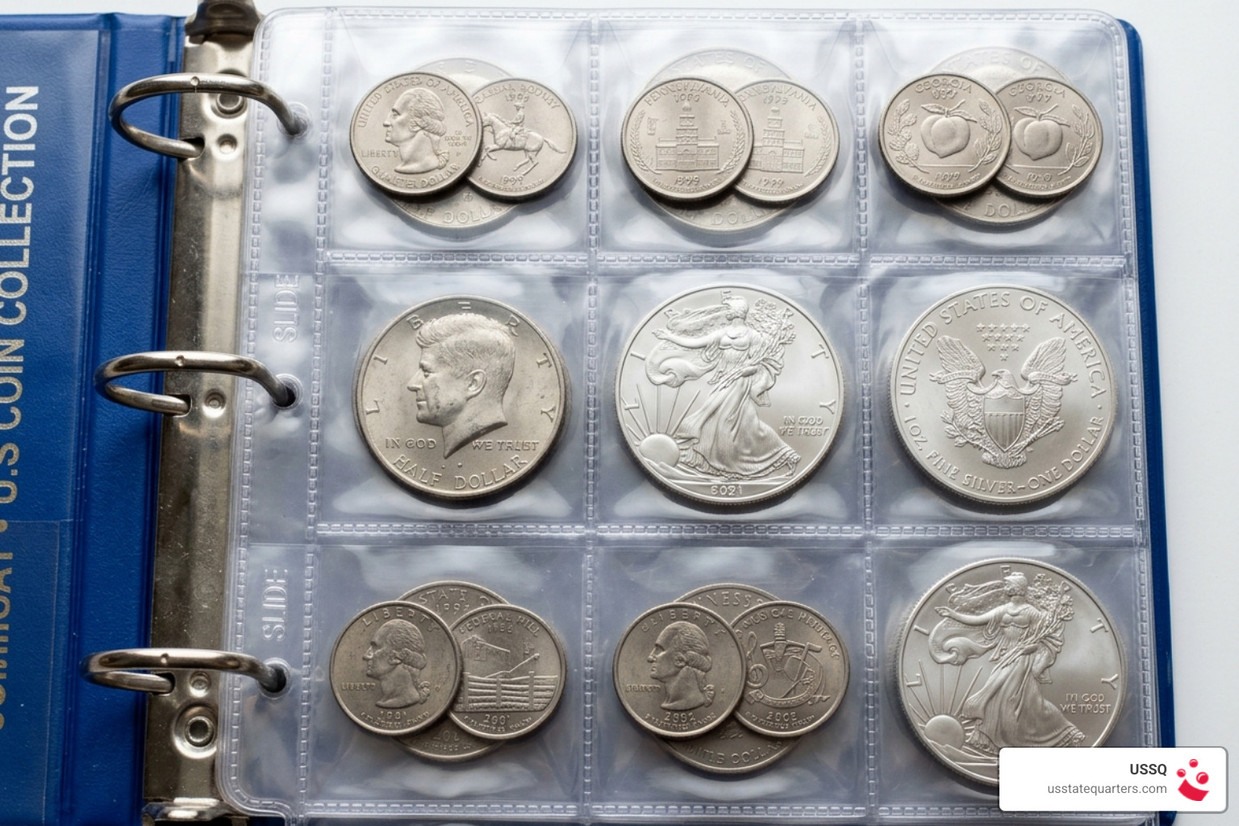
Coin binder sheets are one of the simplest and most effective ways to store, display, and organize a coin collection. Whether you collect US state quarters, silver eagles, or world coins, binder sheets let you see every coin at a glance — no digging through boxes required.
Here's a quick overview of what coin binder sheets offer:
- Easy viewing — see both sides of coins without removing them from holders
- Custom organization — arrange by series, year, mint mark, or type
- High capacity — a single binder can hold hundreds of coins across multiple pages
- Archival safety — quality sheets are acid-free and PVC-free to protect coins long-term
- Compatibility — fit standard 3-ring binders and work with 2x2 cardboard flips, plastic holders, and coin flips
- Affordable storage — pages start as low as $0.29 each when bought in bulk
Coin collectors have been using binder-based storage systems since 1929. And it's easy to see why the format has lasted — pulling out a binder and flipping through clean, organized pages beats rummaging through a box every time.
This guide breaks down everything you need to know: materials, sizes, top brands, how to insert coins safely, and how to keep your collection in great shape for years to come.
When we talk to collectors from New Orleans to Toronto, the number one reason they switch to coin binder sheets is visibility. In the numismatic world, your collection is meant to be seen. Traditional storage methods like cigar boxes or plastic tubs might keep coins in one place, but they turn your hobby into a game of "hide and seek."
The modular nature of binder sheets allows for what we call "organic growth." If you start a collection of National Park Quarters, you can simply add a new page as you find new specimens. You aren't committed to a fixed-size album that might leave gaps or run out of room.
Furthermore, inventory management becomes a breeze. By using clear pocket pages, you can see the obverse and reverse of every coin. This is particularly useful for identifying mint marks or checking the condition of a coin’s "lustre" without having to physically handle the metal, which can lead to degradation over time.
| Feature | Coin Binder Sheets | Traditional Storage Boxes |
|---|---|---|
| Visibility | High (Two-sided viewing) | Low (Must dig through) |
| Organization | Modular (By year/series) | Bulk (Often jumbled) |
| Protection | High (Individual pockets) | Medium (Coins may rub) |
| Portability | Excellent (Standard binders) | Variable (Bulky/Heavy) |
| Scalability | Unlimited (Add pages) | Limited (Fixed volume) |
If you are looking to upgrade your setup, you can Explore coin binder options at USSQ to find the right fit for your specific series.
Understanding Materials and Archival Safety
As we move through April 2026, the technology behind coin preservation has never been better. However, not all plastic is created equal. When choosing coin binder sheets, the most critical factor is "archival safety."
For long-term preservation, we must avoid PVC (polyvinyl chloride) that contains plasticizers or "softeners." Over time, these chemicals can leach out of the plastic and onto the coin, creating a sticky, green residue that permanently damages the surface. This is often referred to as "PVC damage" or "green slime."
Instead, look for sheets made from the following materials:
- Polypropylene: This is a high-clarity, acid-free plastic that is chemically stable. It doesn’t react with the metal of the coin and is the industry standard for safe, long-term storage.
- Mylar (Polyester): Often used in more rigid holders, Mylar is incredibly stable and provides a high degree of moisture protection.
- Safety Vinyl: While some vinyl is dangerous, high-quality "non-plasticized" vinyl is used by top manufacturers to create flexible pages that are still archival-safe.
The goal is chemical stability. You want a material that won't off-gas or react to changes in humidity. For collectors in humid climates like Louisiana, choosing moisture-resistant, acid-free sheets is non-negotiable. You can Discover archival coin albums and sheets at USSQ that meet these rigorous standards.
Choosing the Right Coin Binder Sheets: Sizes and Features
Selecting the right page isn't just about how many coins you can fit; it’s about the "pitch" and the "pocket." A pocket that is too large will allow the coin to slide around, potentially falling out if the binder is tipped. A pocket that is too small will make it impossible to insert a protective cardboard flip.
Modern sheets often feature "LaserWeld" technology. This is a manufacturing process where the seams are fused together using precision lasers rather than heat rollers. The result is a page that lies perfectly flat and has significantly stronger seams that won't tear when you're flipping through a heavy binder.
Other features to look for include:
- Thumb Cuts: Small semi-circular cutouts at the top of the pocket that allow you to easily grip the coin or holder for removal.
- Envelope Flaps: Some specialized sheets include a top flap that folds over the pocket, ensuring the coin stays put even if the binder is held upside down.
- Reinforced Edges: Look for pages with a "heavy-duty" multi-hole strip. This prevents the weight of the coins from tearing the page away from the binder rings.
To ensure your pages stay secure, we always recommend using a high-quality binder. Find binders for coin pages and supplies at USSQ designed specifically to handle the unique weight of metal collections.
Standard Pocket Sizes for Coin Binder Sheets
The "Standard" in the industry is the 20-pocket page. This is designed specifically to hold 2x2 inch cardboard holders (flips).
- 20-Pocket Pages: Fits standard 2x2 cardboard or plastic holders. Ideal for pennies, nickels, dimes, and quarters.
- 12-Pocket Pages: Features larger 2.5x2.5 inch pockets. These are necessary for larger coins like Silver Eagles, Silver Dollars, or coins in extra-thick protective capsules.
- 30-Pocket Pages: Features smaller 1.5x1.5 inch pockets. These are great for space-saving if you are collecting small denominations like world "minnies" or small cents.
- Millimeter-Specific Pages: Some premium systems offer pages with circular cutouts measured in millimeters for a "naked" coin fit, though these are less common than holder-based sheets.
Specialized Storage and Bulk Value Packs
As your collection grows, you may find you need more than just standard coin pockets. Many collectors use their binders to store "numismatic ephemera."
- Currency Pages: These typically have 3 or 4 long horizontal pockets designed to hold banknotes and paper money safely.
- Slab Protectors: If you have coins graded by professional services, specialized "ENCAP" or heavy-duty vinyl pages are available that can hold the thick plastic "slabs."
- Bulk Pricing: Collecting is more affordable when you buy in volume. For example, while a single page might cost $0.80 to $1.00, buying a 100-count box can drop that price significantly. In our experience, a 100-pack of high-quality 20-pocket pages often retails for around $28.99 to $31.95, bringing your cost down to roughly $0.29 per page.
If you are a club president or a high-volume investor, you can Contact USSQ for bulk supply inquiries to get the best possible rates on large orders.
How to Organize and Maintain Your Coin Binder
Organization is what separates a "hoard" from a "collection." We recommend a systematic approach to ensure your binder remains a functional tool for years.
First, consider the binder itself. We strongly suggest using Slant-D ring binders. Unlike round rings, Slant-D rings allow the pages to lie completely flat on one side. This prevents the "ring kink" that happens when pages are forced to curve around a circular ring, which can eventually lead to the coins on the inner edge becoming bent or the pages tearing.
Properly Inserting Coins into Coin Binder Sheets
It might seem straightforward, but there is a "right way" to load your sheets:
- Flatten the Staples: If you are using cardboard 2x2 flips, ensure the staples are completely flat. Use a pair of pliers or a dedicated "staple flattener" tool. Browse coin flips and tools at USSQ to ensure you have the right equipment for safe mounting.
- Slide, Don't Force: The holder should slide in with minimal resistance. If you have to force it, the pocket is likely too small.
- Center the Coin: Ensure the coin is centered within the flip before sliding it into the pocket. This ensures the best visual appeal when flipping through the binder.
- Use Divider Sheets: Inserting a black or white archival divider between pages can make the coins "pop" visually and prevents the coins on one page from rubbing against the plastic of the next.
Long-Term Maintenance and Inventory
A coin binder is a living document. To keep it in top condition:
- Temperature and Humidity: Store your binders in a "people-friendly" environment. If you are comfortable, your coins are likely comfortable. Avoid attics (too hot) or basements (too damp).
- Vertical Storage: Always store your binders vertically, like books on a shelf. Laying them flat and stacking them can put immense pressure on the coins at the bottom of the stack, potentially damaging the holders or the coins themselves.
- Cleaning: If the plastic sheets become dusty, use a dry microfiber cloth to wipe them down. Never use household glass cleaners, as the chemicals can seep into the pockets.
- Digital Backup: Keep a digital inventory that mirrors your binder’s organization. This makes it easy to know exactly what you have without constantly flipping through the physical pages.
Frequently Asked Questions about Coin Binder Sheets
Do these sheets fit standard 3-ring binders?
Yes! Most coin binder sheets are designed with a universal multi-hole punch. This typically includes a standard 3-hole pattern for US Letter-sized binders and often a 9-hole or 11-hole pattern to accommodate European A4-style binders. However, because coins are heavy, we always recommend a heavy-duty binder rather than a standard office-grade one. You can find professional-grade coin binders at USSQ that are built to support the weight of full pages.
Are vinyl sheets safe for long-term storage?
This depends on the type of vinyl. "Unplasticized" or "safety vinyl" is archival-safe. However, many collectors prefer polypropylene because it is inherently PVC-free and doesn't require the addition of any potentially harmful chemicals to stay flexible. If the page has a strong "new car" or "shower curtain" smell, it likely contains harmful PVC and should be avoided.
How many coins can a single binder hold?
A standard 2-inch Slant-D binder can comfortably hold about 10 to 15 pages. If you are using 20-pocket pages, that’s 200 to 300 coins. While you can technically fit more, the weight becomes a factor. A binder with 300 quarters is heavy! For the safety of the binder rings and your own ease of use, we recommend keeping the coin count around 160-200 per binder.
Conclusion
As we look ahead through 2026, the hobby of coin collecting continues to grow, and the tools we use to protect our treasures are more advanced than ever. Coin binder sheets remain the gold standard for collectors who value both protection and presentation. They offer a modular, affordable, and highly visual way to enjoy your collection every single day.
At US State Quarters (USSQ), we’ve been helping collectors since 1999. Whether you’re looking for a single page for a rare find or a 100-count box to organize a lifetime of searching, we offer competitive pricing and low shipping rates across the US and Canada. Remember to check your staples, choose acid-free materials, and store your binders vertically to ensure your collection remains pristine for the next generation of numismatists.
Ready to get organized? Shop coin binder sheets at US State Quarters and turn your coin hoard into a world-class gallery.
Recent Posts
-

Walking Liberty Half Dollar Value Guide: Key Dates, the 1921 Problem, and What Yours Is Really Worth
Ask a room full of collectors to name the most beautiful U.S. coin and the Walking Liberty half doll
-
The 2026 Semiquincentennial Proof Set: What's in It, Why It Costs $107, and Whether to Buy One
On October 6 at noon Eastern, the U.S. Mint puts the 2026 Semiquincentennial Proof Set on sale at $1