Mint Condition: How to Determine Your Proof Sets Values
What Are Proof Sets Values — and What's Yours Worth?
Proof sets values range from as little as $5 for common modern sets to over $275,000 for ultra-rare error varieties, depending on the year, condition, packaging, and mintage.
Here's a quick snapshot of current market values (as of April 2026):
| Era | Typical Proof Set Value |
|---|---|
| 1936 (first year) | ~$6,800–$7,500 |
| 1942–1958 | $36–$975 |
| 1960s clad/silver | $30–$165 |
| 1968–1989 (modern clad) | $5–$30 |
| 1990s–2000s silver | $75–$115 |
| 2010s–present | $19–$295 |
| Rare errors (e.g., No S varieties) | $5,750–$275,000+ |
If you have a proof set sitting in a drawer — or you're thinking about buying one — understanding what drives value is the difference between leaving money on the table and making a smart collecting decision.
The U.S. Mint has been producing proof sets since 1936, when just 3,837 sets were sold at $1.89 each. Today, those same sets fetch upward of $7,500 on the open market. But not every proof set has appreciated that dramatically. Most modern sets are still worth under $30.
What separates a $10 set from a $10,000 one? It comes down to four things: year, rarity, condition, and packaging. This guide breaks all of it down so you know exactly what you have — and what it's worth.
Explore our Proof Sets collection
Historical Evolution and Types of U.S. Proof Sets
To understand proof sets values, we first have to look at how these sets were made. A "proof" isn't just a shiny coin; it’s a method of manufacture. The U.S. Mint uses specially polished dies and planchets (coin blanks). Each coin is struck at least twice at slow speeds and high pressure, resulting in mirror-like backgrounds and sharp, frosted details.
While the Mint produced individual proof coins as far back as the early 1800s for dignitaries, the official "Proof Set" as we know it began in 1936.
The Philadelphia Era (1936–1964)
Initially, all proof sets were struck at the Philadelphia Mint. These early sets are the "blue chips" of the hobby. From 1936 to 1942, sets were sold in small numbers. Production took a break during World War II (1943–1949) and resumed in 1950. By the late 1950s, demand exploded from a few thousand collectors to hundreds of thousands.
The San Francisco Transition and Special Mint Sets (1965–1967)
In the mid-1960s, the U.S. faced a coin shortage. To discourage "hoarding," the Mint stopped making traditional proof sets and removed mint marks. Instead, they produced Special Mint Sets (SMS). These have a better finish than circulation coins but aren't quite full proofs. In 1968, production moved to the San Francisco Mint, and the famous "S" mint mark became the standard for proof coinage.
Diverse Modern Offerings
Today, the Mint offers several varieties that significantly impact proof sets values:
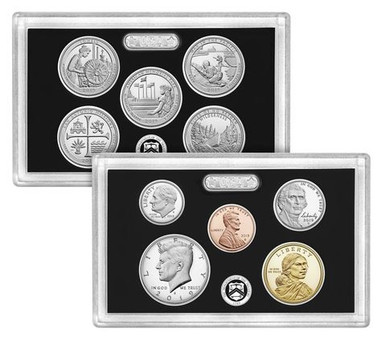
- Standard (Clad) Sets: The base annual set containing copper-nickel versions of circulating coins.
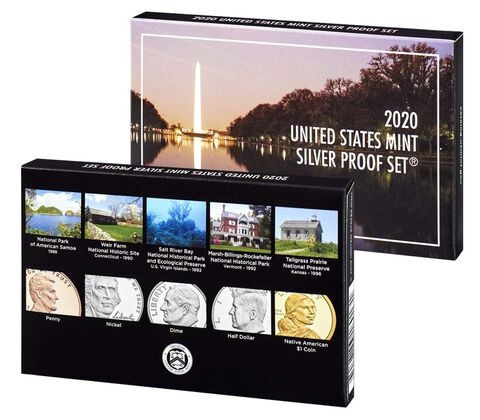
- Silver Proof Sets: Introduced as a regular annual option in 1992, these contain dimes, quarters, and half dollars struck in 90% (or more recently, .999 fine) silver.
- Prestige Sets: Issued between 1983 and 1997, these include the standard proof coins plus a commemorative silver dollar, all housed in a luxury book-style case.
- Quarter-Only Sets: Since the 50 State Quarters program began in 1999, the Mint has released sets containing only the year's quarters.
Discover vintage Proof Sets
Key Factors Influencing Your Proof Sets Values
Why is one 1956 set worth $75 while another might struggle to hit $40? It’s rarely about the coins being "missing." It’s about the technical quality of the strike.
Condition and the Sheldon Rarity Scale
Numismatists use the Sheldon Scale (1–70) to grade coins. For proof sets, we look for "Proof-65" (Choice Proof) or higher. A single "perfect" Proof-70 coin inside a set can skyrocket the set's value, though most sets in original packaging are assumed to be in the PR63 to PR65 range.
The Cameo Effect
In the early days of proof production, the "frosted" look on the portraits was a byproduct of new dies. After a few hundred strikes, that frost wore off, leaving the coins looking brilliant but flat.
- Cameo (CAM): Strong contrast between frosted devices and mirror fields.
- Deep Cameo (DCAM): Intense, heavy frost that makes the portrait look like it's floating on a black pool of water.
Pre-1976 sets with DCAM coins are incredibly scarce and command massive premiums. For example, a standard 1962 set might retail for $99, but if the Franklin Half Dollar inside is a confirmed DCAM, that single coin could be worth hundreds more.
Learn more about coin grading
Understanding the Impact of Packaging on Proof Sets Values
For modern collectors, the "box" matters almost as much as the "bucks." Original Government Packaging (OGP) is the gold standard. If you break the seal or lose the box, proof sets values can drop by 10% to 25%.
- 1936–1954: These were often wrapped in cellophane and tissue paper. This paper contained sulfur, which frequently caused "toning" (color changes). While some collectors love rainbow toning, others see it as damage.
- 1955–1964: The Mint used "flat packs" — clear pliofilm envelopes inside a yellow or white envelope. These are prone to "clouding" if stored in humid areas.
- 1968–Present: Proofs are housed in rigid plastic lenses. These protect the coins well, but the outer cardboard sleeves are fragile. Collectors should look for "fresh" packaging without writing, frayed edges, or water stains.
- Certificates of Authenticity (COA): Starting in the mid-1980s, the Mint included COAs. While the coins are the primary value, a missing COA makes a set "incomplete" to a serious buyer.
Rare Varieties, Key Dates, and Authentication
If you're hunting for a "lottery ticket" in your collection, you’re looking for the No S Errors. In several years, the San Francisco Mint accidentally struck proof coins without the "S" mint mark. These are the holy grails of proof sets values.
- 1975-S No S Roosevelt Dime: Only two are known to exist. One recently carried a market value of roughly $220,000 to $275,000.
- 1968-S No S Roosevelt Dime: A rare error valued around $14,500.
- 1990-S No S Lincoln Cent: Found in standard 1990 proof sets, this cent is missing its mint mark and is valued at approximately $5,750 according to Greysheet data.
Identifying Error Varieties to Maximize Proof Sets Values
Beyond missing mint marks, look for doubled dies (where the design appears doubled) or "Type" varieties. For instance, the 1979-S and 1981-S sets have two versions of the mint mark: Type 1 (filled) and Type 2 (clear). The Type 2 "Clear S" is generally more desirable and carries a higher premium.
Because these rarities are so valuable, counterfeits do exist. Authentication by a third-party service like PCGS or NGC is essential for any "No S" variety. We always recommend checking "population reports" to see how many of a specific error have actually been certified before paying a "rarity" price.
View rare Proof Sets
Market Price Guide: From Vintage Rarities to Modern Trends
The market for proof sets is divided into distinct eras. Here is how the current 2026 market views them:
The Early Classics (1936–1950)
These are the rarest. The 1936 set is the king, with only 3,837 sets produced. Even the 1942 set, which features two different types of nickels (the standard and the "Wartime" silver), commands nearly $1,000 in high grade.
The "Silver" Boom (1950–1964)
These sets all contain 90% silver dimes, quarters, and half dollars. A 1957 set is currently valued around $36, while a 1958 set retails closer to $85. These are popular because they combine numismatic value with the "melt value" of silver.
The Modern Era (1968–2010)
Most of these sets were minted in the millions. Consequently, proof sets values for this era are often flat. A standard 1976 Bicentennial set might only fetch $22. However, the 1999 Silver Proof Set — the first year of the State Quarters — remains a strong performer at roughly $90.
The Recent Appreciation (2010–Present)
Interestingly, some newer sets are showing great potential. The 2012 and 2013 sets had lower mintages than previous years, causing their prices to climb faster than sets from the 1980s. The 2025 Silver Proof Set is currently trading at a premium due to high silver spot prices and limited edition status.
| Year/Type | Mintage (Approx) | Market Value (April 2026) |
|---|---|---|
| 1936 Proof Set | 3,837 | $6,800 |
| 1950 Proof Set | 51,386 | $660 |
| 1999 Silver Proof Set | 804,565 | $90 |
| 2012 Silver Proof Set | 395,443 | $145 |
| 2024 Clad Proof Set | N/A | $80 |
Browse our current Proof Set values
Buying and Selling: Navigating Retail vs. Wholesale Markets
When you see a price online, you need to know if it's a "Buy" or "Sell" price.
- Retail Prices (CPG): This is what you would pay a dealer. These prices cover the dealer's overhead, marketing, and expertise.
- Wholesale/Bid Prices (Greysheet): This is what dealers pay each other. If you are selling a large collection, expect to receive 5% to 20% back of the Greysheet bid.
Why the discount? Dealers often buy in bulk. If a set has a frayed box or a cracked plastic lens, a "market maker" will reject it or demand a steep discount. At USSQ, we pride ourselves on competitive pricing and transparency. Whether you are adding a 2025 Silver Proof Set to your hoard or looking to liquidate an inheritance, understanding these margins is key.
Sell your Proof Sets to USSQ Shop modern Proof Sets
Frequently Asked Questions about Proof Sets
What is the difference between a proof set and a mint set?
A proof set contains coins specifically struck for collectors with a mirror-like finish. A "Mint Set" (or Uncirculated Set) contains coins struck exactly like the ones in your pocket, just taken off the line before they enter circulation. Mint sets usually contain coins from both the Philadelphia and Denver mints, whereas proof sets are typically "S" mint coins.
Are silver proof sets always worth more than clad sets?
Generally, yes. Silver proof sets have intrinsic metal value that provides a "floor" for the price. Even if collector demand for a specific year drops, the silver content ensures the set remains valuable. Clad sets (made of copper and nickel) rely entirely on collector demand and rarity.
How does the condition of the outer box affect the value?
It’s significant! A 1955 "Flat Pack" that has been opened or has "1955" scrawled across the envelope in Sharpie might sell for $20 less than a pristine, unopened envelope. Collectors pay for the "originality" of the set.
Conclusion
Determining your proof sets values doesn't have to be a mystery. By looking at the year of issue, checking for the "Cameo" frost, and ensuring your packaging is in top-notch shape, you can get a very accurate idea of what your collection is worth in today's market.
At USSQ (Coins Online LLC), we’ve been helping collectors since 1999. Whether you're in New Orleans, Louisiana, or anywhere across the United States and Canada, we are here to provide the supplies and sets you need to grow your collection. Proof sets are a beautiful, stable entry point into numismatics — and if you happen to find a "No S" dime, they might just be your best investment yet!
More info about our services Contact us for valuation help
Recent Posts
-

Walking Liberty Half Dollar Value Guide: Key Dates, the 1921 Problem, and What Yours Is Really Worth
Ask a room full of collectors to name the most beautiful U.S. coin and the Walking Liberty half doll
-
The 2026 Semiquincentennial Proof Set: What's in It, Why It Costs $107, and Whether to Buy One
On October 6 at noon Eastern, the U.S. Mint puts the 2026 Semiquincentennial Proof Set on sale at $1