Why the Half Dollar Coin is Still the King of Change
The Half Dollar Coin: America's Most Overlooked Treasure
The half dollar coin is a 50-cent United States coin with one of the richest histories of any denomination in American numismatics. Here's what you need to know at a glance:
- Face value: 50 cents (one half of a dollar)
- First minted: December 1794 (approximately 5,300 pieces)
- Authorized by: The Coinage Act of April 2, 1792
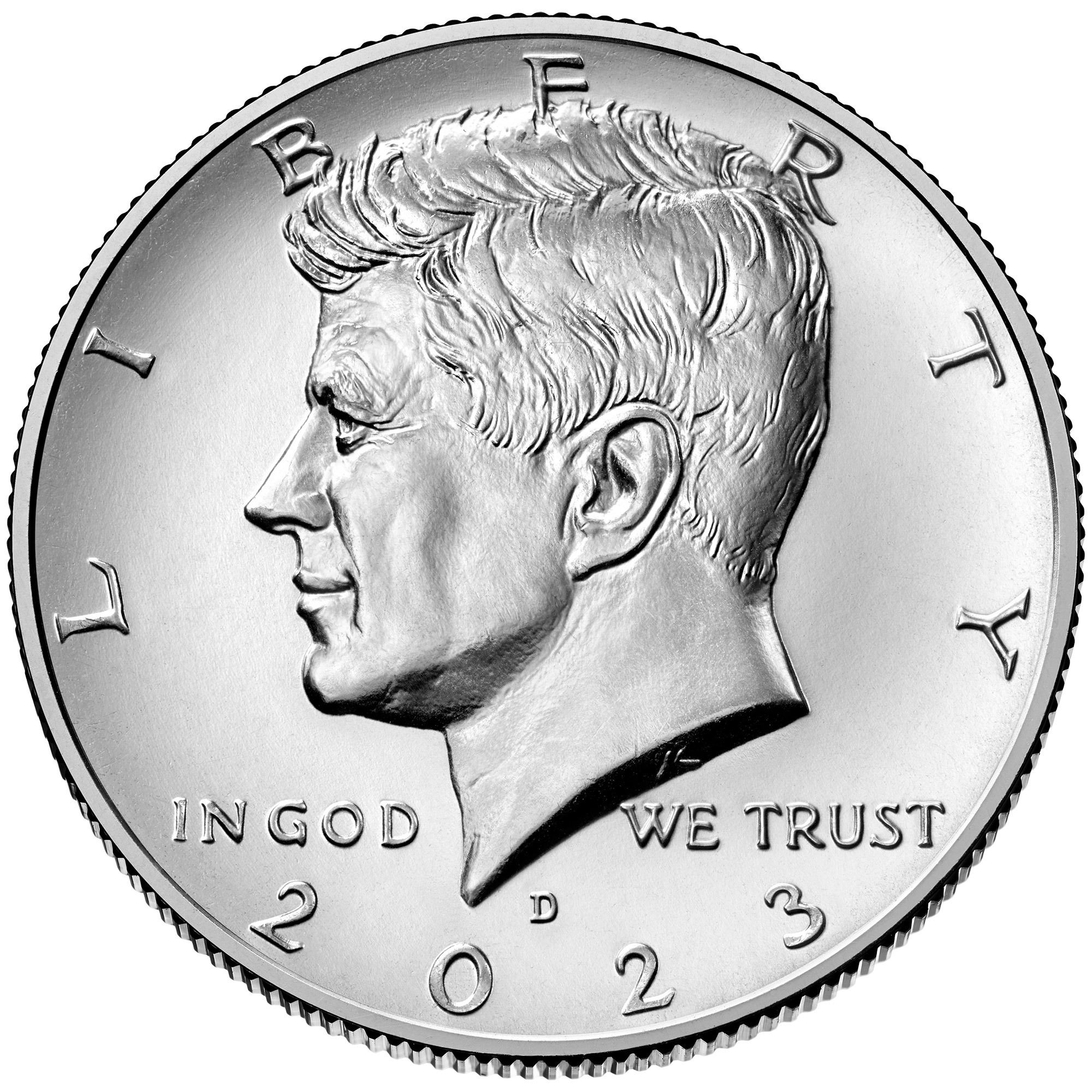
- Current design: John F. Kennedy on the obverse since 1964
- Current composition: Copper-nickel clad (8.33% nickel, balance copper)
- Diameter: 30.61 mm | Weight: 11.34 g | Thickness: 2.15 mm
- Silver content: 90% until 1964, reduced to 40% through 1970, eliminated entirely in 1971
- Largest circulating US coin currently struck by the US Mint
- Circulation status: Minting for general circulation was suspended 2002–2020, then resumed in 2021
Few coins tell the story of America quite like the half dollar. From its earliest silver strikes in 1794 to the emotional rush to buy Kennedy halves in 1964 — when banks in Boston and Philadelphia sold out by noon and rationed purchases to 40 coins per customer — this denomination has always captured the public's imagination.
Yet despite a history spanning more than 230 years, the half dollar is largely a stranger to everyday pockets and cash registers today. More than 2.5 billion Kennedy half dollars had been struck by 1979 — more than all previously minted US half dollars combined — and yet most Americans rarely see one in circulation.
That's exactly what makes it so fascinating to collectors.
Whether you're tracking down a scarce 1970-D with its tiny mintage of just 2.1 million, hunting for 90% silver pre-1965 examples, or eyeing the brand-new 2026 Semiquincentennial "Enduring Liberty" redesign, the half dollar rewards those who pay attention.
This guide covers everything: the full design history, silver content changes, key dates, rare varieties, the Kennedy story, Canadian silver halves, and what's coming in 2026.
The Evolution of the Half Dollar Coin: From 1794 to 2026
The half dollar coin has seen more faces than perhaps any other American denomination. Its journey reflects the artistic and political shifts of a growing nation. While we often think of the current Kennedy design, for over 150 years, the coin featured various allegorical representations of Liberty.
Throughout its history, the major design series have included:
- Flowing Hair (1794–1795): The very first design, featuring Liberty with loose, flowing locks.
- Draped Bust (1796–1807): A more refined Liberty with a draped bustline.
- Capped Bust (1807–1839): Liberty wearing a cloth cap, a favorite for die-variety collectors.
- Liberty Seated (1839–1891): Liberty sitting on a rock, holding a shield.
- Barber (1892–1915): A classical Greek-style head designed by Charles Barber.
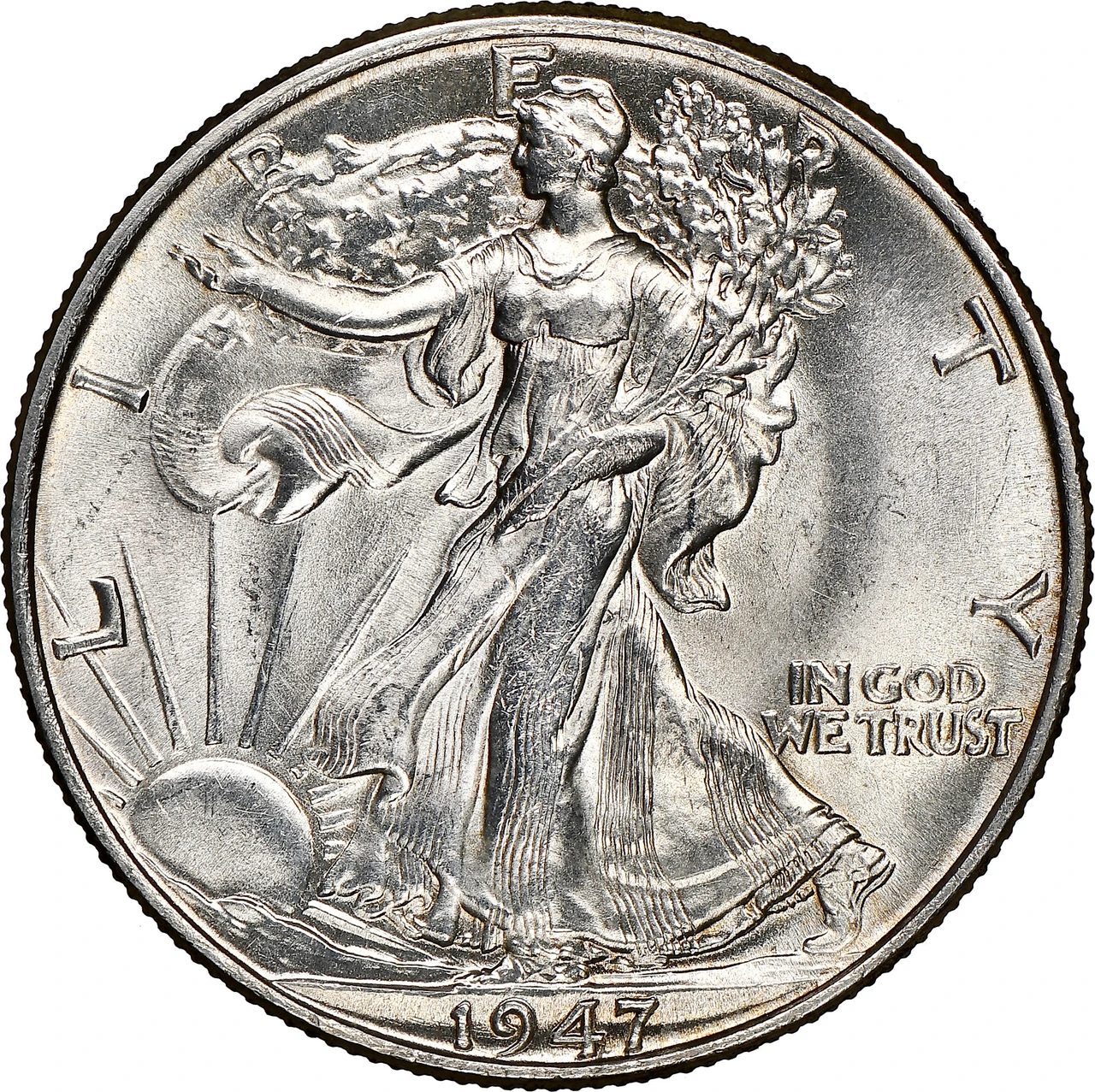
- Walking Liberty (1916–1947): Widely considered America's most beautiful silver coin.
- Franklin (1948–1963): The first to feature a real person who wasn't a president.
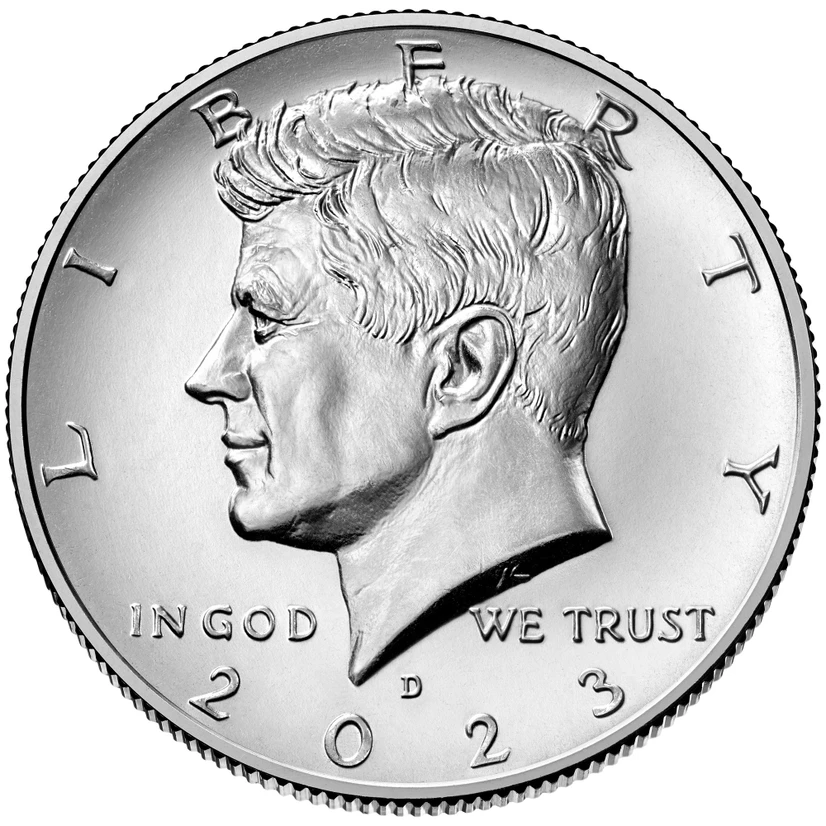
- Kennedy (1964–Present): A tribute to the 35th President.
For a deeper dive into these designs, the Half Dollar page at the US Mint provides excellent visual resources for new collectors.
Early Classics and the Barber Series
The story officially began with the Coinage Act of 1792, but it wasn't until December 1, 1794, that the first 5,300 pieces were delivered. These early "Flowing Hair" coins are massive rarities today. As the Mint expanded, branch facilities began to contribute. The New Orleans Mint, for example, struck its first halves in 1838. The 1838-O is a legendary rarity; only 20 were supposedly struck, and they remain some of the most sought-after specimens in the world.
By the late 19th century, Charles Barber’s design took over. His classical approach gave the coin a formal, "official" look that lasted until the artistic revolution of the early 20th century.
The Walking Liberty and Franklin Eras
In 1916, Adolph A. Weinman (who also designed the Mercury dime) created the Walking Liberty half dollar. It depicts Liberty striding toward the dawn of a new day, wrapped in the stars and stripes. This coin was so popular that its obverse was later resurrected for the American Silver Eagle bullion coin.
In 1948, the design shifted to honor Benjamin Franklin. This was a significant moment in numismatics because it was the first circulating US coin to depict a real person who was not a president. Franklin’s bust appeared on the obverse, while the Liberty Bell took center stage on the reverse. This series was cut short in 1963 following the national tragedy that led to the creation of the Kennedy half dollar.
Silver Content and Composition: Why Collectors Hoard the Half Dollar
If you've ever wondered why people "hunt" for the half dollar coin in bank rolls, the answer is usually silver. Unlike the dime and quarter, which lost all silver content in 1965, the half dollar held onto its precious metal longer.
| Era | Composition | Gross Weight | Silver Content (oz) |
|---|---|---|---|
| 1794–1836 | 89.24% Silver | 13.48 g | ~0.386 oz |
| 1837–1964 | 90% Silver | 12.50 g | 0.3617 oz |
| 1965–1970 | 40% Silver | 11.50 g | 0.1479 oz |
| 1971–Present | Copper-Nickel Clad | 11.34 g | 0.00 oz |
The 1837 Fineness Standard
The Coinage Act of 1837 was a pivotal moment for the half dollar coin. It simplified the silver fineness from the awkward .8924 standard to a clean .900 (90%) silver and 10% copper. This remained the standard for over 125 years. During this time, the weight was set at 12.50 grams, making a "junk silver" half dollar significantly heavier than the modern clad versions we see today.
The 1965 Transition to Clad
By the mid-1960s, a global silver shortage was looming. The Coinage Act of 1965 removed silver from dimes and quarters entirely. However, because of the half dollar's special status as a memorial to JFK, it was allowed to keep a reduced silver content of 40% (silver-clad) until 1971.
This 40% silver era (1965–1970) is a "sweet spot" for roll hunters. Many people know to look for 1964 coins, but they often overlook the 1965–1970 dates, which still contain a significant amount of precious metal. If you are looking to start or expand a silver collection, Contact USSQ for collection inquiries regarding our available inventory.
The Kennedy Half Dollar Coin: A Presidential Legacy
The half dollar coin we know today was born from grief. Following the assassination of John F. Kennedy in November 1963, there was an immediate push to honor him on a coin. Jacqueline Kennedy personally requested that he be placed on the half dollar because she didn't want to replace George Washington on the quarter.
The design was finalized in record time. Gilroy Roberts, the Chief Engraver of the Mint, designed the obverse, while Frank Gasparro designed the reverse, based on the Presidential Seal. For more on the technical specifications of this series, check out the Kennedy half dollar entry.
The 1964 Kennedy half dollar coin
The 1964 issue was the first Kennedy half dollar and the only regular circulation strike made in 90% silver. Nearly 430 million were minted, but many disappeared from everyday use almost right away. Americans saved them both as a tribute to President Kennedy and for their silver content.
One rare variety from this year is the "Accented Hair" proof. Jacqueline Kennedy requested changes to the hair details above the ear, but not before an estimated 40,000 to 100,000 proof coins were struck with the original design. These are highly prized by collectors today. Additionally, the 1964 Special Mint Set (SMS) half dollar is one of the rarest non-error coins in the series, with only about a dozen known to exist.
Circulation Status and Hoarding
Why don't we see these in change? It’s a combination of history and psychology. After the silver was removed in 1971, the public was already in the habit of hoarding the coins. By the time enough clad coins were available, many vending machines and banks had already stopped providing slots for them.
In 2002, the U.S. Mint stopped making the half dollar coin for everyday circulation and produced it mainly for collector issues, often called NIFC, or "Not Intended For Circulation." As Federal Reserve stockpiles shrank, regular circulation production resumed in 2021. Today, you can still spot modern Kennedy half dollars if you are lucky enough to pick up a roll from a local bank.
Rare Varieties and the Future of the half dollar coin
For the serious numismatist, the half dollar coin offers some of the most exciting "treasure hunts" in the hobby.
- 1838-O: As mentioned, a "holy grail" for collectors.
- 1861-O Louisiana Issue: During the Civil War, this mint was held by the US, then the State of Louisiana, then the Confederacy. All three used the same dies to strike halves!
- 1970-D: This is the "key" to the Kennedy series. It was only issued in Mint Sets, with a mintage of just 2.1 million.
- 1974-D Double Die Obverse: A popular error for those with a magnifying glass.
Collecting the Canadian Silver half dollar coin
Our friends to the north also have a storied 50-cent tradition. The Canadian 80% silver half dollar (minted 1920–1967) is a favorite for silver stackers. Each coin contains 0.2925 troy ounces of silver. Much like the US coins, these disappeared from circulation in 1968 when the Royal Canadian Mint switched to pure nickel. You can learn more about these at the Canadian fifty-cent coin resource.
The 2026 Semiquincentennial Redesign
As of April 2026, the half dollar coin enters a milestone year. To mark the 250th anniversary of the United States, the U.S. Mint released a special Semiquincentennial design for the series.
The 2026 "Enduring Liberty" half dollar features a stunning obverse by Donna Weaver, showing a close-up of the Statue of Liberty. The reverse, designed by Beth Zaiken, depicts Liberty passing her torch to a younger generation, symbolizing the continuity of American ideals. This is the first major redesign since the 1776–1976 Bicentennial issue, and it is expected to be a massive hit with collectors.
Frequently Asked Questions about Half Dollars
Why did the half dollar disappear from circulation?
It was a "perfect storm" of events. The initial 1964 silver hoarding was followed by rising silver prices in the late 60s, leading people to melt coins for profit. By the time the copper-nickel clad version arrived in 1971, the public had simply lost the habit of using them, and businesses found them too bulky for standard cash drawers.
What is the most valuable Kennedy half dollar?
While most are worth face value, certain rarities are worth thousands. The 1964 Special Mint Set (SMS) version has sold for over $47,000. High-grade 1970-D coins and the 1964 "Accented Hair" proofs in top condition also command significant premiums.
Are half dollars still being made in 2026?
Yes! Not only are they being made, but 2026 is a landmark year. The Mint is producing the special "Enduring Liberty" design for the 250th anniversary of the United States. These are being struck at the Philadelphia, Denver, and San Francisco mints.
Conclusion
At USSQ, we believe the half dollar coin remains the "King of Change." Its large size makes it the perfect canvas for American artistry, and its silver-rich history makes it a rewarding pursuit for both casual hobbyists and serious investors.
Whether you are looking for a 1794 Flowing Hair classic or the latest 2026 Semiquincentennial release, we are here to help. As part of Coins Online LLC, we have been serving the numismatics community since 1999. With over 5,000 products, competitive prices, and a 14-day return policy, we make it easy to build a collection you can be proud of.
Ready to add a classic to your collection? Shop for collectible half dollar coins at USSQ today and explore a denomination that has played a major role in American coin history for more than two centuries.
Recent Posts
-

Walking Liberty Half Dollar Value Guide: Key Dates, the 1921 Problem, and What Yours Is Really Worth
Ask a room full of collectors to name the most beautiful U.S. coin and the Walking Liberty half doll
-
The 2026 Semiquincentennial Proof Set: What's in It, Why It Costs $107, and Whether to Buy One
On October 6 at noon Eastern, the U.S. Mint puts the 2026 Semiquincentennial Proof Set on sale at $1