Dating the Undatable Buffalo Nickel
What Is an Indian Head Five Cents with No Date Worth?
Indian head five cents with no date is one of the most common finds in a coin jar or old collection — and most are worth very little. Here's the quick answer:
| Condition | Typical Value |
|---|---|
| No date, no mint mark (cull) | $0.06 - $0.20 |
| No date, good detail otherwise | Up to $1.00 |
| Acid-restored date (key date revealed) | $50 - $3,000+ |
| Professionally graded dated example | Varies widely |
Bottom line: without a visible date, a Buffalo Nickel has almost no numismatic premium. But there's a catch — a rare key date could be hiding under all that wear.
These coins are officially called Buffalo Nickels, minted from 1913 to 1938. The "Indian Head" on the front is actually a composite portrait of three Native American chiefs, designed by sculptor James Earle Fraser. Collectors and dealers often call them "Indian Head five cents" — both names refer to the same coin.
So why is the date missing? It's not a minting error. The date was placed on a raised, high-relief area of the coin — right on the Native American's shoulder. That spot wore down faster than almost any other part of the design during normal circulation.
Decades of passing through hands, cash registers, and pockets simply rubbed the digits away.
The result? Millions of smooth-shouldered nickels with no year to identify them — and very little collector value as a result.
Why Your Indian Head Five Cents with No Date Lost Its Year
At Coins Online LLC, we often hear from collectors who have found a handful of these smooth-shouldered beauties and wonder if they’ve discovered a rare mint error. We hate to be the bearers of bad news, but a dateless Buffalo Nickel is almost never an error; it is a victim of its own beautiful, yet impractical, design.
When James Earle Fraser created the Buffalo Nickel in 1913, he was focused on artistic realism. He used a composite portrait of three different Native American chiefs to create a quintessentially American image. However, from a technical standpoint, the design was flawed. Unlike many other coins where the date is "incuse" (sunken into the metal) or protected by a high rim, the date on the Buffalo Nickel was placed on the highest point of the obverse relief: the Native American's shoulder.
The Vulnerable Design of the Indian Head Five Cents with No Date
Think of the shoulder as the "peak" of a mountain. Whenever the coin rubbed against another nickel in a pocket or slid across a wooden shop counter during the Great Depression, that peak took the brunt of the friction. Because the metal was a 75% copper and 25% nickel alloy—which is quite durable but not invincible—the four digits of the year were the first things to go.
By the time these coins had been in circulation for just a decade or two, many were already "slick." The Mint actually recognized this problem quite early. In mid-1913, they modified the reverse design because the words "FIVE CENTS" were also wearing off too quickly (changing from a raised mound to a recessed line), but they never fully fixed the vulnerability of the date on the shoulder.
Distinguishing Nickels from Indian Head Cents
It is a common point of confusion for new hobbyists to mix up the "Indian Head" nickel with the Indian Head cent. While both feature Native American-inspired imagery, they are very different animals. The Indian Head cent (minted 1859–1909) is a small penny made of copper-nickel or bronze, featuring a Caucasian Liberty in a headdress. You can learn more about those specific Indian Cent Specifications to see the difference in size and metal.
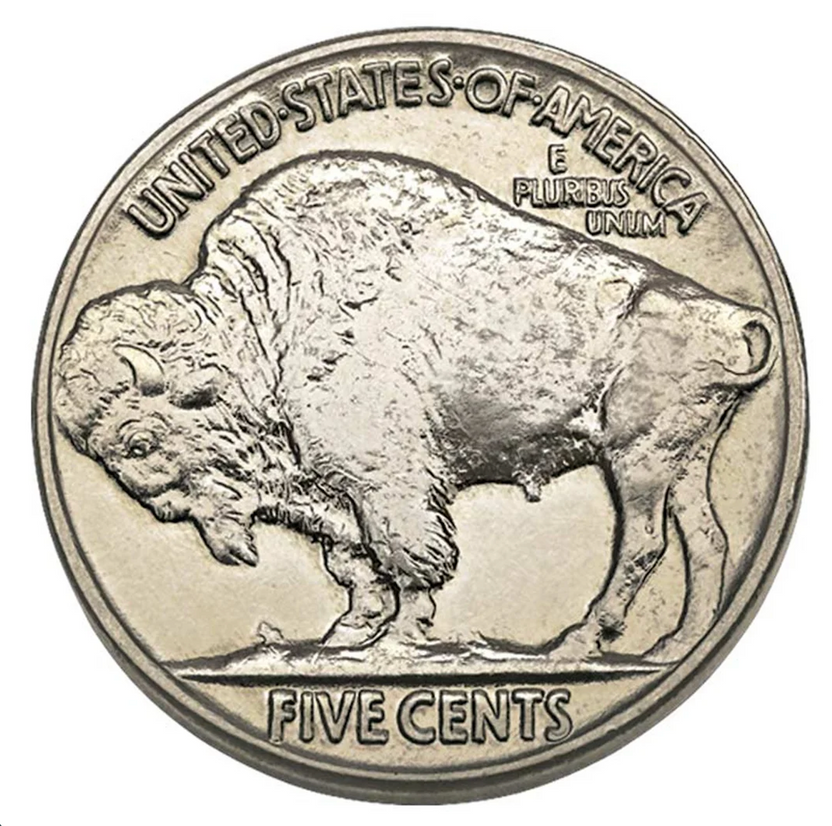
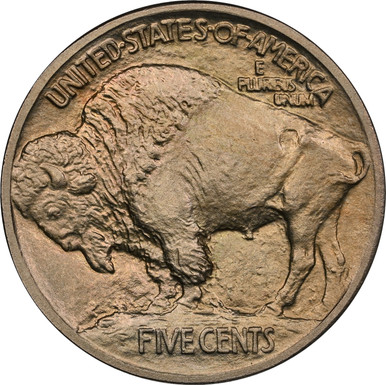
Our indian head five cents with no date is larger, heavier, and has that iconic American Bison on the back. If your coin is silver-colored and has a buffalo on the reverse, you’ve got a nickel. If it’s copper-colored and has a wreath on the back, you’re looking at a cent.
How to Identify and Value a Dateless Buffalo Nickel
If you are holding a dateless nickel, you might feel like you’re holding a mystery. While the year is gone, other clues remain that can help us determine its story and its worth. At Coins Online LLC, we categorize these as "culls" or "filler" coins. They are perfect for young collectors or for use in crafts, but they don't carry the high premiums of their dated cousins.
Determining the Value of an Indian Head Five Cents with No Date
In numismatics, information is money. Without a date, the coin loses its "collector" status and becomes a "bulk" item. Typically, these sell for anywhere from $0.06 to $0.20 each.
Why more than five cents? Because they are no longer being minted and have a nostalgic "cool factor." Many people buy them in bulk to make buttons for Western-style shirts, inlay them into knife handles, or create unique jewelry. If the coin is in decent shape otherwise—meaning you can still see the braid in the hair or the tail of the buffalo—it might fetch closer to $1.00 from someone looking for a nice "hole filler" for a budget album.
Identifying Mint Marks on the Reverse
Even if the date is gone, the "Mint Mark" might still be visible! This is a tiny letter on the reverse (back) of the coin, located directly under the words "FIVE CENTS."
- No Mark: The coin was minted in Philadelphia.
- D: The coin was minted in Denver.
- S: The coin was minted in San Francisco.
Finding an "S" or a "D" on a dateless nickel is exciting because San Francisco and Denver usually had much lower mintages than Philadelphia. While it doesn't make a dateless coin worth a fortune, it does increase the odds that the hidden date belongs to a rare year.
Techniques to Reveal a Hidden Date
So, you have a dateless nickel and you’re dying to know if it’s a common 1936 or a legendary 1913-S. Is there a way to look into the past? Yes, but it comes with a heavy price.
Chemical Restoration and the Indian Head Five Cents with No Date
The most famous method for "resurrecting" a date is using a chemical called ferric chloride, often sold under the brand name "Nic-A-Date." When a coin is struck at the Mint, the pressure of the dies actually changes the molecular structure of the metal underneath the design. Even when the surface is worn smooth, that "compressed" metal remains underneath.
By applying a drop of acid to the shoulder area, the chemical eats away at the surrounding metal faster than the compressed metal of the date. After a few minutes, the year magically reappears as a ghost-like image.
Risks of Acid Testing
Before you reach for the acid, we have to give you a stern warning: Acid testing permanently damages the coin.
Professional numismatists and grading services like NGC or PCGS generally view acid-restored coins as "damaged." The acid leaves a dull, etched, grey spot on the shoulder that looks like a chemical burn. While a restored 1913-S nickel is worth more than a dateless one, it will only ever be worth a fraction (perhaps 10-20%) of what a naturally dated 1913-S would fetch. Most serious collectors avoid these "acid dates" because they lack the original luster and beauty of a natural coin.
Key Varieties and Hidden Rarities
Why do people bother with acid at all? Because the "lottery ticket" factor is real. There are several "key dates" in the Buffalo Nickel series that are worth hundreds or even thousands of dollars in high grades.
Hidden Key Dates to Look For
If you have a dateless nickel with an "S" mint mark, you might be sitting on a 1913-S Type 2, a 1921-S, or a 1926-S. A 1921-S in decent condition can easily top $90, and a 1913-S Type 2 is a prize in any collection.
There are also famous varieties that don't even require a date to identify! The most famous is the 1937-D 3-Legged Buffalo. Due to a damaged die, the buffalo's front right leg appears to be missing. If you find a buffalo with three legs, it doesn't matter if the date is worn off—you've found a coin worth hundreds of dollars!
Another one to watch for is the 1916 Doubled Die Obverse. If the "Indian Head" looks like it has a blurry or double-stamped chin and eye, you might have a winner, even if the date is a struggle to read.
Frequently Asked Questions about Dateless Nickels
Is a no-date Buffalo Nickel worth more than five cents?
Yes! While they aren't going to fund your retirement, they almost always trade for a premium over face value. Expect to get at least 6 to 10 cents in bulk, or up to 20-50 cents if you're selling them individually to casual collectors. At Coins Online LLC, we see these as a great way for new collectors to get a piece of history without breaking the bank.
What does the 'F' under the date area mean?
Many people see the small "F" and think it stands for "Fake" or perhaps a specific mint. It actually stands for James Earle Fraser, the designer. That "F" is present on every single authentic Buffalo Nickel. If you see it, it's a good sign your coin is genuine!
Can I still spend a Buffalo Nickel with no date?
Technically, yes. It is still legal tender in the United States and Canada. However, we wouldn't recommend it. Most modern vending machines won't recognize the weight and wear of an old nickel, and you'd be giving away a piece of history for 5 cents when it's worth at least double that to a collector!
Conclusion
The indian head five cents with no date is a fascinating artifact of American history. It tells a story of a time when coins worked hard and stayed in circulation for decades, through wars and economic shifts. Whether you decide to keep yours as a lucky charm, use acid to reveal its hidden birthday, or start a new collection with us, these "slick" nickels remain a favorite among numismatists for their rugged beauty.
Since 1999, Coins Online LLC has been helping collectors find the missing pieces for their albums. With over 5,000 products, competitive prices, and a 14-day return policy, we are your premier source for all things numismatic. Whether you're looking for a pristine 1913-S or just some supplies to house your bulk finds, we're here to help. Start your collection today and discover the stories hidden in your pocket change!
See our collector coins for current prices.
Recent Posts
-

Walking Liberty Half Dollar Value Guide: Key Dates, the 1921 Problem, and What Yours Is Really Worth
Ask a room full of collectors to name the most beautiful U.S. coin and the Walking Liberty half doll
-
The 2026 Semiquincentennial Proof Set: What's in It, Why It Costs $107, and Whether to Buy One
On October 6 at noon Eastern, the U.S. Mint puts the 2026 Semiquincentennial Proof Set on sale at $1