Indian Head Penny 1898 Price Guide and Market Trends
1898 Indian Head Penny Price Guide: What Is It Worth Today?
The indian head penny 1898 is one of the most accessible vintage U.S. coins you can add to your collection — but its value varies dramatically depending on condition.
Here's a quick look at current market values (as of April 2026):
| Grade | Condition | Estimated Value |
|---|---|---|
| G-4 | Good | ~$3.62 |
| VG-8 | Very Good | ~$4.96 |
| F-12 | Fine | ~$6.25 |
| VF-20 | Very Fine | ~$10 |
| EF-40 | Extremely Fine | ~$19 |
| AU-50 | About Uncirculated | ~$30 |
| MS-63 | Uncirculated | ~$92 |
| PR-63 | Proof | ~$313 |
Key facts at a glance:
- Minted exclusively in Philadelphia (no mint mark)
- Mintage: 49,821,284 business strikes
- Composition: 95% copper, 5% tin and zinc
- Weight: 3.11 grams | Diameter: 19 mm
- Designer: James B. Longacre
- Top auction record: $1,495 for an AU58 example (Heritage Auctions, 2007)
With nearly 50 million struck, circulated examples are easy to find and affordable. But high-grade survivors — especially those retaining original red luster — are genuinely scarce. Only an estimated 200 examples are believed to exist in grades MS-60 or better, and just 30 coins in MS-65 or higher.
Whether you're filling a date set or hunting for a gem uncirculated example, this guide covers everything you need to know about buying, grading, and valuing the 1898 Indian Head cent.
Design and Historical Context of the 1898 Indian Head Cent
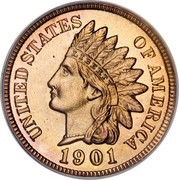
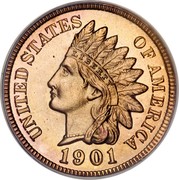
When you hold an indian head penny 1898, you aren't just holding a piece of copper; you're holding a snapshot of a pivotal year in American history. The design itself, created by James B. Longacre, is one of the most beloved in U.S. numismatics. Interestingly, the "Indian" on the obverse isn't a Native American at all. It is actually a depiction of Lady Liberty wearing a stylized Native American headdress.
Legend has it that a Native American chief visiting the mint playfully placed his headdress on the head of Longacre’s young daughter, Sarah, which inspired the sketch. While historians often debate the literal truth of this "daughter-as-model" story, the charm of the design remains undisputed. The reverse of the coin features an elegant oak wreath and a small shield at the top, symbolizing national strength and unity.
In 1898, the world was changing rapidly. This was the year the U.S.S. Maine exploded in Havana harbor, an event that propelled the United States into the Spanish-American War. While these pennies were being struck at the Philadelphia Mint, H.G. Wells was publishing his sci-fi masterpiece War of the Worlds, and the very first Indian brand motorcycle was being assembled.
At USSQ, we believe that understanding this context makes the hobby so much more rewarding. If you are looking to start or complete your set, you can Explore our collection of Indian Head Pennies at USSQ.
Determining the Value of an Indian Head Penny 1898
The value of an indian head penny 1898 is primarily driven by its "grade"—a professional assessment of how much wear the coin has suffered since leaving the mint. Because the 1898 mintage was quite high (nearly 50 million), common circulated coins are very affordable, often selling for $3 to $7.
However, market trends show a significant "price jump" once you reach the Mint State (MS) levels. A coin that has never been in a pocket or a cash register—retaining its original mint luster—is a true prize. While a Fine-12 coin might cost you about $6, an MS-65 specimen can easily fetch over $245, with "Full Red" examples climbing toward $700 or more.
To help you navigate the current market, we have compiled this value table based on recent retail and auction data:
| Grade | Description | Market Value (Approx.) |
|---|---|---|
| G-4 | Heavily worn, but all major details visible | $3.62 |
| F-12 | Moderate wear; Liberty's hair and headdress show detail | $6.25 |
| EF-40 | Very light wear on high points; sharp details | $19.00 |
| AU-50 | Trace wear; some original mint luster remains | $30.00 |
| MS-63 | No wear; attractive luster; some marks or spots | $92.00 |
| MS-65 | Gem quality; brilliant luster; very few marks | $245.00 |
If you're ready to add one of these beauties to your folder, you can Find current values and available 1898 Indian Head Pennies at USSQ.
Grading the Indian Head Penny 1898
Grading is both an art and a science. When we look at an indian head penny 1898, we follow standards set by organizations like PCGS and NGC. For this specific series, the first place to look for wear is the word "LIBERTY" on the headband.
- Good (G-4): The letters in LIBERTY are worn away or barely visible.
- Fine (F-12): All letters in LIBERTY are clearly visible, though worn.
- Extremely Fine (EF-40): The tips of the feathers in the headdress are sharp, and the wear is very slight.
- Uncirculated (MS-60+): No wear at all. The coin should look exactly as it did the day it was struck, though the color may have changed over time.
Luster is the "glow" of a coin. On a copper penny, this luster is fragile. Once a coin is handled, the oils from skin and friction from pockets dull that shine. To learn more about how we evaluate these pieces, you can Learn more about coin grading standards at USSQ.
Investing in the Indian Head Penny 1898
Is the indian head penny 1898 a good investment? While it isn't a "key date" like the 1877 or the 1909-S, it offers excellent value for the collector-investor. Survival estimates suggest that while millions were made, only about 4,000 survive in any collectible grade today.
High-grade survivors are particularly scarce. PCGS estimates that only about 30 examples exist in MS-65 or better. This "condition rarity" means that if you find a top-tier coin, its value is likely to appreciate as more collectors enter the market. Auction records, such as the $1,495 paid for an AU58 example at Heritage Auctions, show that even "almost" uncirculated coins can command high prices if they have exceptional eye appeal. You can Discover investment-grade Indian Head Pennies at USSQ to see what is currently available.
Market Trends: Color Designations and Proof Strikes
When dealing with copper coins like the indian head penny 1898, you will see three important letters: BN, RB, or RD. These refer to the color of the coin, which is caused by oxidation.
- BN (Brown): Most surviving 1898 pennies are brown. This is the natural color copper turns after years of exposure to air.
- RB (Red and Brown): These coins show a mix of the original mint orange-red and the later brown patina. They usually command a premium over BN coins.
- RD (Red): These are the "holy grails." A "Full Red" 1898 penny looks like it was minted yesterday. Because copper oxidizes so easily, finding a Red coin from 1898 is incredibly difficult.
Beyond business strikes, the Philadelphia Mint also produced about 1,795 Proof coins in 1898. These were struck on specially polished planchets with multiple strikes to ensure a mirror-like finish. A PR-63 Proof is currently valued at approximately $313, making it a luxurious addition to any collection. You can View our selection of 1898 Indian Head Pennies by color designation at USSQ.
Notable Varieties and Die Errors
For the "treasure hunters" among us, the indian head penny 1898 has a few secrets. Die varieties and errors are a fascinating sub-field of numismatics.
- Misplaced Dates (MPD): There are two recognized "Misplaced Date" varieties for this year, known as FS-401 and FS-402. In these cases, parts of the date digits can be seen peeking out from the denticles (the tooth-like dots around the edge) or the base of the bust.
- Die Cracks and Cuds: As the steel dies used to strike the coins aged, they would crack. You might find an 1898 penny with a raised line of copper (a die crack) or a blob of copper at the edge (a cud).
- Off-Center and Double Strikes: These are dramatic mint errors where the coin wasn't properly aligned. While rare, these can increase the value of a common penny into the hundreds of dollars.
- Clipped Planchets: Occasionally, the machine that punched out the copper discs (planchets) would overlap, creating a coin with a "bite" taken out of it.
On the rarity scale, most 1898 varieties fall into the R-4.2 range (scarce but available), but high-grade error coins are significantly rarer.
Frequently Asked Questions about the 1898 Penny
What is the mintage of the 1898 Indian Head Penny?
The Philadelphia Mint produced exactly 49,821,284 business strike pennies in 1898. Because they were all made in Philadelphia, they do not have a mint mark. If you see an Indian Head penny with an "S" on the back, it was made in San Francisco (but only in 1908 and 1909!).
Is the 1898 Indian Head Penny rare?
In "Good" condition, no. You can find them at almost any coin shop. However, it is a "condition rarity." Finding an 1898 penny in MS-65 (Gem Uncirculated) is very difficult, with only about 30 such coins estimated to survive.
What is the melt value of an 1898 penny?
The 1898 penny is 95% copper. Based on current copper prices, the melt value is usually between $0.03 and $0.04. However, we strongly advise against melting them! Their numismatic (collector) value is almost always much higher than the metal value.
Conclusion
The indian head penny 1898 is a classic of American coinage. Whether you are attracted to its 19th-century history, the beautiful artistry of James B. Longacre, or the thrill of hunting for a rare "Full Red" specimen, there is something for every collector here.
At USSQ (Coins Online LLC), we have been helping collectors find the perfect additions to their sets since 1999. We offer competitive prices, low shipping, and a 14-day return policy on over 5,000 products. The best way to preserve your pennies is to keep them in PVC-free holders and avoid cleaning them, as cleaning can permanently damage the coin's value.
Ready to find your next treasure? More info about Indian Head Pennies is just a click away!
See our wheat pennies for current prices.
Recent Posts
-

Walking Liberty Half Dollar Value Guide: Key Dates, the 1921 Problem, and What Yours Is Really Worth
Ask a room full of collectors to name the most beautiful U.S. coin and the Walking Liberty half doll
-
The 2026 Semiquincentennial Proof Set: What's in It, Why It Costs $107, and Whether to Buy One
On October 6 at noon Eastern, the U.S. Mint puts the 2026 Semiquincentennial Proof Set on sale at $1