Don't Pass the Buck on These Most Expensive Buffalo Nickels
The Most Expensive Buffalo Nickels at a Glance
The most expensive buffalo nickel ever sold is the 1918/7-D Overdate, which fetched over $350,000 at auction in high grade. But several other varieties aren't far behind.
Here are the top most valuable Buffalo Nickels by record auction price:
| Rank | Coin | Record Auction Price |
|---|---|---|
| 1 | 1918/7-D Overdate (MS65) | $350,750 |
| 2 | 1926-S (NGC MS66) | $322,000 |
| 3 | 1916 Doubled Die Obverse (MS64) | $281,750+ |
| 4 | 1920-D (MS66) | $138,000 |
| 5 | 1917-S (MS67) | $138,000 |
| 6 | 1937-D 3-Legged (MS66) | $125,000+ |
| 7 | 1927-S (MS66) | $125,350 |
| 8 | 1919-S (MS66) | $109,250 |
| 9 | 1924-S (MS66) | $105,750 |
| 10 | 1913 Type 1 (PCGS AU-58) | ~$79,312 |
Most Buffalo Nickels in average circulated condition are worth just a few dollars. But the right date, mint mark, or error — in the right grade — can push a five-cent coin into six-figure territory.
That gap is enormous. And it's exactly why knowing what to look for matters so much.
Buffalo Nickels were minted from 1913 to 1938. In that 25-year run, a handful of coins slipped out of the mint with overdates, polishing errors, and doubled dies. Most went unnoticed for decades. Some are still turning up in old rolls and inherited collections today.
The difference between a $5 coin and a $350,000 coin can come down to a single digit hidden inside the date.
Below, we break down every major variety worth knowing — with auction records, grading context, and tips to help you spot one.
The Design Legacy of James Earle Fraser
The Buffalo Nickel, also known as the Indian Head Nickel, is widely considered one of the most beautiful and "distinctly American" coins ever produced. It was designed by the renowned sculptor James Earle Fraser), who had studied under the legendary Augustus Saint-Gaudens. Fraser’s goal was to move away from the European-style "Liberty" figures and create something that captured the spirit of the American frontier.
The obverse (front) of the coin features a powerful Native American profile. Rather than depicting a single individual, Fraser created a composite portrait using three different Native American chiefs as models: Iron Tail (a Cheyenne), Two Moons (a Sioux), and Big Tree (a Kiowa). This design was a radical departure from previous coins, which often used Caucasian models dressed in Native American headdresses.
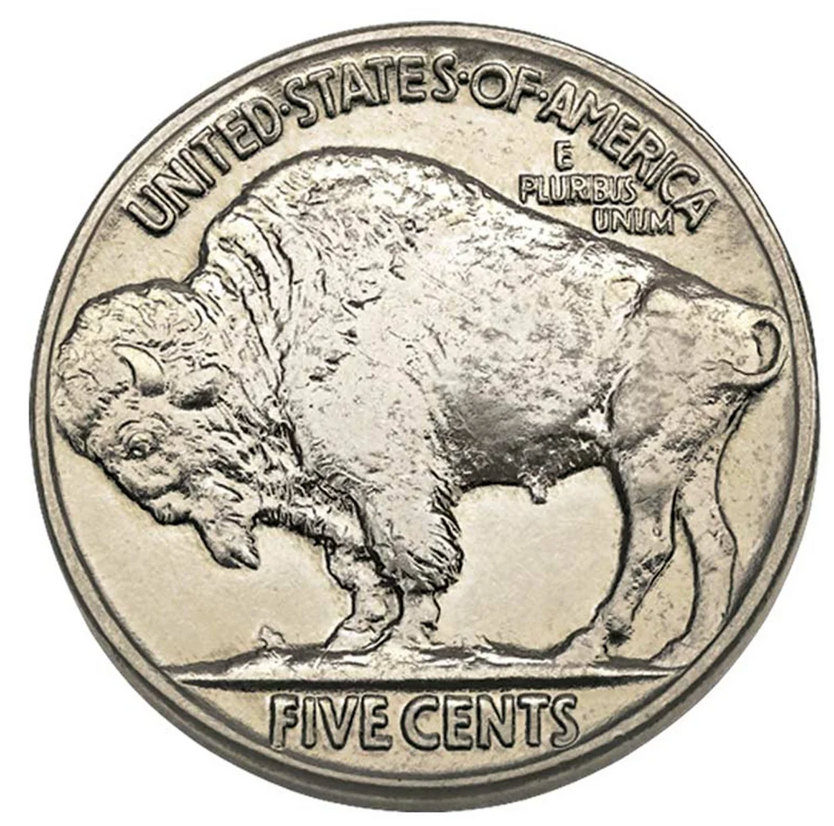
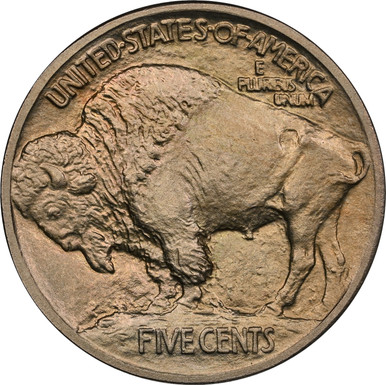
On the reverse (back), Fraser featured a massive American bison. While often called a "buffalo," it is actually a bison. The inspiration for this design was Black Diamond), a famous bison that lived at the Central Park Zoo in New York City.
Type 1 vs Type 2: The First Change
In the very first year of production, 1913, the mint realized there was a problem. The original design, known as Type 1, featured the bison standing on a raised mound of dirt with the words "FIVE CENTS" embossed directly on the mound. Because the denomination was the highest point on the coin, it began to wear off almost immediately in circulation.
To fix this, the mint transitioned to the Type 2 design later in 1913. They flattened the mound into a straight line and recessed the "FIVE CENTS" into a protected area below the line. This change helped the denomination last longer, but it didn't solve all the design's problems—the date on the front remained on a raised shoulder, leading to millions of "dateless" Buffalo Nickels that we still see today.
Countdown of the Most Expensive Buffalo Nickel Varieties
When we look at the most expensive buffalo nickel sales in history, we see a mix of low-mintage "key dates" and spectacular mint errors. Here is a closer look at the heavy hitters that dominate the auction blocks.
1. 1918/7-D Overdate ($350,750)
This coin is the undisputed king of the series. It occurred when a mint worker accidentally impressed a 1918 hub over a 1917 hub on a single die. The result is a clear "7" visible under the "8" in the date. Because this error wasn't discovered by collectors until the 1930s, most of these coins circulated heavily. Finding one in Mint State is incredibly difficult—there are only about 85 to 110 known uncirculated examples. A PCGS MS65 specimen set the record at $350,750 in 2006.
2. 1926-S ($322,000)
The 1926-S Buffalo Nickel holds the title for the lowest mintage in the entire series, with only 970,000 pieces struck. While you can find circulated versions for a few hundred dollars, high-grade examples are "condition rarities." The San Francisco mint was notorious for poor strikes during this era, making a well-struck, Gem-condition 1926-S a six-figure treasure.
3. 1916 Doubled Die Obverse ($281,750+)
This is a dramatic "doubled die" error where the date and the Native American’s feathers show clear, thick doubling. Despite a high mintage for the year, this variety went unnoticed for half a century. Today, it is one of the most sought-after varieties in all of US numismatics.
4. 1937-D 3-Legged Buffalo ($125,000+)
Perhaps the most famous coin in the series, the 1937-D 3-Legged Buffalo Nickel was created by accident. A mint employee, trying to remove "clash marks" from a damaged die, over-polished the surface so much that he accidentally erased the bison's front right leg. While thousands exist in circulated grades, an MS66 or higher can easily fetch over $100,000.
5. 1920-D, 1917-S, and 1927-S
These three coins share a common trait: they are exceptionally rare in high grades. The 1920-D is a key date because the Denver mint stopped making nickels for three years afterward due to a recession. The 1917-S and 1927-S suffer from notoriously weak strikes; finding one with "full horn" detail and original luster is a monumental task for any collector.
Key Dates and Rare Mint Errors
If you are hunting through a collection, you need to know where to look. The mint mark—if there is one—is located on the reverse, right below the "FIVE CENTS" denomination.
- No Mark: Philadelphia
- D: Denver
- S: San Francisco
While the big names like the 3-Legged Buffalo get all the glory, there are several other "hidden" errors that can make a coin the most expensive buffalo nickel in a local shop.
Identifying the Most Expensive Buffalo Nickel Errors
- 1935 Doubled Die Reverse: Look closely at the words "FIVE CENTS" and "E PLURIBUS UNUM" on the back. This is the only major doubled die reverse in the series. An MS68 example once sold for $57,500.
- 1929 Two Feathers: This variety occurred when the obverse die was over-polished, removing the small third feather from the Native American’s headdress. These can be worth over $10,000 in high grades.
- 1914/3 Overdate: Similar to the 1918/7-D, this features a 4 struck over a 3. It is much subtler but still carries a massive premium, often selling for $3,000 to $7,000 even in modest condition.
- 1936-D 3.5 Legs: A "cousin" to the famous 3-legged version, this one shows the leg partially faded. It’s a great find for those who can't quite afford the full 3-legged price tag.
Market Factors for the Most Expensive Buffalo Nickel Grades
Value isn't just about the date; it's about the "strike." Because the Buffalo Nickel design was so high-relief, the dies wore out quickly. This resulted in many coins looking "mushy" even when they were brand new.
Collectors look for:
- The Horn: On the bison, the horn is one of the first things to wear down. A "full horn" nickel is the gold standard for high-grade collectors.
- The Tail: Details in the bison's tail are often weak. A crisp, clear tail indicates a superior strike.
- Luster: That original mint "frost" or "sheen" that disappears as soon as a coin is touched by human hands.
To get a better idea of how these factors influence price, you can refer to professional value charts to see how grades jump from $20 to $2,000 with just a few extra details.
Professional Grading and Authentication
Because the most expensive buffalo nickel varieties are so valuable, they are also frequently counterfeited. Scammers often take a common 1937-D nickel and manually grind off the leg to mimic the rare "3-legged" error.
This is why we always recommend buying high-value coins that have been certified by third-party grading services like PCGS or NGC. These companies verify the coin’s authenticity and assign it a numeric grade from 1 to 70.
Mint State (MS) vs. Proof (PR)
Most Buffalo Nickels you find were "Business Strikes," meant for use in pockets and cash registers. However, the mint also produced special "Proof" versions for collectors.
- Matte Proofs (1913-1916): These don't look shiny like modern proofs. They have a grainy, "sandblasted" texture. They are incredibly rare and highly prized.
- Satin Proofs (1936-1937): These have a smooth, silky finish.
- Brilliant Proofs (1936-1937): These have the mirror-like finish most modern collectors recognize.
A 1915 Proof Buffalo Nickel can be worth $2,500 even in lower uncirculated grades, while the finest known specimens have pushed toward $50,000.
Frequently Asked Questions about Buffalo Nickels
Why was the Buffalo Nickel discontinued?
The Buffalo Nickel was a bit of a nightmare for the U.S. Mint. The high-relief design caused the steel dies to break much faster than usual. Furthermore, because the date and denomination were on raised surfaces, they wore off quickly in circulation, making the coins difficult to identify for banks. After the mandatory 25-year period ended in 1938, the mint immediately switched to the Jefferson Nickel, which was much more "production-friendly."
What is the difference between Type 1 and Type 2 Buffalo Nickels?
The difference is all on the reverse (the back).
- Type 1: The bison stands on a rounded mound (a "hump"). The words "FIVE CENTS" are on top of that mound.
- Type 2: The bison stands on a flat, straight line. The words "FIVE CENTS" are in a recessed area below that line. The 1913 Type 1 is a favorite for new collectors because it is affordable and features the original, more artistic mound.
How can I tell if my 3-legged buffalo is real?
Check the back of the coin. On a genuine 1937-D 3-legged nickel, the "stump" of the missing leg should look ragged, not smooth. Also, look for "die markers"—real ones usually have a stream of "pitting" or small dots that look like "buffalo poop" (as collectors jokingly call it) falling from the bison's belly. If the area where the leg should be is perfectly smooth and clean, someone likely ground it off with a tool.
Conclusion
Collecting Buffalo Nickels is like holding a small piece of the American West in the palm of your hand. Whether you are hunting for a rare 1926-S or just trying to find a 1913 Type 1 with a clear date, the journey is incredibly rewarding.
At Coins Online LLC, we’ve been helping collectors find their next "treasure" since 1999. We offer competitive prices, low shipping, and a massive inventory of over 5,000 products, ranging from US state quarters to the rarest gold and silver coins. We take pride in our 14-day return policy and our commitment to serving collectors across the US and Canada.
If you’re ready to start your collection or need supplies to protect the ones you already have, Contact Us today. To learn more about our history and our mission to provide the best numismatic experience, visit our About Us page.
Don't pass the buck—your next pocket change find could be the most expensive buffalo nickel in your neighborhood! For more info about coin services, browse our full catalog and see why we are a trusted name in the industry.
Recent Posts
-

Walking Liberty Half Dollar Value Guide: Key Dates, the 1921 Problem, and What Yours Is Really Worth
Ask a room full of collectors to name the most beautiful U.S. coin and the Walking Liberty half doll
-
The 2026 Semiquincentennial Proof Set: What's in It, Why It Costs $107, and Whether to Buy One
On October 6 at noon Eastern, the U.S. Mint puts the 2026 Semiquincentennial Proof Set on sale at $1