Roosevelt Dime Value: Silver Years, Key Dates, and What Your Dimes Are Really Worth
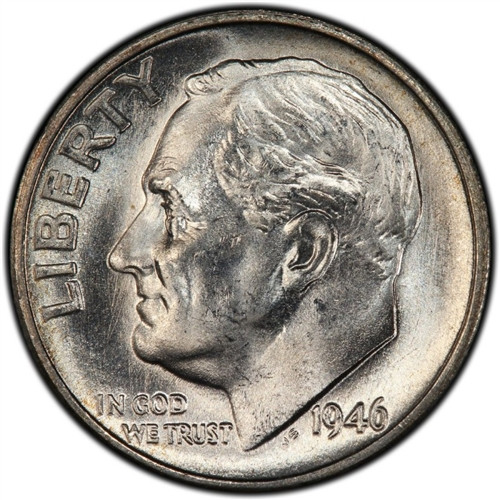
Most Roosevelt dimes are worth exactly ten cents, and anyone who tells you otherwise is selling something. But a meaningful slice of the series — every dime struck from 1946 through 1964 — is 90% silver, and a handful of dates and errors are worth far more than their metal. Here's how to sort your dimes honestly.
The Silver Years: 1946–1964
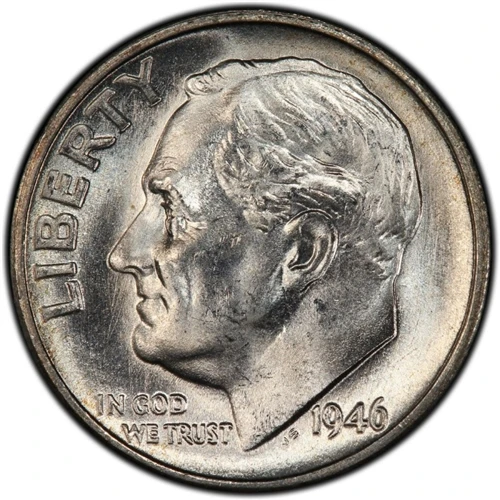
The Roosevelt dime debuted in 1946, months after FDR's death — a fitting tribute given his connection to the March of Dimes. John Sinnock's design has run ever since, but the composition changed in 1965. Every dime dated 1946 through 1964 contains 0.0723 troy ounces of silver, and for common dates in circulated condition, that silver content is the value: figure roughly the day's melt price, a few dollars per coin. Dealers buy them by the roll as "junk silver." That's not an insult — it's the honest floor under every silver Roosevelt, and it's why none of them belong back in circulation.
Dates Worth a Second Look
No business-strike Roosevelt dime is genuinely rare, but a few are scarce enough to command premiums above melt, especially uncirculated. The 1949-S (13.5 million struck) is the traditional semi-key of the series. The 1950-S (20.4 million) and the 1955-P — at 12.8 million, the lowest-mintage business strike of the entire series — round out the short list. Uncirculated coins with fully struck horizontal bands on the torch (designated "Full Bands" or "Full Torch" by the grading services) carry real premiums in high grades; check the PCGS or NGC price guides for current levels rather than trusting a fixed number. Our Roosevelt dime inventory covers the silver years in brilliant uncirculated condition, including the 1949-S and 1950-S.
The Errors That Make Headlines
The famous Roosevelt dime rarities are mint errors, not regular dates. The 1975 proof dime missing its "S" mint mark is one of the great modern rarities — only two are known, and both have brought six-figure prices at auction. The 1982 no-P dime, struck at Philadelphia without its mint mark, is far more available but still sells for a solid premium, especially in high grade. Worth checking your proof sets and 1982 pocket change finds; not worth expecting.
Clad Dimes: 1965 to Today
Copper-nickel dimes from 1965 onward are worth face value in circulated condition, full stop. Value only enters the picture with high-grade uncirculated examples, proofs, and errors. That's the plain truth most value guides bury.
Sorting an Inherited Dime Folder
If you've just inherited a blue Whitman folder of dimes, here's the fast triage. Pull everything dated 1964 or earlier — that's your silver pile, worth melt at minimum. Within it, set aside the 1949-S, 1950-S, and 1955 dates, plus anything that looks fully brilliant and unworn; those are the coins worth pricing individually. Everything 1965 or later goes back to face value unless it's a proof or an obvious error. Don't clean anything — a wiped or polished coin loses its collector premium instantly, and grading services will body-bag it. Hold coins by the edges, and if a piece looks like it might be one of the better dates in uncirculated condition, a $20 grading-guide check before you sell can save you from giving away a $100 coin for $3 in silver.
The 2026 Dime Is a One-Year Type
One footnote that makes this year interesting: for America's 250th anniversary, the 2026 Roosevelt dime carries the dual date 1776 ~ 2026 and a Liberty Bell "250" privy mark — a one-year-only type in a series that has barely changed in eighty years. Uncirculated rolls are an inexpensive way to put one aside; you'll find them with the rest of this year's releases in our 2026 dated coins collection.
Recent Posts
-

Coin Gifts for Every Collector: A 2026 Holiday Gift Guide by Budget
Coins make unusually good gifts. They are small, they last forever, they carry real history, and unl
-
Flying Eagle Cent Value Guide: 1856, 1857 and 1858, Large vs. Small Letters, and America's First Small Cent
The Flying Eagle cent lasted barely two years in circulation, but it changed American money for good