How to buy Sacagawea dollar coins without breaking the bank
The Golden Dollar You Can Actually Afford (And Why Collectors Love It)
Sacagawea dollar coins are one of the most recognizable and collectible modern U.S. coins — and most of them are surprisingly affordable, even for new collectors.
Here's a quick overview to get you started:
| What You Want to Know | Quick Answer |
|---|---|
| What is it? | A U.S. $1 coin first issued in 2000, featuring Shoshone guide Sacagawea and her infant son Jean Baptiste |
| Why is it golden? | The outer layer is manganese brass — no actual gold inside |
| What's it worth? | Most common dates: $1–$3. Rare varieties: up to $200,000+ |
| Still being made? | Yes, as Native American dollars (2009–present) with changing reverse designs |
| Where to buy? | Coin dealers, online shops, and directly from the U.S. Mint |
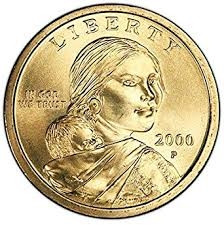
Launched in January 2000, the Sacagawea dollar was meant to replace the unpopular Susan B. Anthony dollar. It brought a fresh look — a warm golden color, a smooth edge, and a design honoring a real piece of American history.
The obverse shows Sacagawea carrying her baby son on her back, a nod to the Hidatsa custom she followed during the Lewis and Clark expedition. The image was sculpted by artist Glenna Goodacre, using a young Shoshone woman named Randy'L He-dow Teton as her model.
Despite over a billion coins minted in its first year alone, the Sacagawea dollar never took hold in everyday circulation. The $1 bill stayed in wallets, and the coins ended up stacked in Federal Reserve vaults. But that same quiet history makes them fascinating — and often very affordable — for collectors today.
Whether you're hunting a common uncirculated example or chasing rare errors worth thousands, there's a Sacagawea dollar for nearly every budget.
History and Design of Sacagawea Dollar Coins
When we look at the Sacagawea dollar coins in our collections, we are looking at a masterpiece of collaboration between the public, historians, and talented artists. The U.S. Mint didn't just pick a design out of a hat; they formed the Dollar Coin Design Advisory Committee to ensure the new "Golden Dollar" would be something Americans could be proud of.
The obverse, designed by sculptor Glenna Goodacre, is a poignant portrait of Sacagawea. She is shown looking over her shoulder, with her infant son, Jean Baptiste Charbonneau, swaddled on her back. This design was selected from 120 submissions. Interestingly, because no contemporary portraits of Sacagawea exist, Goodacre used Randy’L He-dow Teton, a modern-day Shoshone student, as her model to capture the spirit of the historical figure.
The original reverse (2000–2008) was designed by Thomas D. Rogers, Sr. It features a soaring bald eagle surrounded by 17 stars. Those stars aren't just for decoration—they represent each state in the Union at the time of the Lewis and Clark expedition in 1804.
If you are interested in the technical side, you can check out the Official Sacagawea dollar specifications. At Coins Online LLC, we’ve been helping collectors find these beauties since 1999. You can find More info about our services on our website.
Sacagawea and the Lewis and Clark Expedition
Sacagawea’s role in American history is legendary. As a teenager, she was hired—along with her husband, Toussaint Charbonneau—to act as a guide and interpreter for Meriwether Lewis and William Clark. She was only about 15 years old and pregnant when the journey began.
Her presence was more than just logistical; it was a "white flag" of peace. Tribes who encountered the expedition saw a woman and an infant, which signaled that this was not a war party. She famously rescued Captain Clark’s journals from the Missouri River after a boat capsized, all while carrying her baby in the traditional Hidatsa custom. Her Shoshone heritage was also vital when the party needed to trade for horses to cross the Rocky Mountains.
Comparing the Golden Dollar to the Susan B. Anthony
The U.S. Mint learned some hard lessons from the Susan B. Anthony (SBA) dollar, which was often confused with the quarter because of its size and silver color. With the Sacagawea dollar coins, the government made specific changes to ensure "distinguishability."
| Feature | Susan B. Anthony Dollar | Sacagawea Dollar |
|---|---|---|
| Color | Silver (Copper-Nickel) | Golden (Manganese Brass) |
| Edge | Reeded (like a quarter) | Smooth (2000-2008) |
| Border | Thin | Extra-wide |
| Visual Impact | Often confused for 25c | Distinctive "Gold" appearance |
While both coins are the same diameter (26.5 mm), the smooth edge and golden hue of the Sacagawea made it much easier to identify in a pocketful of change. However, despite these improvements and a $41 million marketing campaign, the public still preferred the $1 paper bill.
Identifying Rare Varieties and Mint Errors
For many of us, the real thrill of numismatics is finding the "needle in the haystack." While most Sacagawea dollar coins are worth exactly one dollar, a few specific errors have reached legendary status in the coin world. These errors transform an ordinary coin into a treasure worth thousands.
One of the most famous is the "Wounded Eagle" (or "Speared Eagle") variety from the 2000-P minting. This was caused by raised die gouges that look like a spear or arrow running through the eagle's breast and wing. Fewer than 200 of these are known to exist! If you want to dive deeper, we recommend this Guide to rare varieties and errors.
The Famous 2000-P Cheerios Sacagawea Dollar Coins
In late 1999, the U.S. Mint partnered with General Mills to promote the new coin. They hid 5,500 Sacagawea dollar coins inside boxes of Cheerios cereal. For years, people thought these were just standard coins.
However, collectors eventually discovered that these "Cheerios Dollars" were actually struck using a prototype reverse die. The most obvious difference is in the eagle’s tail feathers—the Cheerios version has much more detailed, enhanced feather lines compared to the standard business strike. An MS68 grade Cheerios dollar can fetch anywhere from $1,000 to over $30,000 at auction!
High-Value Mule Errors and Special Issues
The "Holy Grail" of modern errors is the 2000-P Sacagawea/Washington Quarter Mule. This happened when a Sacagawea dollar obverse die was accidentally paired with a Washington state quarter reverse die. Only 11 of these are currently known. These coins have sold for as much as $200,000!
Other special issues for collectors include:
- Goodacre Presentation Specimens: Artist Glenna Goodacre was paid her $5,000 design fee in 5,000 specially burnished Sacagawea dollars. These have a distinctive glossy, proof-like finish.
- Millennium Set (2000-D): 75,000 sets were released containing a dollar with a special burnished finish.
- 22-Karat Gold Versions: The Mint actually struck 39 gold Sacagawea dollars at West Point. Twelve of these were flown on the Space Shuttle Columbia (STS-93). While most were melted, the "space-flown" coins were eventually auctioned, with some reaching prices over $500,000 in 2025.
Evolution and Annual Native American Reverses
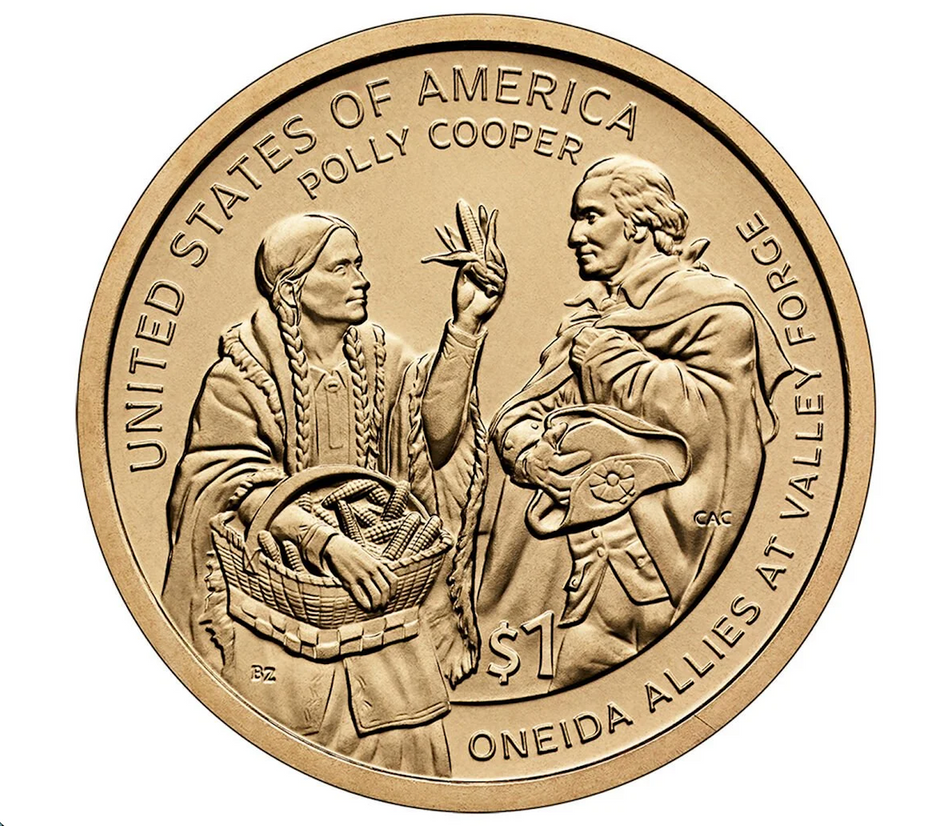
In 2009, the series underwent a significant transformation. Under the Native American $1 Coin Act, the coin was rebranded as the "Native American Dollar." While the obverse still features Sacagawea, the reverse now changes every year to honor the contributions of Native American tribes and individuals.
Another major change in 2009 was the move to edge lettering. The date, mint mark, and the mottos "E Pluribus Unum" and "In God We Trust" were moved to the edge of the coin to allow for larger, more beautiful designs on the faces.
Collecting Modern Native American Dollar Themes
Since 2009, we have seen some incredible designs that tell the story of Native American history. Some of our favorites include:
- 2015 Mohawk Ironworkers: Honoring the men who built the skyscrapers of New York City.
- 2016 Code Talkers: Commemorating the vital role of Native American languages in WWI and WWII.
- 2019 Space Exploration: Highlighting Mary Golda Ross and the contributions of Native Americans to the space program.
- 2023 Maria Tallchief: Celebrating America’s first major prima ballerina.
Smart Strategies for Buying Sacagawea Dollar Coins
If you want to build a collection without "breaking the bank," here is our expert advice:
- Look for Mintage Drops: After the initial 1.29 billion coins in 2000, production dropped by 90% in 2001. By 2002, the Mint stopped making them for general circulation entirely.
- Buy Uncirculated Rolls: Since these coins don't circulate much, you can often find uncirculated rolls or Mint sets for a very reasonable premium.
- Focus on Grades: For modern coins, the difference between an MS66 and an MS68 can be thousands of dollars. Unless you are an elite investor, sticking to "Brilliant Uncirculated" (BU) raw coins is a great way to save money.
- Check the Federal Reserve Factor: As of 2009, there were over 857 million dollar coins sitting in government vaults. Because they are so common in storage, "common" years will likely stay affordable for a long time.
If you have questions about a specific year or mint mark, don't hesitate to Contact our experts. We love talking shop!
Frequently Asked Questions about Sacagawea Dollars
Why are they called "Golden Dollars" if they contain no gold?
It's all in the chemistry! The coin has a pure copper core, but the outer layers are a manganese brass alloy (77% copper, 12% zinc, 7% manganese, and 4% nickel). This specific mix gives the coin its bright, golden shine when new. Over time, it develops an antique-looking patina that many collectors actually prefer over the "shiny" new version.
Are Sacagawea dollars still being minted for circulation?
Technically, no. Since 2011, the U.S. Mint has only produced these coins for collectors. While they are still legal tender and you could spend one at the grocery store, you won't find them in your change very often. The Mint sells them in bags, rolls, and sets directly to the public and through dealers like us.
What is the most expensive Sacagawea dollar ever sold?
While the space-flown gold versions have hit the $550,000 mark, the most expensive "standard" error is the 2000-P Mule (Sacagawea obverse/Washington Quarter reverse). These regularly command prices between $100,000 and $200,000 at major auctions.
Conclusion
At Coins Online LLC, we believe that every coin tells a story, and Sacagawea dollar coins tell one of the most important stories in American history. Whether you are fascinated by the Lewis and Clark expedition or you just love the look of the "Golden Dollar," this series offers a fantastic entry point into numismatics.
With our competitive pricing, low shipping costs, and a 14-day return policy, we make it easy to grow your collection with confidence. We have been serving the collector community since 1999, and we take pride in offering over 5,000 products to our customers in the US and Canada.
Ready to find your next treasure? Browse our full inventory of Sacagawea dollar coins today and see why we are a favorite destination for collectors worldwide!
Recent Posts
-

Walking Liberty Half Dollar Value Guide: Key Dates, the 1921 Problem, and What Yours Is Really Worth
Ask a room full of collectors to name the most beautiful U.S. coin and the Walking Liberty half doll
-
The 2026 Semiquincentennial Proof Set: What's in It, Why It Costs $107, and Whether to Buy One
On October 6 at noon Eastern, the U.S. Mint puts the 2026 Semiquincentennial Proof Set on sale at $1