Susan B. Anthony Dollar Value: Why Most Are Worth $1 — and the Few That Aren't
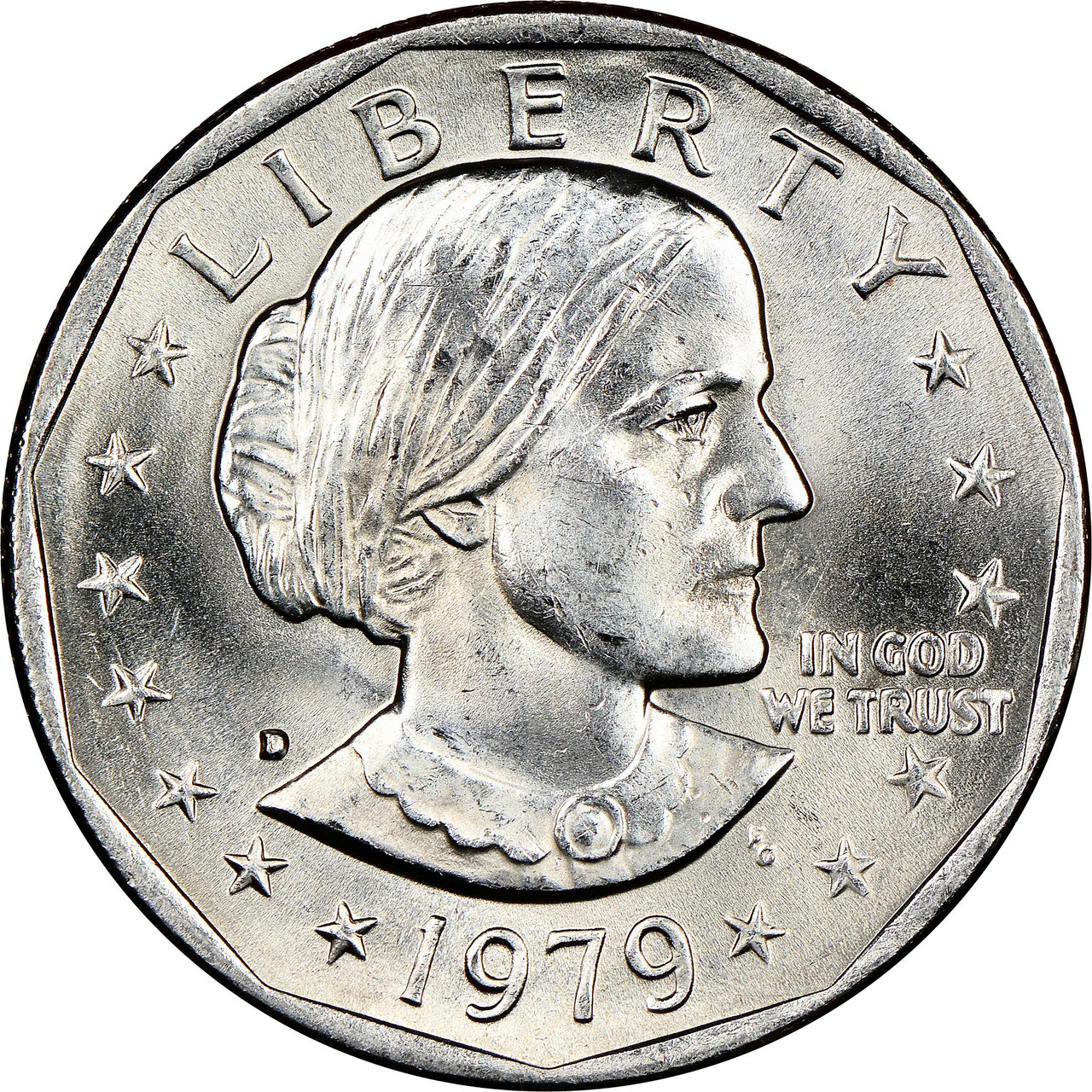
Somewhere in a drawer, a coin jar, or an inherited collection, almost every American family has a few Susan B. Anthony dollars — and sooner or later someone asks whether they're valuable. Here's the straight answer most articles bury: a circulated Susan B. Anthony dollar from 1979 or 1980 is worth exactly one dollar. It isn't silver, it isn't rare, and no dealer will pay a premium for it. But the series hides a handful of genuine exceptions — a famous 1979 variety, two proof varieties, and three dates that never reached circulation at all — and those are worth knowing how to spot before you spend one.
Why the Anthony Dollar Exists — and Why It Flopped
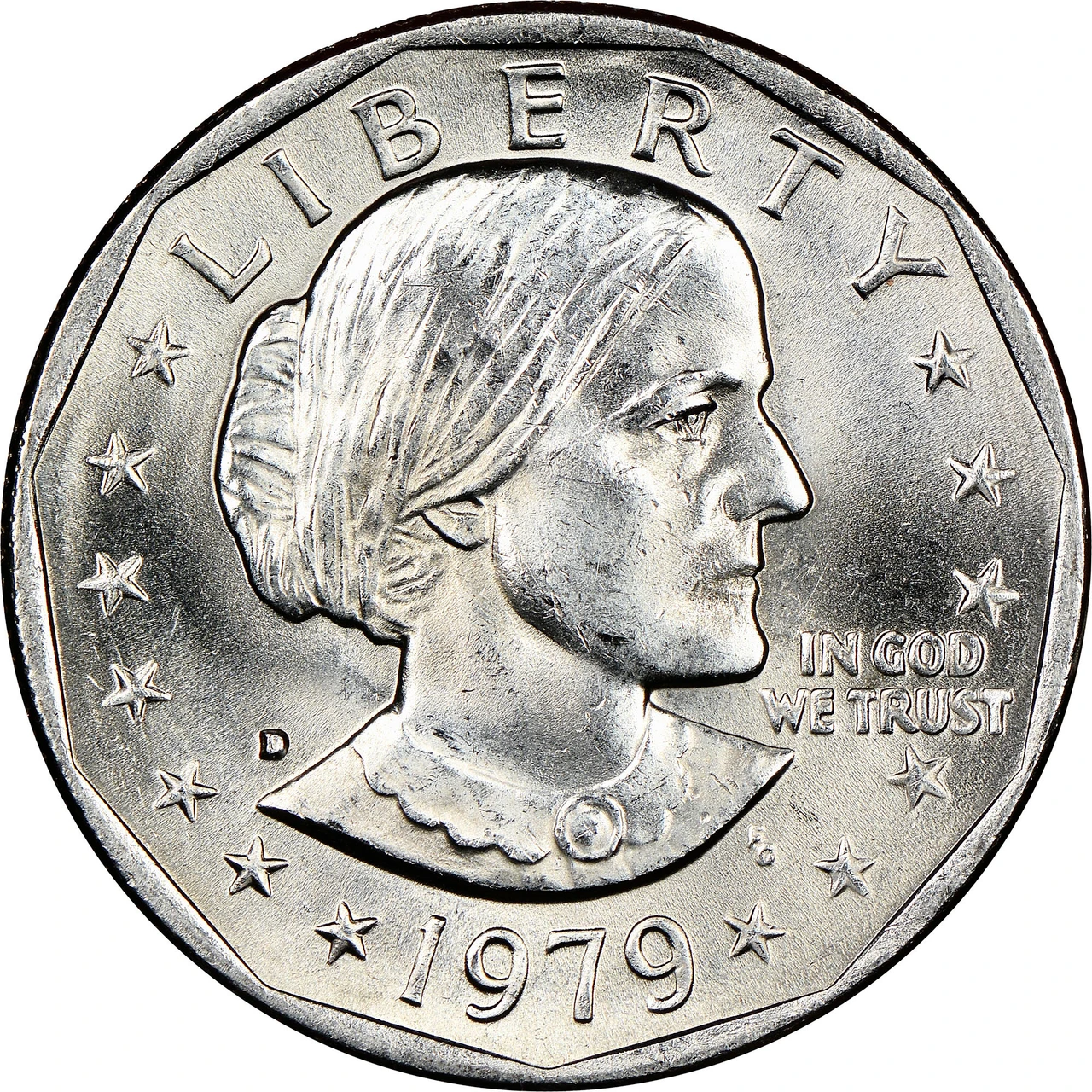
In 1979 the Mint replaced the big Eisenhower dollar with a small dollar coin designed by Frank Gasparro, making Susan B. Anthony the first real woman — not an allegorical Liberty — to appear on a circulating U.S. coin. The problem showed up immediately: at 26.5mm, the new dollar was close enough in size and color to a quarter that people spent them as quarters, and the public simply refused to use them. Production collapsed after two years. The 1981 coins were struck only for collectors in U.S. Mint uncirculated sets, and that was the end — until an unexpected encore in 1999.
What Your Susan B. Anthony Dollar Is Worth
First, the composition: despite being called a "silver dollar" in headlines and family stories, every Anthony dollar is copper-nickel clad. There is no silver in any of them, so there's no melt value floor. From there, the honest breakdown is simple. Circulated 1979 and 1980 coins from the Philadelphia and Denver mints — the ones with mintages in the hundreds of millions — are worth face value. Crisp uncirculated examples trade for a few dollars, which is why a brilliant uncirculated 1979-P sells for under ten dollars. The value in this series lives entirely in the exceptions below.
The Exceptions Worth Real Money
1979-P Wide Rim (Near Date)
Early in 1979, Philadelphia used dies with a noticeably wider rim, pushing the date almost against the edge of the coin. Collectors call it the Wide Rim or Near Date variety, and it's the one Anthony dollar worth pulling out of change. Grading-service price guides (PCGS/NGC) put uncirculated examples in the tens of dollars, with top-grade certified pieces bringing well into the hundreds. Check the gap between the date and the rim — on the common variety there's clear space; on the Wide Rim the date nearly touches.
The 1981 Coins Nobody Spent
Because 1981 Anthony dollars were sold only in mint sets, mintages fell to around 3 million per mint — a fraction of 1979's output. They never circulated, so any 1981-dated coin you find is collectible by definition. Uncirculated singles carry a modest premium, and the original 1981 mint set remains the most natural way to own all three mints at once.
Proof Varieties: Type 2 Mint Marks
San Francisco struck proofs each year, and in both 1979 and 1981 the Mint re-cut the S mint mark punch partway through production. The later "Type 2" punches — a clearer, better-defined S — are the scarcer versions, and grading-service guides price them at a meaningful multiple of the common Type 1 proofs. If you own a 1979 or 1981 proof set, the mint mark is worth a look under magnification.
The 1999 Encore
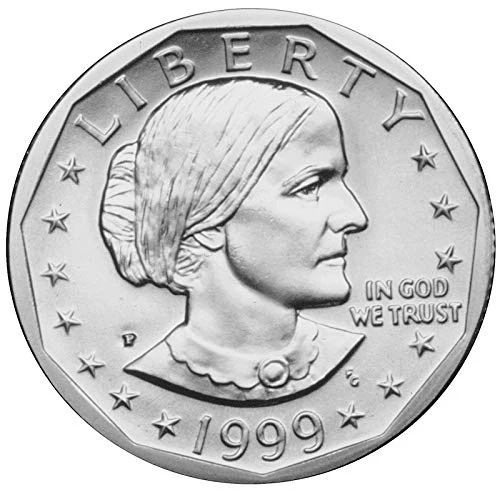
By the late 1990s, vending machines and transit systems had quietly burned through the government's stockpile of Anthony dollars, and the Sacagawea dollar wasn't ready. So in 1999 the Mint struck the series one last time — about 29.6 million from Philadelphia and 11.8 million from Denver, plus a proof issue of roughly 750,000. That makes 1999 the only year of the series with genuinely modest mintages across the board, and the 1999-P and 1999-D remain inexpensive in uncirculated condition. The 18-year gap between the 1981 and 1999 issues is also a quirky footnote — no other modern U.S. coin series stopped and restarted after that long a pause.
Collecting the Whole Series
Here's the good news hiding in all of this: the Susan B. Anthony dollar is one of the cheapest complete sets in American coinage. Eleven business strikes plus the proofs, every one of them affordable in brilliant uncirculated condition — a genuinely satisfying weekend project, and a good first set for a new collector or a grandchild. You can find every date and mint mark, from the common 1979-P to the 1999 issues, in our Susan B. Anthony dollar collection. Just don't pay silver-dollar money for one — now you know better.
Recent Posts
-

Coin Gifts for Every Collector: A 2026 Holiday Gift Guide by Budget
Coins make unusually good gifts. They are small, they last forever, they carry real history, and unl
-
Flying Eagle Cent Value Guide: 1856, 1857 and 1858, Large vs. Small Letters, and America's First Small Cent
The Flying Eagle cent lasted barely two years in circulation, but it changed American money for good