How to Spot a Valuable Sacagawea Dollar Coin in the Wild
Could That Gold Dollar in Your Pocket Be Worth Thousands?
Valuable Sacagawea dollar coin varieties exist — and some have sold for over $100,000 at auction. Most people assume these golden dollar coins are worth exactly one dollar. For the vast majority, that's true. But a small number of rare varieties, minting errors, and special strikes can be worth dramatically more.
Here's a quick look at the most valuable Sacagawea dollars to watch for:
| Variety | Key Feature | Approximate Value |
|---|---|---|
| 2000-P Sacagawea/Quarter Mule | Wrong die combination | Up to $144,000 |
| 2000-P Cheerios Dollar | Prototype eagle reverse | $5,000–$34,500+ |
| 2007 Edge Lettering Error | Presidential dollar edge on Sacagawea | ~$17,161 (1 known) |
| 2000-P on SBA Planchet | Wrong metal blank | ~$16,800 |
| 2000-P Wounded Eagle | Die flaw across eagle chest | Up to $5,160 |
| 2000-P Goodacre Presentation | Burnished, proof-like finish | $2,000–$5,000+ |
Since 2000, the U.S. Mint has produced roughly 71 billion Sacagawea dollars. That makes nearly all of them worth exactly face value. But a handful of coins — created by mint errors, special promotions, or die varieties — slipped through with features that collectors now pay serious money to own.
The exciting part? Some of these coins have turned up in bank rolls, cereal boxes, and spare change jars.
This guide will show you exactly what to look for.
The History and Design of the Sacagawea Dollar
The story of the Sacagawea dollar began in 1997 when Congress authorized a new dollar coin to replace the Susan B. Anthony dollar, which many consumers confused with the quarter. We saw the first coins hit the streets in early 2000. The goal was to create a coin that was distinct in color and feel, leading to the famous "Golden Dollar" appearance.
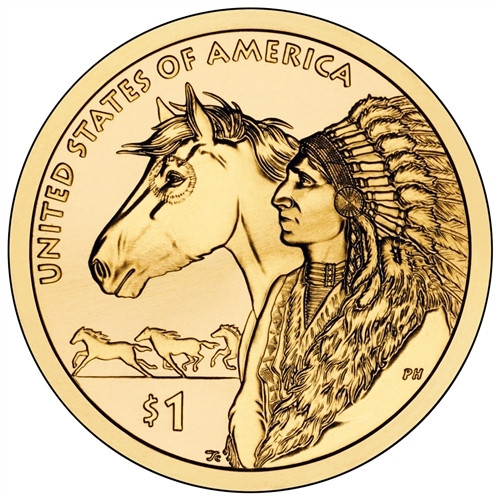
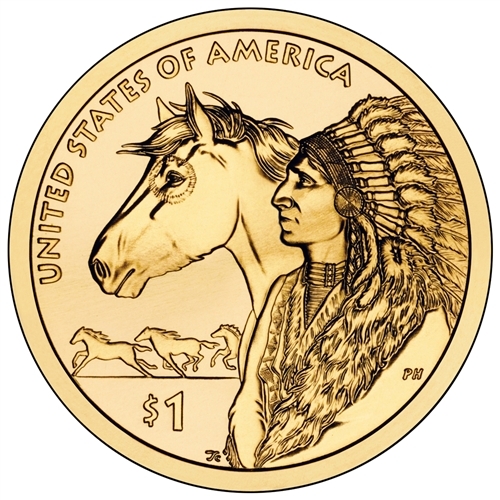
The design is a beautiful tribute to American history. The obverse (front) was designed by artist Glenna Goodacre. Since no contemporary portraits of Sacagawea exist, Goodacre used a modern Shoshone student named Randy’L He-dow Teton as her model. The design depicts Sacagawea carrying her infant son, Jean Baptiste Charbonneau, in a traditional papoose.
On the reverse (back), Thomas D. Rogers Sr. designed a soaring bald eagle surrounded by 17 stars. These stars aren't just for decoration; they represent the 17 states in the Union at the time of the Lewis and Clark expedition in 1804. Interestingly, Sacagawea was chosen for the coin because she served as a "white flag" of peace for the expedition—war parties in that era never included a woman and a baby.
You can learn more about the official production history at the Sacagawea Golden Dollar Coin page.
Metal Composition and Mint Marks
Despite their "golden" hue, these coins don't actually contain any gold. They are made of a unique manganese brass alloy. The core is pure copper, while the outer layers consist of 77% copper, 12% zinc, 7% manganese, and 4% nickel. This specific blend gives the coin its luster, though it does tend to develop a dark patina or "antique" look over time as the manganese reacts with the air.
When hunting for a valuable sacagawea dollar coin, you need to check the mint mark. These are located on the obverse, just below the date:
- P: Philadelphia Mint
- D: Denver Mint
- S: San Francisco Mint (typically for Proof coins)
If you're looking to fill holes in your album or start a new set, Browse our collection of dollar coins and supplies.
Top 7 Most Valuable Sacagawea Dollar Coin Varieties
While billions of these coins are in vaults or circulation, a few specific "accidents" and limited runs have created legends in the numismatic world.
| Variety | Mint | Rarity Note | Record Sale |
|---|---|---|---|
| Sacagawea/State Quarter Mule | P | Only ~18 known | $144,000 |
| Sacagawea/Presidential Mule | D | 1 known | $84,000 |
| Sacagawea/SC Quarter Mule | D | 1 known | $66,000 |
| Cheerios Dollar | P | ~60-70 confirmed | $34,500 |
| Edge Lettering Error | (None) | 1 known (2007) | $17,161 |
| SBA Planchet Error | P | Rare off-metal | $16,800 |
| Wounded Eagle | P | ~200 known | $5,160 |
The 2000-P Cheerios Dollar: A Valuable Sacagawea Dollar Coin
In early 2000, General Mills ran a "treasure hunt" promotion, placing a new Sacagawea dollar in every 2,000th box of Cheerios. While 5,500 coins were distributed, most people treated them like regular dollars. It wasn't until 2005 that collector Pat Braddick noticed something strange: the eagle on the "Cheerios" coins was different.
These coins were struck using a prototype reverse die. The most obvious giveaway is the tail feathers. On a regular dollar, the feathers are flat. On a Cheerios Dollar, the feathers have crisp, defined, and raised "veins" or shafts. Because only about 60 to 70 of these have been officially authenticated, they are incredibly prized. One high-grade example sold for a staggering $34,500.
For current market trends on these and other years, check the Sacagawea Dollars (2000-Date) | Price Guide & Values | NGC.
Rare Mule Errors: When Two Coins Become One
In the minting world, a "mule" is a coin struck with dies intended for two different coins. It’s a human error that creates a numismatic masterpiece. The most famous is the 2000-P Sacagawea dollar struck with a Washington Statehood quarter obverse. Imagine a coin with George Washington on the front and the Sacagawea eagle on the back! Only about 18 of these are known, and one sold for $144,000 in 2022.
Other mules include:
- 2014-D Presidential Mule: A Sacagawea reverse paired with a Presidential Dollar obverse. One was found in a bank bag in 2019 and sold for $84,000.
- 2000-D South Carolina Mule: A Sacagawea dollar mistakenly struck with the reverse of a South Carolina state quarter. Only one is known to exist, fetching $66,000 at auction.
The 2000-P Wounded Eagle: A Valuable Sacagawea Dollar Coin
This variety gets its name from a prominent die flaw. If you look at the eagle’s breast on the reverse, you might see a raised line (or two) running through the bird's torso. It looks like an arrow has pierced the eagle. This wasn't a design choice; it was caused by a crack in the minting die.
About 200 specimens have been reported. In a high grade like MS68, a "Wounded Eagle" can bring in over $5,000. When searching, ensure the line is raised. If the line is sunken into the coin, it’s likely just a scratch (post-mint damage) and not the rare variety.
How to Identify a Valuable Sacagawea Dollar Coin in Your Change
You don't need a lab to find a valuable sacagawea dollar coin, but you do need a good eye and a 10x magnifying loupe.
- Check the 2000-P Tail Feathers: Always look at the reverse of your 2000-P dollars. If the eagle's tail feathers look incredibly sharp and detailed compared to a standard dollar, you might have found a Cheerios prototype.
- Inspect the Edges: From 2000 to 2008, Sacagawea dollars were supposed to have plain, smooth edges. In 2009, the Mint moved to edge lettering (the date and mint mark moved to the rim). If you find a 2007 dollar with edge lettering, it's a major error worth five figures because it was struck with the collar intended for a Presidential dollar!
- Look for Color Oddities: If your "golden" dollar looks like it's made of silver, it might be a planchet error. Some Sacagawea designs were accidentally struck on Susan B. Anthony (SBA) copper-nickel planchets. These "off-metal" strikes are highly valuable.
Spotting the 2000-P Goodacre Presentation Strike
When Glenna Goodacre designed the coin, she requested her $5,000 commission be paid in the new dollar coins. The Mint obliged by striking 5,000 special coins on burnished planchets. These have a distinct "specimen" or proof-like finish that is much shinier and smoother than a regular circulation coin.
Goodacre had these coins independently certified to preserve their pedigree. If you find a 2000-P that looks exceptionally "frosted" or polished, it could be one of these presentation pieces. If you think you've found one, we recommend having it professionally appraised. You can Contact us for appraisals or advice on the next steps.
Collector’s Guide: Grading, Storing, and Investing
In numismatics, condition is everything. A regular 2000-P dollar is worth $1. However, a 2000-P in MS69 (nearly perfect condition) can be worth thousands because they are so rare in that grade. Most coins get "bag marks" (tiny scratches) during the minting process, so finding one without a single flaw is like finding a needle in a haystack.
We always suggest checking "population reports" from services like PCGS or NGC. These reports tell you how many coins have been graded at a certain level. For example, if there are only two known MS69 examples of a specific year, the price for those coins will skyrocket.
If you're curious about our history in the industry and how we've helped collectors since 1999, you can Learn more about us.
Tips for Preserving Your Collection
If you are lucky enough to find a valuable sacagawea dollar coin, you must protect it immediately. The manganese brass alloy is very sensitive to the oils on your skin and moisture in the air.
- Handle by the Edges: Never touch the face of the coin.
- Use Acid-Free Holders: Avoid PVC flips, which can damage the coin's surface over time. Use "2x2" cardboard holders or hard plastic capsules.
- Climate Control: Store your coins in a cool, dry place. Humidity is the enemy of the golden dollar’s luster.
- Don't Clean Them: This is the golden rule! Cleaning a coin with chemicals or even a soft cloth can leave microscopic scratches that destroy its numismatic value. A "cleaned" coin will often be rejected by grading services.
Frequently Asked Questions about Valuable Sacagawea Dollar Coins
Are regular circulation Sacagawea dollars worth more than face value?
Generally, no. Because the Mint produced over a billion coins in the first few years alone, most well-circulated Sacagawea dollars are worth exactly $1. You might get a tiny premium (maybe $1.05 to $1.10) for uncirculated rolls from the early 2000s, but they are not a "get rich quick" item unless they have an error.
Do Sacagawea dollar coins contain real gold?
We get this question a lot! Despite the "Golden Dollar" nickname, there is zero gold in these coins. The color comes from the manganese brass outer layer. They were designed to be golden in color to distinguish them from quarters, but they are composed of base metals like copper and zinc.
How can I tell if my 2000-P dollar is a Cheerios variety?
The key is the tail feathers on the eagle. Grab a magnifying glass and look at the tail. A standard dollar has feathers that are relatively smooth and flat. The Cheerios variety has very distinct, raised lines (veins) in the center of each feather. It is a "high-relief" look that stands out once you know what to look for.
Conclusion
The hunt for a valuable sacagawea dollar coin is one of the most exciting activities for modern collectors. Whether it's the high-relief feathers of a Cheerios Dollar or the "wounded" breast of a 2000-P variety, these treasures are still hiding in plain sight.
At Coins Online LLC, we’ve been part of the collecting community for over two decades. We love the history behind these coins just as much as the hunt for errors. Whether you are a seasoned numismatist or just someone who found a shiny gold coin in a vending machine, we are here to help you grow your collection with competitive prices and expert advice.
Ready to find your next prize? Start your collection today and see what treasures you can uncover! Happy hunting!
Recent Posts
-

Walking Liberty Half Dollar Value Guide: Key Dates, the 1921 Problem, and What Yours Is Really Worth
Ask a room full of collectors to name the most beautiful U.S. coin and the Walking Liberty half doll
-
The 2026 Semiquincentennial Proof Set: What's in It, Why It Costs $107, and Whether to Buy One
On October 6 at noon Eastern, the U.S. Mint puts the 2026 Semiquincentennial Proof Set on sale at $1