Buffaloed by Your Change? A Guide to Indian Head Nickels
Origins and Design of the Old Indian Head Nickel
The story of the old indian head nickel begins with a push for "artistic" money. In the early 20th century, President Theodore Roosevelt was famously dissatisfied with the "uninspired" state of American coinage. This led to a beautification drive that eventually touched every denomination. Because of the 1890 Coinage Act, which prohibited changing a coin's design more than once every 25 years without Congressional approval, the old Liberty Head "V" nickel became eligible for a makeover in 1911.
Enter James Earle Fraser. A former assistant to the legendary Augustus Saint-Gaudens, Fraser brought a rugged, frontier sensibility to the project. Having grown up in South Dakota, he had seen the vanishing West firsthand. He wanted to move away from the "Caucasian Liberty in a headdress" style seen on the Indian Head cent and create a portrait that felt authentic.
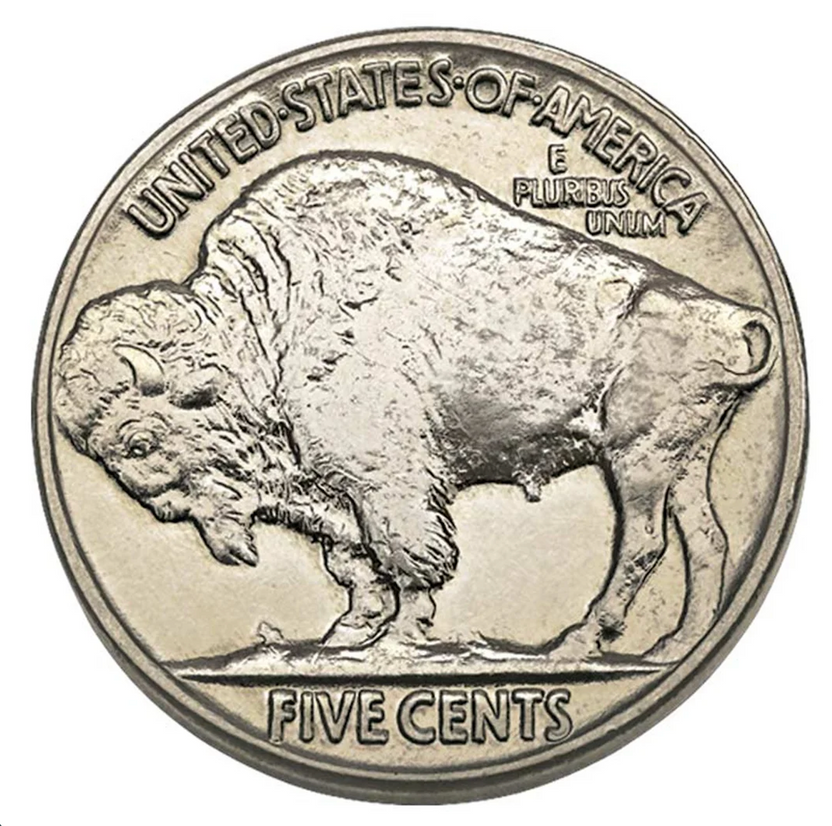
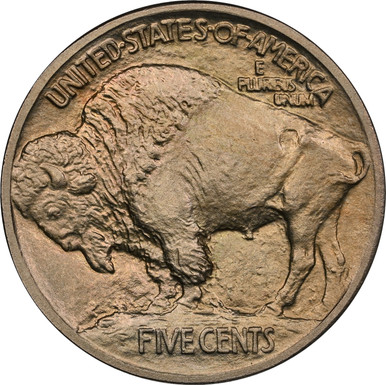
The result was a composite portrait. Fraser stated that the face was not one specific person but a blend of three Native American chiefs: Iron Tail (Sioux), Two Moons (Cheyenne), and Big Tree (Kiowa). On the reverse, he placed a massive American bison. While often called a "buffalo," the animal is technically a bison. Fraser modeled it after "Black Diamond," a famous inhabitant of the Central Park Zoo. Fraser later joked that Black Diamond was the "contrariest animal" he ever met, refusing to stand still for his profile.
The design was a masterpiece of medallic art. However, it wasn't just about looks. Fraser included his initial "F" just below the date on the obverse. If you find an old indian head nickel where the date is worn but you see that "F," you know you're looking at Fraser's handiwork.
Identifying Key Varieties of the Old Indian Head Nickel
Not all nickels are created equal. Some left the mint with "personality" in the form of errors or mid-year design tweaks. If you are hunting for value, these are the varieties we recommend looking for:
- 1913 Type 1 vs. Type 2: In the first year of issue, the "FIVE CENTS" on the reverse sat on a raised mound of dirt. The Mint quickly realized this would wear away too fast. Mid-way through 1913, they changed it to Type 2, where the denomination sits in a recessed space below a straight line.
- The 1937-D Three-Legged Buffalo: This is the "superstar" of the series. A pressman at the Denver Mint, trying to remove clash marks from a die, accidentally polished away the bison's front right leg.
- 1918/7-D Overdate: A rare case where a 1917 die was impressed with a 1918 hub. Look closely at the "8" for the ghost of a "7" underneath.
- 1938-D/S Overmintmark: This was the first repunched mintmark discovered in U.S. history, where a "D" was punched over an "S."
Historical Challenges for the Old Indian Head Nickel
The old indian head nickel almost didn't happen. Before it could be released, the Hobbs Manufacturing Company filed a formal protest. They made anti-slug devices for vending machines and claimed Fraser's design—specifically the "lumpy" nature of the Native American's hair and the bison's back—would jam their machines.
Treasury Secretary Franklin MacVeagh eventually grew tired of the delays. He famously noted that if the government halted coinage every time a vending machine company complained, it would "handicap national art." He ordered the production to proceed in February 1913.
However, the critics were right about one thing: the coin wore down fast. The high relief of the design meant that the date (on the shoulder) and the "FIVE CENTS" (on the mound) were the first things to vanish in a pocket full of change. This led to the Buffalo nickel history being defined by a constant battle between beauty and durability.
Determining Value and Rarity in Buffalo Nickels
When we look at the value of an old indian head nickel, we start with the "Big Three" factors: Date, Mint Mark, and Condition. Over 1.2 billion were minted between 1913 and 1938, but they were not distributed evenly. Philadelphia usually pumped out the most, while Denver (D) and San Francisco (S) had much smaller runs.
Here is how some of the key dates stack up in terms of rarity:
| Date/Mint | Mintage | Why it's Valuable |
|---|---|---|
| 1926-S | 970,000 | The only date in the series with under 1 million made. |
| 1931-S | 1,194,000 | Low mintage; the Mint actually struck an extra million later just to stop people from hoarding them! |
| 1913-S (Type 2) | 1,209,000 | A very rare first-year variety that is tough to find in high grades. |
| 1922 | 0 | No Buffalo nickels were minted this year due to the economic recession. |
If you have a 1926-S in your hand, you're holding a piece of history that can be worth hundreds—or even thousands—depending on how much of the original detail remains. For a deeper dive into specific year-by-year pricing, you can check out this guide on Buffalo Nickel values and prices.
Grading and Preservation Tips for the Old Indian Head Nickel
Grading a Buffalo nickel is notoriously difficult because many of them were "weakly struck." This means even a brand-new coin might look a little fuzzy in the details. Collectors use a scale from "Good" (heavily worn but identifiable) to "Uncirculated" (looks like it just left the mint).
One of the biggest heartbreaks for a collector is finding a "no-date" nickel. Because the date was on a raised area, it often rubbed off completely. You might see products like "Nic-A-Date" (ferric chloride) that can chemically etch the date back onto the surface. A word of caution from us: While this is fun for a hobbyist, it technically damages the coin. Professional collectors and dealers usually won't pay a premium for a chemically restored date. It’s often better to keep it as a "cull" or use it for jewelry than to treat it with chemicals.
At Coins Online LLC, we always recommend keeping your coins in a cool, dry place. Using acid-free flips or folders is the best way to maintain that original surface luster. If you're looking for more info about coin collecting, we have a wealth of resources to help you protect your investment.
The Legacy and Modern Significance of Fraser’s Design
In 1938, the old indian head nickel reached the end of its mandatory 25-year run. It was replaced by the Jefferson Nickel, designed by Felix Schlag. While the Jefferson design was more practical for the Mint's high-speed presses, it lacked the raw, "totally American" soul of Fraser's work.
But the design didn't die. During the Great Depression, the Buffalo nickel became the canvas for "Hobo Nickels." Out-of-work artists would use small tools to carve the Native American's face into portraits of friends, self-portraits, or even clowns. These are now highly sought-after folk art pieces.
Fraser’s imagery eventually made a triumphant return to the U.S. Mint:
- 2001: A commemorative Silver Buffalo Dollar was released, selling out almost instantly.
- 2006-Present: The U.S. Mint began the American Buffalo Gold Bullion series, using Fraser's exact 1913 design on 24-karat gold coins.
The coin also holds a bit of bittersweet history. The first nickels were distributed at the 1913 groundbreaking for the National American Indian Memorial in New York. While the memorial was never actually built, the coin itself became a permanent monument to the people and animals of the American frontier. To learn more about our passion for these historic pieces, visit our about us page.
Frequently Asked Questions about Indian Head Nickels
Why did the dates wear off the Buffalo nickel so easily?
The date was positioned on a raised area of the Native American's shoulder. In physics and pocket change, the highest point on a coin takes the most friction. Because Fraser prioritized the "medallic" look of the portrait, the date sat right in the line of fire for every thumb and pocket it touched.
Is a Buffalo nickel with no date worth anything?
Generally, an undated old indian head nickel is worth about $0.06 to $0.10. They are often sold in bulk as "culls." While they don't have much value to a serious coin collector, they are very popular for use in buttons, western-style shirt snaps, and artisan jewelry.
What is the difference between a Buffalo nickel and an Indian Head nickel?
There is no difference! They are two names for the exact same five-cent piece. "Buffalo nickel" is the more common term used by the general public, while "Indian Head nickel" is often used by numismatists (coin experts) to mirror the naming convention of the Indian Head Cent.
Conclusion
The old indian head nickel is more than just five cents; it’s a tiny, circular time capsule of the American West. From the controversy of the "three-legged" error to the rugged beauty of Black Diamond the bison, these coins continue to fascinate us over a century later.
Whether you are looking for a rare 1926-S to complete your set or just want a few "no-date" nickels for a craft project, Coins Online LLC is here to help. Since 1999, we’ve offered over 5,000 products with competitive pricing and a 14-day return policy to ensure you're happy with every addition to your collection. We ship throughout the U.S. and Canada, bringing the history of the Mint right to your doorstep.
Ready to find your next treasure? Contact us for more information or browse our latest inventory today!
Recent Posts
-

Walking Liberty Half Dollar Value Guide: Key Dates, the 1921 Problem, and What Yours Is Really Worth
Ask a room full of collectors to name the most beautiful U.S. coin and the Walking Liberty half doll
-
The 2026 Semiquincentennial Proof Set: What's in It, Why It Costs $107, and Whether to Buy One
On October 6 at noon Eastern, the U.S. Mint puts the 2026 Semiquincentennial Proof Set on sale at $1