Walking Liberty Half Dollar Value Guide: Key Dates, the 1921 Problem, and What Yours Is Really Worth
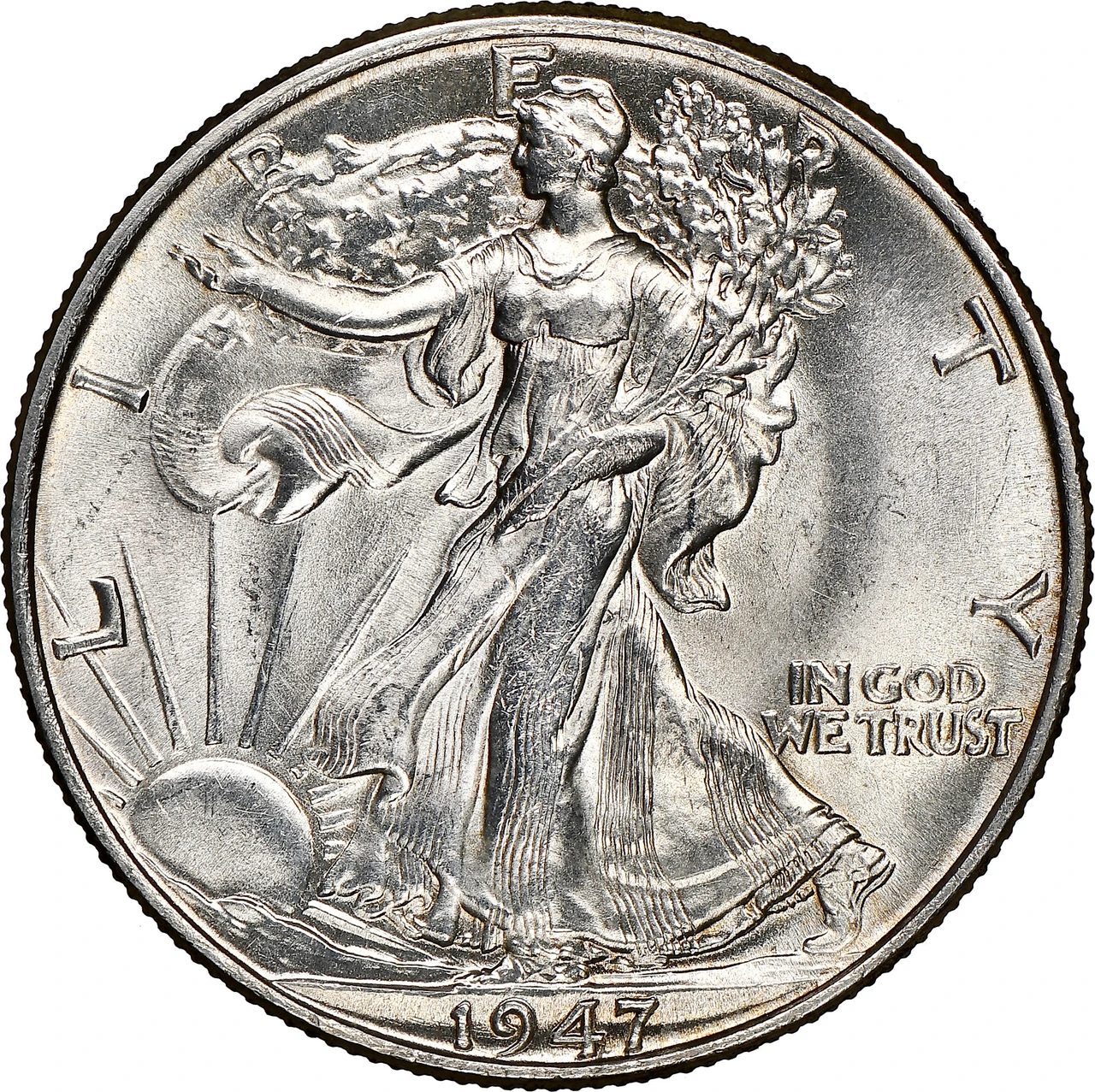
Ask a room full of collectors to name the most beautiful U.S. coin and the Walking Liberty half dollar wins more votes than anything but the Saint-Gaudens double eagle. The Mint agrees: it borrowed Adolph Weinman's striding Liberty for the American Silver Eagle in 1986 and has kept it there ever since. Beauty and value are different questions, though. Most Walking Liberty halves are worth their silver plus a modest premium, a short list of dates are worth real money, and one year is a wall that stops most collectors cold. Here is how to sort yours.

The basics
The series ran from 1916 through 1947, when the Franklin half replaced it. Every coin is 90% silver and contains just over 0.36 troy ounces of the metal, which sets the floor: no Walking Liberty half is worth fifty cents. Liberty walks toward the sunrise wrapped in the flag on the obverse; a perched eagle with a pine sapling fills the reverse. Weinman designed the Mercury dime the same year, and the two coins are usually collected side by side.
Where the mint mark is
This trips people up. On 1916 coins and some 1917 coins, the D or S mint mark sits on the obverse, below IN GOD WE TRUST. Partway through 1917 the Mint moved it to the reverse, at the lower left near the rim. That is why 1917 exists in five versions: Philadelphia, 1917-D and 1917-S with the mark on the obverse, and 1917-D and 1917-S with the mark on the reverse. The obverse-mintmark 1917-D and 1917-S are the scarcer and more valuable pairs.
The dates that matter
1921, 1921-D and 1921-S
The post-war slump meant almost no half dollars were needed in 1921. Philadelphia struck 246,000, Denver only 208,000, and San Francisco 548,000. The 1921-D is the key to the whole series and the 1921 is close behind; even worn, honest examples of either sell for several hundred dollars according to the grading-service price guides, and they climb steeply in Very Fine and above. The 1921-S is affordable in low grades but is the toughest coin in the series in mint state.
1916-S and the 1917 obverse-mintmark pair
The 1916-S had a mintage of just 508,000 and is scarce in every grade. The 1917-D and 1917-S with obverse mint marks are semi-keys, worth a healthy premium over their reverse-mintmark siblings, so check the obverse of every 1917 you own before you check the reverse.
1919, 1919-D and 1919-S
Not rare in worn grades, but among the hardest dates in the series to find with full detail, so higher-grade examples are expensive. The 1919-D in particular is famous among specialists for weak strikes.
1938-D
The sleeper. Denver struck only 491,600 halves in 1938, the lowest mintage of the entire 1934 to 1947 run, and because it is a late date many people assume it is common. It is not. A circulated 1938-D is a coin worth pulling out of any accumulation and pricing separately.
The common dates
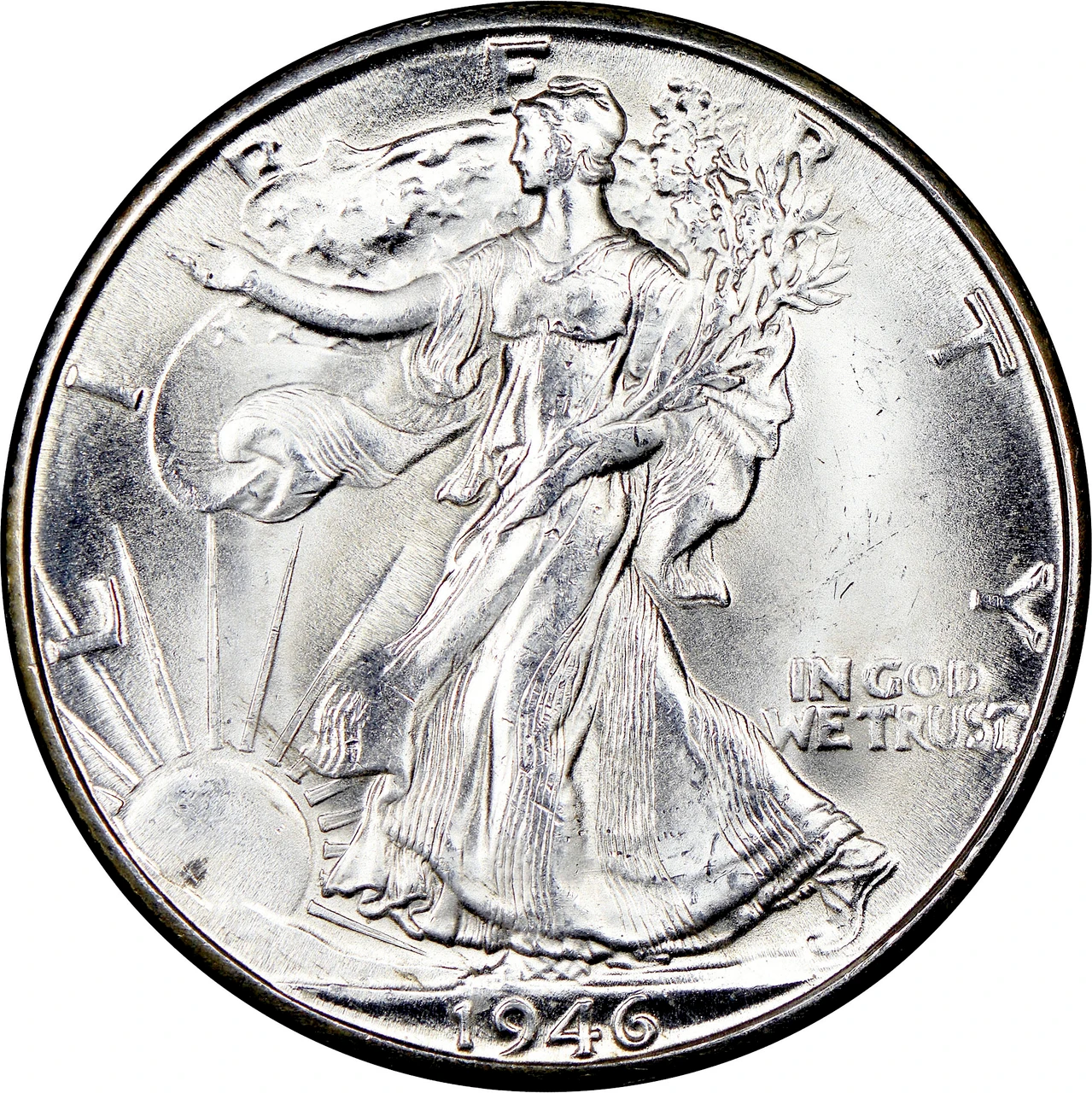
Everything from 1941 through 1947 was struck in large numbers, and those coins make up the bulk of what shows up in inherited collections. Worn examples trade close to silver value plus a few dollars. Where they get interesting is in mint state: a bright, fully struck 1941-1947 half with original luster is a genuinely attractive coin for well under a hundred dollars in most dates, which is why the short set exists.
The short-set strategy
A full date-and-mintmark run is 65 coins and the 1921 issues alone can cost more than the rest combined, so most collectors build the short set instead: the twenty coins from 1941 to 1947, all in matching uncirculated grade. It is achievable on a normal budget, it looks spectacular in an album, and it teaches you to grade the series before you spend serious money on the 1916 to 1921 dates. We keep a rotating stock of individual dates by grade in our Walking Liberty half dollars category, from common 1940s coins up to the tougher 1930s dates, and the design that followed it is in our Franklin half dollars section.
Grading and the strike problem
Two things to look at. First, wear: on the obverse, Liberty's head, breast and the hand holding the branches go first; on the reverse, the eagle's breast feathers. Second, strike, which is the series' particular headache. Many Walking Liberty halves, especially San Francisco coins from the 1920s and 1940s, left the Mint with Liberty's left hand and the skirt lines mushy even though the coin never circulated. A weakly struck uncirculated coin is still uncirculated, but a sharply struck one commands a premium, and a worn coin should never be mistaken for a weak strike. If the coin has been cleaned, with hairlines, unnatural brightness or a flat white look, deduct heavily; the grading services will not assign a numerical grade to it.
Why it is back in the news
The Mint's 2026 Best of the Mint series re-created Weinman's half dollar as a modern gold coin paired with a silver medal, and that has sent a fresh wave of collectors back to the originals. If you like the design and want it in silver at silver prices, the American Silver Eagle carries the same obverse, and if you want the other half of Weinman's 1916 work, our Mercury dime value guide covers it.
The honest summary
Check every coin for 1916-S, 1917 with an obverse mint mark, 1919-D, all three 1921 issues and 1938-D. Anything else is worth its silver plus a premium that depends almost entirely on condition and strike. For current numbers by date and grade, use the price guides at PCGS and NGC rather than a single online listing, and for the series history the American Numismatic Association library is the place to go deeper.
Recent Posts
-

Walking Liberty Half Dollar Value Guide: Key Dates, the 1921 Problem, and What Yours Is Really Worth
Ask a room full of collectors to name the most beautiful U.S. coin and the Walking Liberty half doll
-
The 2026 Semiquincentennial Proof Set: What's in It, Why It Costs $107, and Whether to Buy One
On October 6 at noon Eastern, the U.S. Mint puts the 2026 Semiquincentennial Proof Set on sale at $1