The Ultimate Washington Quarter Value Guide for Collectors
What Are Washington Quarter Values Worth Today?
Washington quarter values range from around $0.25 for common circulated clad coins to over $85,000 for rare key dates in top condition. Here's a quick snapshot to answer the most common questions right away:
| Quarter Type | Condition | Approximate Value |
|---|---|---|
| Common clad (1965-1998) | Circulated | $0.25-$0.50 |
| Common clad (1965-1998) | MS-65 uncirculated | $5-$15 |
| Silver (1932-1964) | Circulated | $6-$10 (melt value) |
| Silver (1932-1964) | MS-65 uncirculated | $20-$12,000+ |
| 1932-S key date | MS-65 | ~$6,000 |
| 1932-D key date | MS-67 | ~$85,000 |
| 1934 Doubled Die Obverse | MS-67 | ~$10,750 |
The Washington Quarter has been minted since 1932 — nearly a century of coins spanning two very different compositions. Quarters made from 1932 through 1964 contain 90% silver, giving them a built-in melt value of roughly $5.50 each at today's silver spot price of around $33 per ounce. Quarters made from 1965 onward are clad cupro-nickel and worth face value unless they're in exceptional condition or carry a rare variety.
But melt value is just the floor. The real excitement in collecting Washington Quarters comes from key dates, mint marks, grading grades, and varieties like doubled dies — factors that can push a single coin's value from a few dollars into the tens of thousands.
Whether you've found an old quarter in a jar or you're building a serious collection, understanding what drives value is the first step.
Introduction
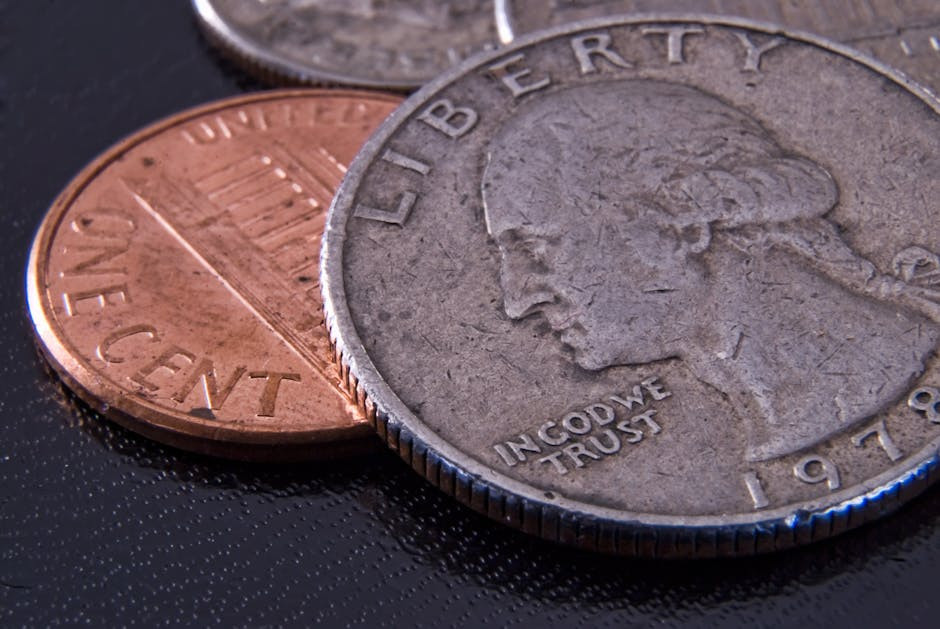
The Washington Quarter is perhaps the most iconic coin in American pockets today. Originally released in 1932 to commemorate the 200th anniversary of George Washington's birth, the design by sculptor John Flanagan was actually intended to be a one-year-only commemorative. However, it proved so popular—and the previous Standing Liberty design was so difficult to strike—that the Treasury decided to make George a permanent fixture.
For the first 32 years of its life, the Washington Quarter was struck in 90% silver and 10% copper. This "Type 1" era ended in 1964 when rising silver prices led the U.S. Mint to switch to a copper-nickel "clad" composition. While billions of these coins have been struck, only a select few are truly rare. To determine washington quarter values, we have to look past the face value and examine the tiny details that separate a common pocket piece from a museum-quality treasure.
Key Factors Determining Washington Quarter Worth
When we evaluate a coin's market worth, we aren't just looking at the date. Several variables work together to determine the final price.
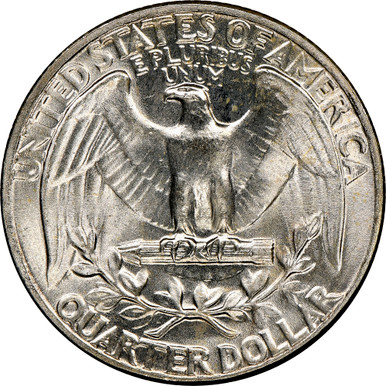
- Mint Marks: Where was your coin born? Quarters struck in Philadelphia usually have no mint mark (or a 'P' on modern issues), while those from Denver ('D') or San Francisco ('S') often have lower mintages. In the early years, the mint mark is found on the reverse, just below the eagle’s wreath.
- The Sheldon Scale: This is the universal 1-to-70 grading scale. A coin graded MS-60 (Mint State) is uncirculated but might have "bag marks" (scratches from hitting other coins). A coin at MS-67 or MS-68 is nearly perfect, with incredible luster and no visible flaws.
- Eye Appeal: Sometimes two coins have the same technical grade, but one has beautiful "toning" (natural coloration) that makes it more desirable to collectors.
- Population Reports: We use data from professional services like PCGS and NGC to see how many examples of a specific coin exist in a certain grade. If only five coins have ever been graded MS-68, the price will skyrocket due to scarcity.
Grading and Condition Rarity
Condition is king in numismatics. For common silver quarters from the 1950s, the difference between a circulated coin and an uncirculated one might only be $10. However, for a key date like the 1932-D, jumping from an MS-60 to an MS-68 can mean a value increase from $1,100 to a staggering $85,000.
Professional grading looks for:
- Luster: The "cartwheel" shine of a freshly minted coin.
- Wear: High points like Washington's cheek and the eagle's breast feathers are the first to show signs of circulation.
- Contact Marks: Scratches or "chatter" on the surface.
The Impact of Silver Spot Prices on Washington Quarter Values
If you have a handful of worn Washington quarters dated 1964 or earlier, their value is tied directly to the "melt value." Since each silver quarter contains about 0.1808 troy ounces of pure silver, a spot price of $33.13 (as of recent market updates) gives each coin a base value of approximately $5.50 to $6.00.
While rare dates trade for a "numismatic premium" far above their silver content, common-date circulated silver quarters (often called "junk silver") move up and down with the daily precious metals market. This makes them a popular choice for both collectors and silver investors.
Rare Dates and High-Value Varieties
While most quarters you'll find are common, a few specific years and mint marks are the "Holy Grails" of the series.
Key Date Washington Quarter Values: 1932-D and 1932-S
In 1932, the Denver and San Francisco mints produced very few quarters compared to Philadelphia.
- 1932-D: With a mintage of only 436,800, this is the undisputed king. Even in "Good" condition, it's worth around $80. In high grades like MS-67, it has reached auction records of $85,000.
- 1932-S: Nearly as rare with a mintage of 408,000. While it is slightly more common in higher grades than the 1932-D, an MS-67 specimen is still valued at approximately $46,000.
Doubled Die Obverse and Motto Varieties
Errors and varieties are where things get really interesting (and expensive). A "Doubled Die" occurs when the die used to strike the coin has a doubled image, which is then transferred to every coin it hits.
- 1934 Doubled Die Obverse (DDO): Look closely at the words "IN GOD WE TRUST." In the doubled variety, the letters will look thickened or show clear secondary lines. An MS-67 version can fetch over $10,750.
- Motto Varieties (1934): There are three versions of the "IN GOD WE TRUST" motto on 1934 quarters: Light, Medium, and Heavy. The Light Motto is the scarcest in high grades, with MS-68 examples valued around $7,500.
- 1943-S Doubled Die: A famous variety that can be worth $6,500 or more in MS-66 condition.
Silver vs. Clad: Comparing Eras of the Washington Quarter
Understanding the physical differences between these two eras is vital for any collector.
| Feature | Silver Era (1932-1964) | Clad Era (1965-1998) |
|---|---|---|
| Composition | 90% Silver, 10% Copper | 75% Copper, 25% Nickel (outer) |
| Weight | 6.25 Grams | 5.67 Grams |
| Edge | Solid Silver color | Copper "sandwich" stripe visible |
| Intrinsic Value | ~$5.50+ (Silver melt) | $0.25 (Face value) |
Circulated vs. Uncirculated Value Spans
For clad quarters (1965-1998), most circulated coins are only worth their face value of 25 cents. However, the market for "Condition Rarities" is booming. A 1965 clad quarter in a perfect MS-70 grade has been known to sell for as much as $15,500 because it is nearly impossible to find a clad coin from that era without any scratches.
Proof and Special Mint Set Values
The U.S. Mint also produces "Proof" coins specifically for collectors. These are struck multiple times on polished planchets to create a mirror-like finish.
- Silver Proofs: From 1992 to 1998, the mint offered silver proof sets. These S-mint coins usually trade for $6 to $15.
- Special Mint Sets (1965-1967): Since the Mint didn't make official Proof sets these years, they made SMS coins with a satin-like finish. High-grade SMS quarters can carry a nice premium.
- Cameo and Deep Cameo: If the design (the frosting) stands out sharply against a deep, dark mirror background, the coin is designated as "Cameo" (PFCA) or "Ultra/Deep Cameo" (PFUC), which significantly increases the value.
Evaluating Your Collection for Authenticity and Value
If you’re looking at your own collection, there are a few things we recommend you check before assuming you have a jackpot.
- Strike Quality: Is the design sharp, or does it look "mushy"? A sharp strike is always more valuable.
- Toning: Some collectors love "rainbow toning"—vibrant colors caused by the silver reacting to the air or original paper mint packaging.
- Storage: Never clean your coins! Cleaning creates microscopic scratches that can destroy 90% of a coin's numismatic value. Use PVC-free holders to prevent chemical damage.
- Counterfeit Detection: Because 1932-D and 1932-S quarters are so valuable, scammers sometimes glue a "D" or "S" onto a common Philadelphia coin. Always look at the mint mark under a magnifying glass to ensure it hasn't been added.
Frequently Asked Questions about Washington Quarter Values
Which Washington Quarter is the most valuable?
The 1932-D is generally considered the most valuable regular-issue Washington quarter, especially in high grades. A specimen in MS-68 condition is valued at approximately $85,000. However, some unique error coins or extremely high-grade modern clad quarters can occasionally challenge these prices at auction.
How much silver is in a Washington Quarter?
Washington Quarters minted from 1932 to 1964 are composed of 90% silver and 10% copper. Each coin contains 0.1808 troy ounces of pure silver. To find the "melt value," multiply 0.1808 by the current silver spot price.
Are 1965 quarters worth anything?
Most 1965 quarters are only worth 25 cents. 1965 was the first year of the copper-nickel clad composition, and billions were minted. However, if you have one in a certified MS-68 grade or higher, it can be worth thousands to a registry set collector. There are also rare "transition errors" where a 1965 quarter was accidentally struck on a leftover silver planchet; these are extremely rare and very valuable!
Conclusion
Building a collection of Washington Quarters is a journey through American history, from the Great Depression through the Bicentennial and into the modern era. Whether you are hunting for the elusive 1932-D or simply stacking silver quarters for their metal value, understanding washington quarter values is the key to success.
At Coins Online LLC, we have been helping collectors find high-quality pieces since 1999. We offer a massive selection of over 5,000 products, including silver quarters and supplies to keep your collection safe. We take pride in our competitive prices, low shipping rates, and our 14-day return policy to ensure you are happy with every addition to your "George" collection.
Ready to start or expand your collection?
Happy collecting, and may your next pocket change discovery be a key date!
Recent Posts
-

Walking Liberty Half Dollar Value Guide: Key Dates, the 1921 Problem, and What Yours Is Really Worth
Ask a room full of collectors to name the most beautiful U.S. coin and the Walking Liberty half doll
-
The 2026 Semiquincentennial Proof Set: What's in It, Why It Costs $107, and Whether to Buy One
On October 6 at noon Eastern, the U.S. Mint puts the 2026 Semiquincentennial Proof Set on sale at $1