1881 Indian Head Cent Guide: Grading and Market Prices
What Is the 1881 Indian Head Penny Worth?
The 1881 Indian Head penny is a beloved 19th-century U.S. coin that collectors worldwide actively seek out. With over 39 million struck at the Philadelphia Mint, it's affordable in circulated grades — but high-grade examples can command serious premiums.
Quick value reference by grade:
| Grade | Condition | Approximate Value |
|---|---|---|
| Good (G-4) | Heavily worn | $5 – $8 |
| Fine (F-12) | Moderate wear | $8 – $9 |
| Very Fine (VF-20) | Light wear | $15 |
| Extremely Fine (XF-40) | Slight wear | $25 – $27 |
| About Uncirculated (AU-50) | Minimal wear | $38 |
| Mint State (MS-60+) | No wear | $35 – $68+ |
| MS-64 BN | Uncirculated, choice | ~$191 |
| MS-65 BN | Uncirculated, gem | ~$343 |
| Proof (PR-63) | Special strike | ~$313 |
Values are approximate as of April 2026. Actual prices vary by color designation (BN, RB, RD) and certification.
Whether you've found one in an old collection or you're building a complete Indian Head cent set (1859–1909), knowing the grade and condition of your coin is the single biggest factor in determining its value. A worn example might sell for under $10, while a pristine gem can fetch hundreds.
This guide covers everything you need — history, grading standards, current market prices, known varieties, and buying tips — so you can make smart, confident decisions.
History and Specifications of the 1881 Indian Head Penny
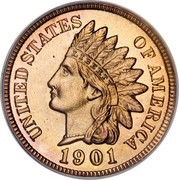
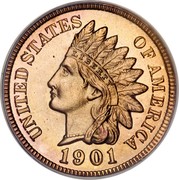
The 1881 indian head penny represents a fascinating era in American numismatics. By 1881, the United States was firmly in the "Gilded Age," and the Indian Head cent had become the workhorse of American commerce. Interestingly, the name of the coin is a bit of a misnomer. The figure on the obverse isn't actually a Native American; it is Lady Liberty wearing a feathered headdress.
Legend has it that the designer, James B. Longacre, modeled the profile after his 12-year-old daughter, Sarah. While some historians debate this charming "family story," the design remains one of the most iconic in U.S. history. Longacre, who was the Chief Engraver at the Philadelphia Mint, also designed the two-cent piece — the first U.S. coin to feature the motto "In God We Trust."
Technical Specifications
For those of us who love the "nuts and bolts" of a coin, the 1881 Indian Head Cent historical context reveals a very specific set of physical attributes. By 1881, the Mint had long since moved away from the thick "nickel-copper" composition used in the early 1860s.
- Mint Location: Philadelphia (No mint mark)
- Composition: 95% Copper, 5% Tin and Zinc (Bronze)
- Weight: 3.11 grams
- Diameter: 19 mm
- Edge: Plain (Smooth)
- Mintage: 39,208,000 (Circulation strikes)
Because these coins were minted in Philadelphia, you won't find a mint mark on them. If you see an "S" mint mark on an Indian Head penny, it would have to be from 1908 or 1909, as the San Francisco mint didn't start producing cents until the very end of the series.
Grading the Condition of an 1881 Indian Head Cent
When we talk about the value of an 1881 indian head penny, "condition is king." Because millions of these were used in daily transactions to buy newspapers, candy, or bread, most surviving examples are heavily worn. Finding one that still looks like it did when it left the mint in 1881 is a rare treat!
Grading is the process of evaluating how much wear a coin has sustained. We use a 70-point scale, but for most collectors, these general categories are the most important:
Common Grading Standards
- Good (G-4): This is a heavily circulated coin. The main devices are visible, but the "LIBERTY" on the headband is likely completely worn away. The rims might be slightly worn into the design.
- Fine (F-12): You can see moderate wear. At least a few letters of "LIBERTY" should be readable on the headband, though they might be faint.
- Very Fine (VF-20): The wear is light. All letters in "LIBERTY" are clearly visible, though the tips of the feathers and the hair above the ear will show smoothness.
- Extremely Fine (XF-40): Only the highest points of the design show wear. The feathers are sharp, and most of the original detail remains.
- About Uncirculated (AU-50): This coin looks nearly new but has just a hint of "rub" on the highest points, like the cheekbone or the tips of the feathers.
- Mint State (MS-60+): These coins have never been in circulation. They retain their original mint luster.
Wear Pattern Comparison Table
| Feature | Good (G-4) | Fine (F-12) | Very Fine (VF-20) | Extremely Fine (XF-40) |
|---|---|---|---|---|
| Liberty Letters | Worn flat | 3-4 letters visible | All letters visible | Sharp and clear |
| Feather Tips | Smooth | Some detail | Defined edges | Crisp details |
| Headdress | Outlined only | Partial detail | Strong detail | Full detail |
| Reverse Wreath | Flat leaves | Veins visible | Strong leaves | Nearly perfect |
Determining the Value of an 1881 Indian Head Penny
The market for the 1881 indian head penny is quite active. Because it is considered a "common date" compared to the rare 1877 or 1909-S, it is a staple for type collectors. However, don't let the word "common" fool you—high-grade specimens are increasingly hard to find as demand rises.
According to the 1881 Indian Cent Values & Prices, prices for basic circulated examples usually hover between $5 and $25. If you move into the Uncirculated (Mint State) category, the price jumps significantly. A "Brown" (BN) MS-63 example might sell for around $123, while an MS-65 can reach over $340.
The color of the copper also matters. Collectors categorize copper coins as BN (Brown), RB (Red-Brown), or RD (Red). A "Full Red" 1881 penny is a stunning sight, often glowing with its original copper orange-red hue, and these carry the highest premiums.
Market Rarity and Proof Strikes
While the Philadelphia Mint produced nearly 40 million pennies for general circulation, they also produced a very small number of "Proof" coins for collectors. These were struck using polished dies and planchets, resulting in a mirror-like finish and incredibly sharp details.
The Proof 1881 Penny
- Mintage: Approximately 3,575 pieces.
- Value: A PR-63 example usually retails for around $313, but high-grade Proofs with "Cameo" contrast can sell for well over $1,000.
In terms of survival rarity for the business strikes, PCGS estimates that about 5,000 examples survive across all grades that would be worth professional grading. When you look at the top of the heap—MS-65 or better—the population drops to a tiny handful. In fact, PCGS notes only about 20 examples in MS-65 or better. This scarcity at the top end is why the 1881 1C, BN (Regular Strike) data shows such a dramatic price curve.
Identifying Varieties of the 1881 Indian Head Penny
For the "treasure hunters" among us, the 1881 year offers some exciting varieties. These are coins that were struck with slightly different or damaged dies, creating unique features that collectors love to find.
Repunched Date (RPD)
One of the most famous varieties for this year is the Repunched Date, specifically the one cataloged by experts like Rick Snow as the Snow-5. On these coins, you can see clear evidence that the "88" in the date was punched into the die more than once. If you look closely at the date with a magnifying glass, you might see "ghost" outlines of the numbers.
Errors to Look For
- Off-Center Strikes: We occasionally see 1881 pennies where the coin wasn't centered in the press, resulting in part of the design being cut off. These are highly collectible.
- Die Cracks: As the dies wore down from striking millions of coins, they would sometimes crack. You might find a raised line of metal running across the face or the reverse of the coin.
- Double Dies: While not as famous as the 1955 Lincoln Cent, minor doubling can sometimes be found on the lettering or the feathers of an 1881 penny.
For more deep dives into these specific types, you can find More info about Indian Head Pennies on our dedicated series page.
Tips for Collecting and Selling 1881 Pennies
Whether you are looking to buy an 1881 indian head penny or you have one you'd like to sell, we have a few expert tips to keep in mind:
- Look for Eye Appeal: For copper coins, "eye appeal" is everything. Avoid coins with dark, ugly spots (carbon spots) or green corrosion (verdigris). A clean, chocolate-brown surface is much more desirable.
- Professional Grading: If you think you have an uncirculated or proof coin, it is often worth having it "slabbed" (certified) by a service like PCGS or NGC. This guarantees the grade and authenticity, making it much easier to sell later.
- Storage is Key: Copper is a reactive metal. To keep your 1881 penny looking its best, store it in a cool, dry place. Avoid PVC-containing plastic flips, as these can damage the coin over time. Use archival-quality holders instead.
- Watch the Market: Like all collectibles, coin prices can fluctuate. Keep an eye on auction records to see what similar coins are actually selling for.
If you have questions about a specific coin in your collection or need help finding a high-grade example to complete your set, Contact us for numismatic assistance. We’ve been helping collectors since 1999 and love talking shop!
Frequently Asked Questions about the 1881 Indian Head Penny
Is the 1881 Indian Head Penny rare?
In circulated condition, no. With a mintage of over 39 million, they are relatively common. However, they are condition rare. Finding an 1881 penny in Mint State-65 or higher, or in a "Full Red" color, is quite difficult and considered rare by collectors.
How much is a 1881 Indian Head Penny worth today?
Most examples found in "junk bins" or old jars are worth between $3 and $8. If the coin is in great shape with "LIBERTY" fully visible, it might be worth $15 to $25. Truly uncirculated examples start around $60 and can go up to several hundred dollars.
Where is the mint mark on an 1881 Indian Head Penny?
There is no mint mark! All 1881 Indian Head pennies were struck at the Philadelphia Mint. During this time, the Philadelphia Mint did not use a mint mark on its coins.
Conclusion
The 1881 indian head penny is a perfect entry point for anyone interested in 19th-century American history. It’s a coin that tells a story of a growing nation, captured in 3.11 grams of bronze. Whether you’re hunting for a Snow-5 repunched date or just looking for a nice "Fine" condition example to fill a hole in your album, this year offers something for every budget.
At USSQ (Coins Online LLC), we pride ourselves on helping collectors find exactly what they need. We’ve been in the numismatics industry since 1999, offering over 5,000 products with competitive prices and low shipping. Plus, we offer a 14-day return policy because we want you to be as excited about your new coin as we are!
Ready to add to your collection? You can Shop 1881 Indian Head Pennies and supplies right here on our site. Happy collecting!
Recent Posts
-

Walking Liberty Half Dollar Value Guide: Key Dates, the 1921 Problem, and What Yours Is Really Worth
Ask a room full of collectors to name the most beautiful U.S. coin and the Walking Liberty half doll
-
The 2026 Semiquincentennial Proof Set: What's in It, Why It Costs $107, and Whether to Buy One
On October 6 at noon Eastern, the U.S. Mint puts the 2026 Semiquincentennial Proof Set on sale at $1