How Much is Your Buffalo Nickel Worth Today
How Much Is a 5 Cent Buffalo Nickel Worth Right Now?
The 5 cent buffalo nickel value ranges from as little as $0.50 for a heavily worn common date all the way to $100,000 or more for a rare variety in pristine condition.
Here's a quick snapshot of what Buffalo Nickels are worth today:
| Coin | Condition | Approximate Value |
|---|---|---|
| Common date (e.g., 1937) | Good (circulated) | ~$0.50 - $2 |
| Common date | Uncirculated (MS-63) | $10 - $50 |
| Key date (1921-S) | Mint State | Up to $1,524 |
| Key date (1926-S) | Uncirculated | Up to $6,400 |
| 1937-D Three-Legged (error) | Circulated | $560+ |
| 1937-D Three-Legged (error) | Uncirculated | $3,300+ |
| Complete 61-coin set | Circulated | ~$900 |
| Complete 61-coin set | Uncirculated | ~$33,000 |
That nickel sitting in your change jar might be worth far more than five cents.
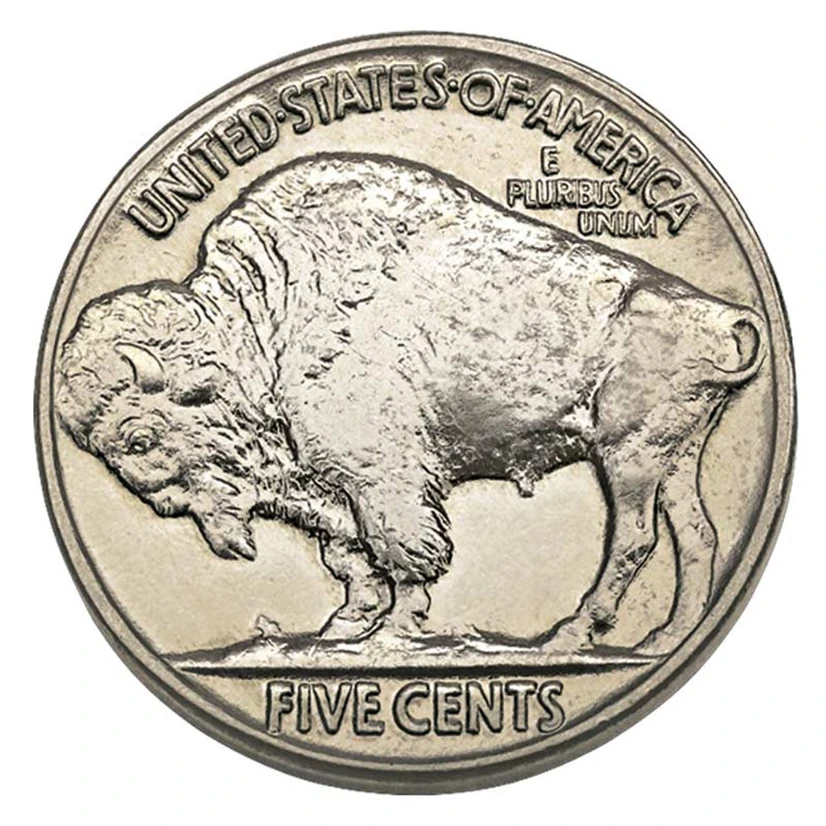
The Buffalo Nickel — officially called the Indian Head Nickel — was minted from 1913 to 1938. Designed by sculptor James Earle Fraser, it's one of the most beloved coins in American history. Its bold imagery of a Native American composite portrait and a bison (modeled after "Black Diamond" from New York's Central Park Zoo) made it instantly iconic.
Most Buffalo Nickels are worth a modest amount. But a handful of key dates and rare error coins can be worth thousands — or even tens of thousands — of dollars. Knowing the difference comes down to three things: date, mint mark, and condition.
History and Design of the Indian Head Nickel
The story of the Buffalo Nickel begins with President Theodore Roosevelt’s "Renaissance of American Coinage." Roosevelt believed our money should be as beautiful as the art in a museum. To achieve this, the U.S. Mint commissioned renowned sculptor James Earle Fraser, an apprentice of the great Augustus Saint-Gaudens, to redesign the five-cent piece.
Fraser’s goal was to create a "totally American" coin. He moved away from European-style "Lady Liberty" figures and looked toward the American West for inspiration. The obverse (front) of the coin features a dignified profile of a Native American man. This wasn't just one person; Fraser created a composite portrait using the features of three different chiefs: Iron Tail (Sioux), Two Moons (Cheyenne), and John Big Tree (Seneca).
The reverse (back) features a massive American bison. For years, rumors swirled that the model was a buffalo named "Black Diamond" from the Central Park Zoo in New York City. While researchers haven't confirmed this with 100% certainty, the "Black Diamond" story remains a favorite piece of numismatic lore.
Type 1 vs. Type 2 Designs
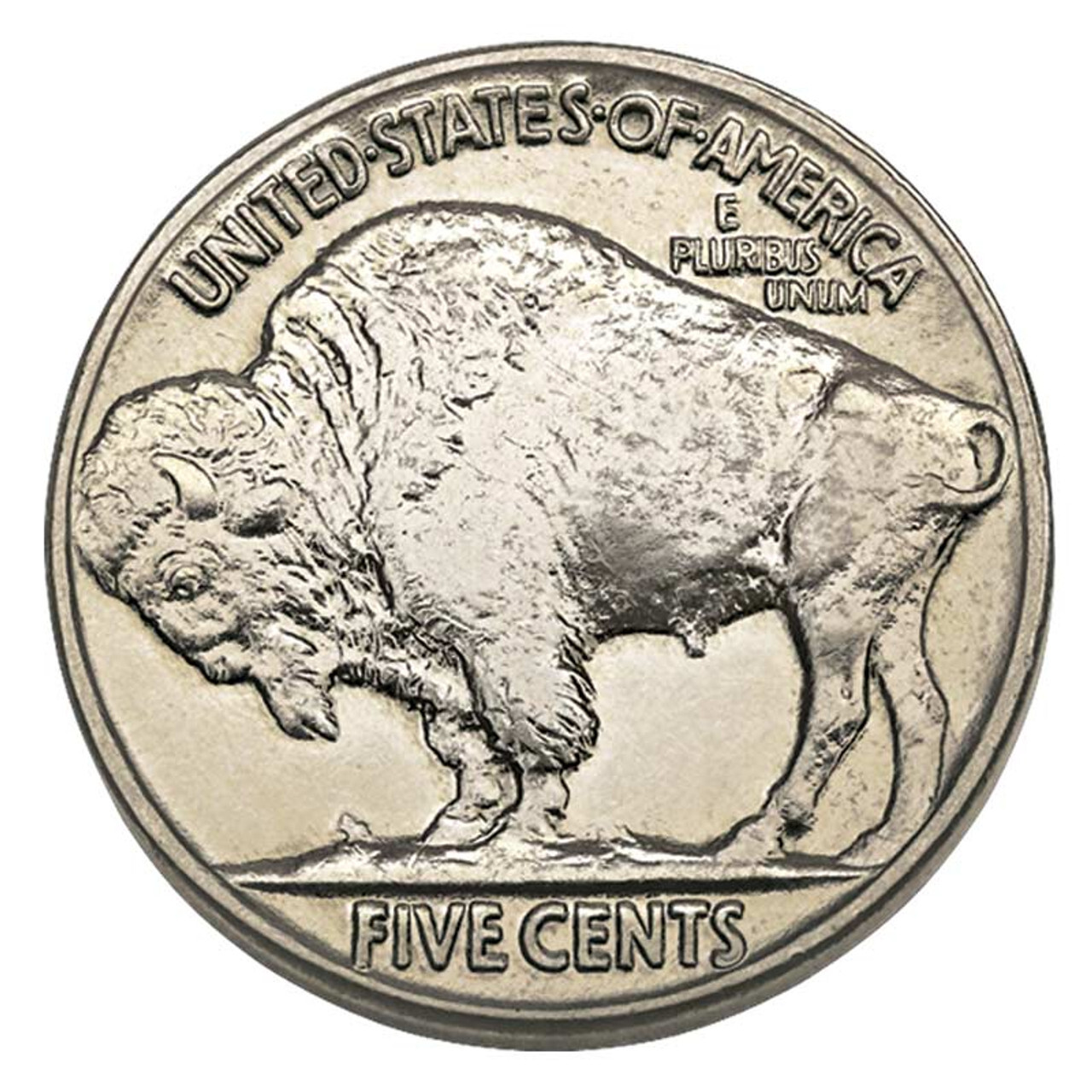
When the coin first debuted on March 4, 1913, the bison stood on a raised mound of dirt. This is known as the Type 1 design. However, Mint officials quickly realized a problem: the "FIVE CENTS" denomination was at the highest point of the mound, causing it to wear away almost immediately in circulation.
By late 1913, the design was modified. The mound was flattened into a straight line, and the "FIVE CENTS" was recessed into a protected area. This Type 2 design remained the standard until the series ended in 1938. Understanding these variations is the first step in using a Buffalo Nickel Value Guide (1913–1938) to price your collection.
Key Factors Influencing 5 cent buffalo nickel value
Determining the 5 cent buffalo nickel value isn't just about reading a date. Several physical and market factors come into play.
Condition and Grade
Condition is king. A 1921-S nickel might be worth $75 in "Good" condition (very worn), but that same coin can skyrocket to over $1,500 if it is in "Mint" condition. Collectors look for "eye appeal"—the absence of scratches, stains, or "planchet flaws" (imperfections in the metal itself).
Strike Quality
Not all Buffalo Nickels were created equal. Coins struck at the Denver (D) and San Francisco (S) mints between 1917 and 1927 are notorious for "weak strikes." Because the copper-nickel alloy is quite hard, the dies often failed to press the full detail into the coin. A "sharply struck" example from these years is a rare find and commands a massive premium.
Mint Marks
Where your coin was born matters. Philadelphia coins have no mint mark. Denver coins have a small "D," and San Francisco coins have an "S." You can find the mint mark on the reverse side, just below the words "FIVE CENTS."
Comparing Type 1 and Type 2 Values
Because Type 1 coins were only minted for part of 1913, they are often more collectible in certain grades. However, because many people saved them as "first-year" souvenirs, uncirculated Type 1s are sometimes easier to find than uncirculated Type 2s.
| Year/Mint | Type 1 (Raised Ground) | Type 2 (Recessed Ground) |
|---|---|---|
| 1913 Philadelphia | ~$15 (MS-60) | ~$32 (MS-60) |
| 1913 Denver | ~$45 (MS-60) | ~$115 (MS-60) |
| 1913 San Francisco | ~$65 (MS-60) | ~$340 (MS-60) |
Rare Dates and Varieties: The Most Valuable Buffalo Nickels
While most Buffalo Nickels from the 1930s are common, the series is famous for its "Key Dates" and spectacular mint errors. If you find one of these, you've hit the numismatic jackpot.
- 1916 Doubled Die Obverse: Look closely at the date. If the numbers look doubled, you might have a coin worth $4,000 in circulated condition and up to $90,000 in high grades.
- 1918/7-D Overdate: A fascinating error where a "7" is visible under the "8" in the date. These are incredibly rare, with values ranging from $1,000 to over $100,000.
- 1926-S: This is the lowest mintage coin of the entire series, with only 970,000 produced. Even in "Good" condition, it’s worth about $44. In uncirculated condition, it can fetch $6,400 or more.
- 1921-S and 1924-S: These are considered "condition rarities." While common in worn grades, they are extremely difficult to find in Mint State.
- 1938-D: This was the final year for the series. Interestingly, the 1938-D 5C Buffalo (Regular Strike) is one of the most common coins in high grades because collectors hoarded rolls of them, knowing the design was about to change to the Jefferson Nickel.
Identifying the 1937-D Three-Legged 5 cent buffalo nickel value
The most famous error in American coin history is the 1937-D Three-Legged Buffalo. This wasn't a design choice; it was an accident. A Mint employee at the Denver facility tried to polish away some "clash marks" on a damaged die and accidentally polished away the buffalo's front right leg.
To identify a genuine "Three-Legs," look for these three things:
- The front leg is completely missing, but the hoof is still visible on the ground.
- The buffalo's back leg looks "moth-eaten" or ragged.
- A "stream" of metal appears to flow from the buffalo's belly to the ground.
Beware of fakes! Many people try to file the leg off a common 1937-D. Always consult a Buffalo Five Cents (1913-1938) | Price Guide & Values or a professional service to authenticate this variety.
Market Trends for 5 cent buffalo nickel value
The market for Buffalo Nickels has remained remarkably stable over the last few decades. Unlike silver coins, their value isn't tied to the fluctuating price of precious metals (they are 75% copper and 25% nickel). Instead, their value comes purely from collector demand and rarity.
High-grade "Gem" coins (MS-65 and above) continue to see the most growth. For example, a 1915 5c MS is considered a tougher date to find in pristine condition compared to the more common 1930s issues, making it a favorite for investors looking for long-term appreciation.
How to Grade and Authenticate Your Collection
Grading a Buffalo Nickel is a bit of an art form. Because the design is so high-relief, it wears down in very specific patterns.
Key Grading High Points
When we assess a coin's grade, we look at the areas that stick out the most, as these show wear first:
- Obverse: The Native American's cheekbone and the hair braid near the "LIBERTY" inscription.
- Reverse: The buffalo's shoulder and the tip of its horn.
The Grading Scale
- Good (G-4): The date is readable but the rest of the coin is very flat. The buffalo's horn is gone.
- Fine (F-12): The buffalo's horn is about half visible. Some detail remains in the hair braid.
- Very Fine (VF-20): The horn is nearly complete. The "LIBERTY" text is sharp.
- Mint State (MS-60 to MS-70): No wear at all. The coin has its original "mint luster" (that frosty shine).
A Note on "Dateless" Nickels
Because the date was placed on a raised part of the design, it's very common to find Buffalo Nickels with no date at all. These are generally worth only about $0.10 to $0.25 as "curiosities." Some people use chemicals (like Ferric Chloride) to "restore" the date, but collectors consider these coins "damaged," and they rarely hold much value.
Frequently Asked Questions about Buffalo Nickels
Where is the mint mark located on a Buffalo Nickel?
The mint mark is located on the reverse (tails) side of the coin. Look at the very bottom, underneath the words "FIVE CENTS." If you see a "D," it was minted in Denver. If you see an "S," it was minted in San Francisco. If there is no letter at all, it was minted in Philadelphia.
Are dateless Buffalo Nickels worth anything?
While they are great for craft projects or "type set" fillers for kids, dateless Buffalo Nickels have very little numismatic value. Because the date is the most important factor in determining rarity, a coin without one is usually just worth its face value plus a tiny premium for the nickel content.
Why was the Buffalo Nickel replaced in 1938?
By 1938, the Buffalo Nickel had reached its 25-year statutory requirement. This meant the Treasury could change the design without needing a special Act of Congress. The Mint was eager to move on because the Buffalo design was notoriously difficult to strike and the dies wore out too quickly. A competition was held, and Felix Schlag’s Jefferson Nickel design was chosen to replace it.
Conclusion
The Buffalo Nickel remains a cornerstone of American coin collecting. Whether you are hunting for a rare 1937-D Three-Legged error or simply trying to complete a date-and-mint set, these coins offer a tangible connection to the rugged spirit of the American frontier.
At USSQ, we've been helping collectors find high-quality coins and supplies since 1999. If you're looking to protect your collection or add a new piece to your portfolio, we invite you to Shop Buffalo Nickels and Supplies on our website. We offer competitive prices, low shipping, and a 14-day return policy to ensure you're happy with every purchase.
Need a professional opinion? You can always Contact USSQ for coin inquiries or visit us for advice on how to build a collection that stands the test of time. Happy hunting!
Recent Posts
-

Walking Liberty Half Dollar Value Guide: Key Dates, the 1921 Problem, and What Yours Is Really Worth
Ask a room full of collectors to name the most beautiful U.S. coin and the Walking Liberty half doll
-
The 2026 Semiquincentennial Proof Set: What's in It, Why It Costs $107, and Whether to Buy One
On October 6 at noon Eastern, the U.S. Mint puts the 2026 Semiquincentennial Proof Set on sale at $1