The Ultimate Guide to Indian Head Pennies
What Are Indian Head Pennies? A Quick Overview
Indian Head Pennies are one of the most iconic and beloved coins in American numismatic history — struck by the U.S. Mint from 1859 through 1909.
Here's what you need to know at a glance:
| Feature | Details |
|---|---|
| Minted | 1859–1909 (50 years) |
| Designer | James Barton Longacre, Chief Engraver, Philadelphia Mint |
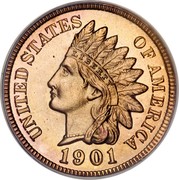
| Obverse | Lady Liberty wearing a Native American feathered headdress |
| Reverse | Laurel wreath (1859) / Oak wreath with Union Shield (1860–1909) |
| Composition | Copper-nickel (1859–1864), then bronze (1864–1909) |
| Key Dates | 1877, 1908-S, 1909-S |
| Replaced by | Lincoln cent in 1909 |
These coins are more than just old pennies. They lived through the Civil War, Reconstruction, westward expansion, and America's rise as an industrial power. That's 50 years of history in your hand.
Widely regarded as America's most beautiful copper coin, the Indian Head cent has captivated collectors for well over a century. Whether you're just starting out or building a serious date set, this guide covers everything — history, design, composition, key dates, values, and grading.
History and Design of Indian Head Pennies
The story of the Indian Head cent begins in the late 1850s. At the time, the United States Mint was struggling with the Flying Eagle cent. While that design was beautiful, it was a nightmare to strike; the eagle’s head and tail were positioned directly opposite the wreath on the reverse, making it difficult for the metal to flow into the dies properly.
In 1858, Mint Director James Ross Snowden tasked Chief Engraver James Barton Longacre with creating a replacement. Longacre produced several patterns, and the design that eventually won out featured a portrait of Liberty in a feathered headdress.
A popular legend suggests that Longacre’s daughter, Sarah, was the model for the coin. The story goes that she tried on a Native American headdress while visiting the Mint, and her father was so struck by the image that he sketched her on the spot. However, most historians (and Longacre himself during his lifetime) debunked this. Sarah was actually 30 years old in 1859, and Longacre stated that the facial features were inspired by a statue of "Crouching Venus" on display in Philadelphia, which he had seen in the Vatican collection.
We often see these coins as a bridge between the old world and the new. For instance, the 1881 Indian Head Penny was struck during a time of immense growth in the U.S., yet it carried a design rooted in mid-19th-century artistic sensibilities.
Evolution of the Obverse Portrait
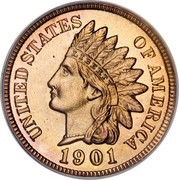
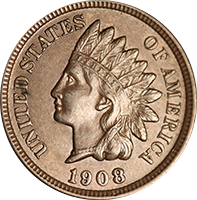
The obverse of the Indian Head Pennies features a Caucasian Lady Liberty. Longacre argued that the feathered tiara was a "proper emblem of American Liberty," choosing it over the Phrygian cap often seen on earlier U.S. coinage. He felt the headdress was uniquely American. Liberty wears a band inscribed with the word "LIBERTY," and her hair falls in long curls down her neck. This "Caucasian Liberty in a Native American costume" has sparked much discussion over the years regarding cultural representation, but in the context of 1859, it was intended to be a purely nationalistic symbol.
The 1860 Reverse Redesign
If you look at an 1859 penny, you’ll notice a simple laurel wreath on the back. By 1860, the Mint decided the coin needed more "national character." The design was updated to an oak wreath—symbolizing strength—and a Union Shield was added to the top. This design remained largely unchanged until the series ended. Coins like the 1892 Indian Head Penny showcase this "Type 2" reverse in all its late-series glory.
Composition Changes and the "White Cent" Era
One of the most fascinating aspects of this series is that the coins actually changed color and weight halfway through production. From 1859 to mid-1864, the pennies were made of 88% copper and 12% nickel. These are known to collectors as "White Cents" or "Nicks" because they have a much lighter, almost silvery appearance compared to the bronze pennies we use today.
According to Indian Cent Specifications, these early coins were also much thicker and heavier.
The Impact of the Civil War on Indian Head Pennies
As the Civil War broke out, people began hoarding all forms of coinage. Metal prices fluctuated wildly, and nickel became scarce and expensive. By 1864, the Mint realized they needed a cheaper, more efficient alloy. The Act of April 22, 1864, authorized the change to bronze (95% copper and 5% tin/zinc).
This transition was so significant that the government eventually passed the Act of March 3, 1871, which allowed for the redemption and melting of over 30 million of the old copper-nickel and Flying Eagle cents. This is one reason why high-grade "White Cents" are so prized today—many were simply taken out of circulation and destroyed. If you’re interested in other "Indian" themed coins from this era, you might also enjoy learning about the Old Indian Head Nickel, though it features a very different design style!
Metallurgical Varieties of 1864
The year 1864 is a "transition year," meaning you can find Indian Head Pennies in both copper-nickel and bronze.
- Copper-Nickel (CN): Weighs 4.67 grams. It is thicker and has a pale, yellowish-white hue.
- Bronze: Weighs 3.11 grams. It is thinner and has the familiar copper-orange (or brown) color.
Late in 1864, Longacre also added a tiny "L" (his initial) to the ribbon behind Liberty’s neck. Finding an 1864-L in good condition is a major win for any collector!
Key Dates, Rarities, and Varieties to Watch For
When we talk about "Key Dates," we are talking about the "Holy Grails" of the series. These are the coins that had the lowest mintages or the lowest survival rates.
The undisputed king of the Philadelphia Mint issues is the 1877 Indian Head cent. With a circulation mintage of only 852,500, it is incredibly rare. Most of these coins were released during a period of economic depression, meaning they were spent and worn down rather than saved by collectors.
Another massive rarity is the 1909-S. For most of the series, pennies were only minted in Philadelphia (which used no mint mark). However, in 1908 and 1909, the San Francisco Mint struck pennies for the first time. The 1909-S has a mintage of just 309,000—the lowest in the entire series.
Identifying Rare Indian Head Pennies Varieties
Beyond just the dates, there are specific varieties that can turn a "common" penny into a treasure:
- 1873 Doubled Liberty: Look for dramatic doubling on the word "LIBERTY" and Liberty’s facial features. This is often called the "King of Indians."
- 1888/7 Overdate: A very rare variety where the last "8" was struck over a "7."
- 1886 Variety 1 vs. Variety 2: In Variety 1, the lowest feather points between the I and C in "AMERICA." In Variety 2, it points between the C and A.
- 1864-L on Ribbon: As mentioned, look for the tiny "L" on the lower ribbon behind the neck.
For those tracking the absolute best of the best, the CCN places Finest Known Indian Head Cent Collection article highlights just how competitive the market for "Condition Census" coins can be.
The 1877 and 1909-S Key Dates
The 1877 and 1909-S remain the most sought-after coins for anyone trying to complete a Indian Head Cent set. While the New Orleans Mint was famous for silver and gold, it never struck Indian cents, making the "S" mint mark from San Francisco the only branch mint mark to look for in this series. You can browse our current inventory of Indian Head Pennies to find these elusive dates.
Determining the Value and Grade of Your Collection
The value of Indian Head Pennies is driven by two main things: rarity and condition. A common 1907 penny might be worth a couple of dollars in worn condition, but a 1907 in "Mint State" (uncirculated) with its original red color can be worth hundreds.
When we look at Indian Head Penny Value, we have to consider the color designation used by grading services like PCGS and NGC:
- Red (RD): The coin retains at least 95% of its original mint orange-red color. These are the most expensive.
- Red-Brown (RB): The coin shows a mix of original red and brown patina (between 5% and 95% red).
- Brown (BN): The coin has turned completely brown. This is natural for copper over time and is the most common state for circulated coins.
Factors Influencing Market Prices
According to Indian Head Cent Value: Most Valuable Key Dates & Varieties - Coins Value, mintage isn't the only factor. "Condition rarity" is huge. For example, the 1872 is actually rarer than the 1877 in some high uncirculated grades!
Other factors include:
- Woodgrain Toning: Sometimes the copper alloy wasn't mixed perfectly, creating a "woodgrain" look. Some collectors love this; others don't.
- Verdigris: This is a green, needle-like corrosion. It is the enemy of copper coins. If you see green "gunk," the coin’s value drops significantly because it is considered "environmental damage."
- Strike Quality: Some years were notorious for "weak strikes" where the feathers don't show full detail even if the coin was never used.
Professional Grading and Authentication
If you think you have a key date like an 1877 or a 1909-S, we strongly recommend professional grading. Because these coins are so valuable, counterfeits do exist (often made by altering common dates). A slab from PCGS or NGC guarantees the coin is real and gives it a definitive grade that makes it much easier to sell later.
Frequently Asked Questions about Indian Head Pennies
Why is the 1877 Indian Head Penny so valuable?
It’s the "perfect storm" of rarity. Not only was the mintage low (852,500), but the U.S. was in the middle of a terrible economic slump. People weren't saving coins; they were spending every penny they had to survive. Consequently, very few 1877 pennies survived in high grades. A low-grade version might cost $500, while a pristine uncirculated one can fetch over $5,000. For more pricing details, see our Indian Head Penny Value guide.
Is the person on the coin actually a Native American?
No. As we mentioned, it is Lady Liberty wearing a headdress. James Longacre wanted to create a "uniquely American" Liberty. At the time, he argued that a feathered tiara was more appropriate for a New World democracy than the Greek or Roman caps used in Europe. If you look closely at her face, she has the same classical European features found on other coins of the era.
Where is the mint mark located on these coins?
For 98% of the series, there is no mint mark because they were all made in Philadelphia. However, for the years 1908 and 1909, look on the reverse side. At the very bottom, right under the center of the wreath, you might see a tiny "S." That "S" stands for San Francisco, and it adds a lot of value!
Conclusion
The Indian Head Pennies series is a cornerstone of American coin collecting. It offers something for everyone—from the beginner who can buy a common date for a few dollars to the advanced specialist hunting for the elusive 1864-L Proof or a "Red" 1877. These coins are tangible pieces of history that survived the fires of the Civil War and the birth of modern America.
At USSQ (Coins Online LLC), we’ve been helping collectors find high-quality, historically significant coins since 1999. Whether you are looking for a specific year to complete your set or want to start a new collection, we invite you to explore our selection. More info about Indian Head Pennies can be found on our main site, where we offer competitive prices and a 14-day return policy to ensure you're happy with every piece of history you add to your collection. Happy hunting!
See our wheat pennies for current prices.
Recent Posts
-

Walking Liberty Half Dollar Value Guide: Key Dates, the 1921 Problem, and What Yours Is Really Worth
Ask a room full of collectors to name the most beautiful U.S. coin and the Walking Liberty half doll
-
The 2026 Semiquincentennial Proof Set: What's in It, Why It Costs $107, and Whether to Buy One
On October 6 at noon Eastern, the U.S. Mint puts the 2026 Semiquincentennial Proof Set on sale at $1