Barber Half Dollar Value Guide: The 1913-1915 Lows, the 1892-O Micro O, and Why Nice Ones Are Hard to Find
The Barber half dollar has no single famous rarity the way the Barber quarter has its 1901-S, and that fools people into thinking the series is easy. It is not. Half dollars were the hardest-working silver coin of their era, most survivors are worn down to the rims, and more than twenty dates had mintages under one million. Put a set together in anything better than Good and you find out quickly why experienced collectors respect this series. Here is what drives value, which dates to look for, and what an ordinary worn example is really worth.

The basics
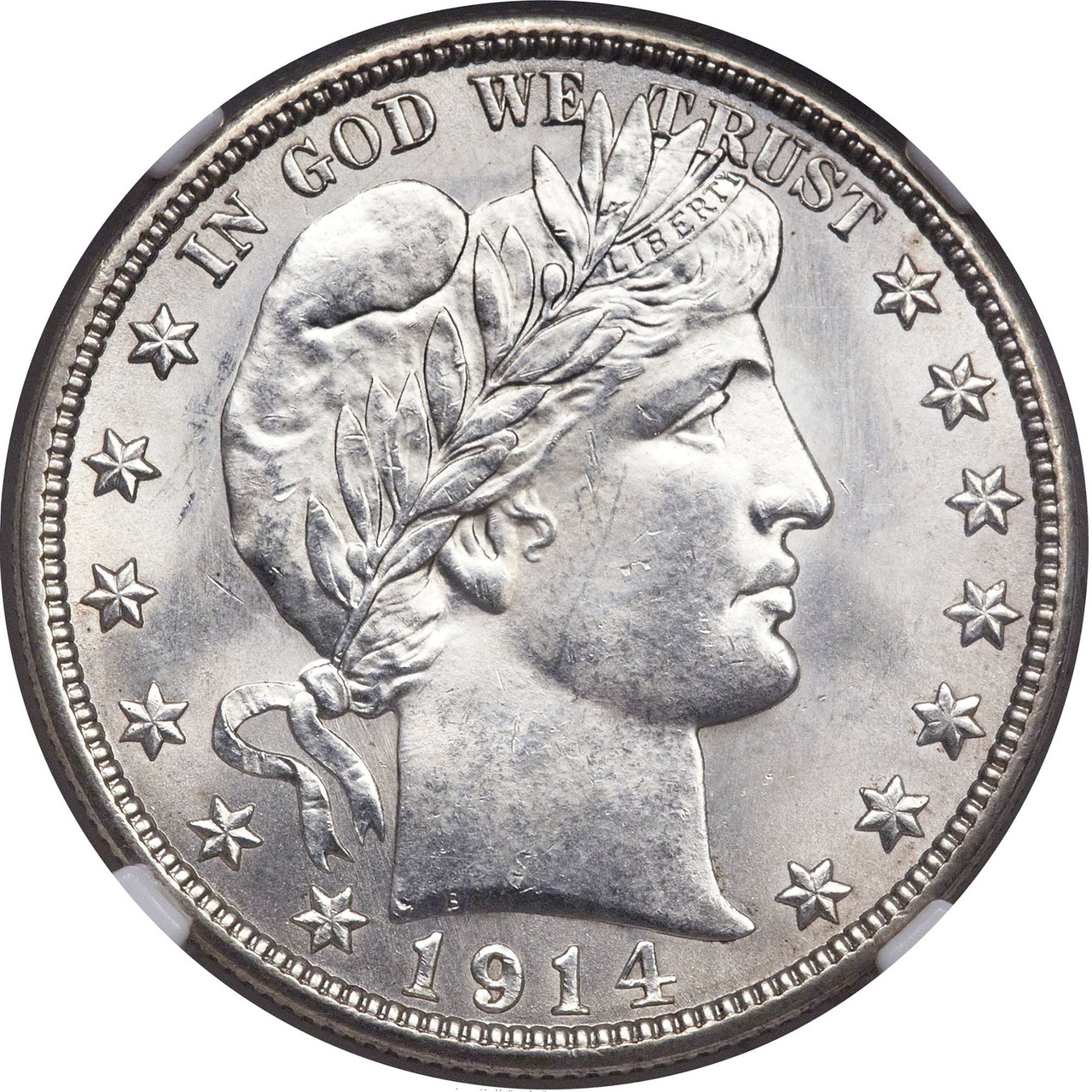
Charles E. Barber's half dollar was struck from 1892 through 1915, replacing the Seated Liberty half and giving way to the Walking Liberty half in 1916. It shares its design with the Barber dime and quarter: Liberty facing right with a laurel wreath and a headband reading LIBERTY on the obverse, and a heraldic eagle on the reverse. The coin is 90% silver, weighs 12.5 grams and contains about 0.36 troy ounces of silver, which sets a floor under even the most worn example.
Philadelphia (no mint mark), New Orleans (O), San Francisco (S) and, from 1906, Denver (D) all struck Barber halves. The mint mark is on the reverse, below the eagle's tail.
The low-mintage dates
According to PCGS, 21 Barber halves have business-strike mintages under one million. The most important to know:
- 1914: 124,230 struck, the lowest mintage of the series and scarce in every grade.
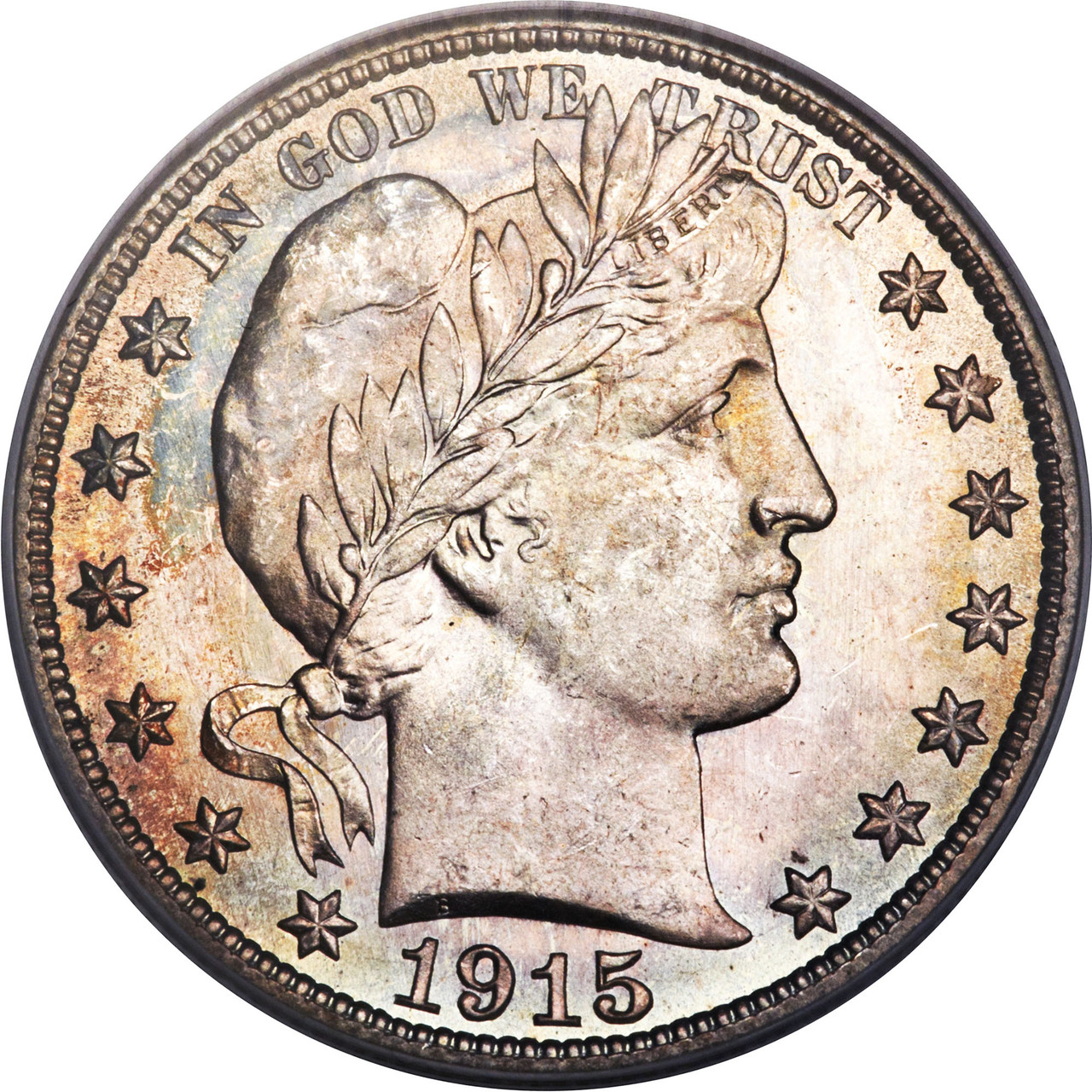
- 1915: 138,000, the final year of the design.
- 1913: 188,000, the third of the late Philadelphia trio.
- 1892-O: 390,000, a first-year branch-mint issue with an even scarcer variety, covered below.
- 1904-S: 553,038. Common enough in low grades, but it becomes a serious coin from Extremely Fine up, because so few survived with detail.
- 1897-O (632,000) and 1893-S (740,000): early branch-mint dates that are scarce in every grade.
The two groups behave differently. The 1913, 1914 and 1915 Philadelphia coins carry a premium in every grade because collectors pay for the low mintage whatever the condition. The scarce 1890s O and S coins, and the 1904-S, tend to be affordable in About Good and then climb steeply as detail returns, because so few survived with any.
The 1892-O Micro O
A small number of 1892 New Orleans halves were struck with a noticeably undersized O mint mark, believed to have been punched with a mint mark intended for a smaller coin. This Micro O variety is rare and expensive in every grade, far above a regular 1892-O. Compare the size of the O against the letters around it, and if you think you have one, send it to PCGS or NGC before you price it.
What a common-date Barber half is worth
Most dates had mintages in the millions, and nearly all of those coins circulated hard. A common date in About Good or Good, with a full date but no LIBERTY on the headband, is a silver coin with a collector premium on top. Prices have moved up a lot over the past few decades: PCGS has noted that dates selling for $5 to $10 in Good in the mid-1990s now bring roughly ten times that or more. From Fine upward the climb is steep, because Barber halves in Very Fine and Extremely Fine are genuinely hard to find for most dates. Uncirculated examples of even the common dates are scarce and priced well above their circulated counterparts.
How to grade one
The headband tells most of the story, exactly as it does on the Barber dime and quarter.
- About Good: date readable, rims worn into the lettering, very little design detail.
- Good: full rims, but LIBERTY on the headband worn off.
- Very Good: a few letters of LIBERTY show.
- Fine: all of LIBERTY readable, though soft.
- Very Fine and up: LIBERTY bold, wreath leaves distinct, and clear feather and shield detail on the eagle.
Because a Barber half is a large silver coin, cleaning shows easily: look for fine hairlines across the fields and an unnatural bright or dull grey surface. Original, evenly toned coins sell at a real premium over cleaned ones in the same grade, and for any key or semi-key date a PCGS or NGC holder is the safest way to buy.
Building a set
A complete date-and-mint set runs to more than 70 coins, and there is no single date that makes it impossible, which is part of the appeal. Most collectors build it in Good or Very Good, filling the common dates first and saving the low-mintage coins listed above for last. A complete set in Fine or better is a long, satisfying chase. Many collectors also pair it with a Barber dime and quarter set, since the three share one design, or move on to the Walking Liberty half that replaced it.
Shop Barber half dollars at USSQ
We carry Barber half dollars by date and grade across the full 1892–1915 run, including the low-mintage 1914, 1915 and 1913. The matching Barber quarters are covered in our Barber quarter value guide, and the Walking Liberty halves that followed are in stock as well. For current values by date and grade, use the price guides at PCGS and NGC.
Recent Posts
-

DC & U.S. Territories Quarters (2009): Complete Set Guide
If you collected 50 State Quarters and wondered what came next, the answer arrived in 2009: six quar
-
Are 2023 Coins Worth Money? What to Keep and What to Spend
Search for "2023 coins worth money" and you will find plenty of headlines promising a fortune in you