Heads Up! The History of Queen Elizabeth II on Canadian Coins
A 70-Year Legacy: Queen Elizabeth II on Canadian Coins
The Elizabeth II Canada coin is one of the most widely recognized numismatic series in the world, spanning seven decades of Canadian history from 1953 to 2023.
Here's a quick overview of what you need to know:
- Who: Queen Elizabeth II appeared on Canadian coins longer than any other monarch in Canadian history
- When: Her effigy first appeared in 1953 and remained until her passing in 2022, with coins dated through 2023
- How many designs: Four distinct portrait designs were used across her 70-year reign
- Status today: All Elizabeth II Canadian coins remain legal tender and continue to circulate
- What changed: King Charles III now appears on new Canadian coins, beginning in 2023
Canada has featured the reigning monarch on its coins since the Royal Canadian Mint began production in 1908. It is a tradition rooted in Canada's ties to the British Crown as a member of the Commonwealth of Nations.
Queen Elizabeth II once described herself as "a witness to this country for more than half its history since Confederation" — and her face on Canadian coins is a direct reflection of that long connection.
Whether you're a seasoned collector or just getting started, understanding the history behind these coins adds real depth to any collection.
The Tradition of the Monarch on Canadian Currency
At Coins Online LLC, we often get asked why a British monarch appears on the money of an independent North American nation. The answer lies in Canada’s constitutional monarchy and its deep-rooted historical context of monarch faces.
Since the Royal Canadian Mint (RCM) started its own production in 1908, every single circulating coin has featured the likeness—or "effigy"—of the reigning King or Queen. This tradition serves as a symbol of the country's ties to the British monarchy as a prominent member of the Commonwealth of Nations. When you hold an elizabeth ii canada coin, you aren't just holding currency; you're holding a piece of a lineage that includes Edward VII, George V, and George VI.
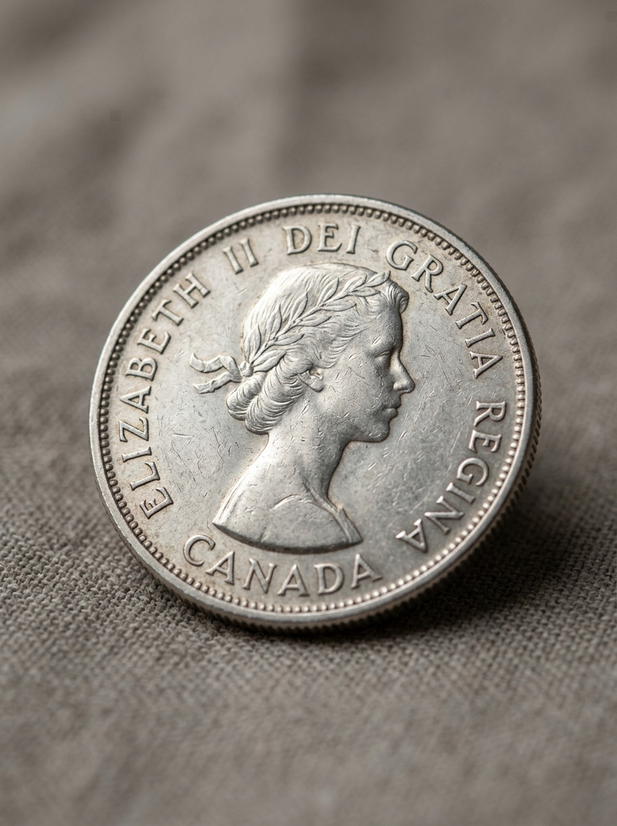
The presence of the Queen is also marked by specific Latin inscriptions. You will notice the phrase "ELIZABETH II D G REGINA" surrounding her portrait. This is an abbreviation for Dei Gratia Regina, which translates to "By the Grace of God, Queen." It is a formal title that has been used on coins for centuries, asserting the monarch's authority.
The Significance of Inscriptions
The words on our coins haven't always stayed the same. Before 1947, Canadian coins included the inscription "ET IND IMP," standing for Et Indiae Imperator (and Emperor of India). This was removed after India gained its independence.
History buffs might also remember the "Godless coins" controversy of 1911. When George V first appeared on Canadian coins, the "DEI GRA" (By the Grace of God) was accidentally omitted. The public was so outraged by the perceived slight to the divine right of the King that the Mint had to change the dies for the following year. Fortunately, the elizabeth ii canada coin never faced such a religious scandal!
Evolution of the Elizabeth II Canada Coin: The Four Effigies
Throughout her 70-year reign, the Queen's appearance on Canadian currency evolved to reflect her journey from a young woman of 27 to a venerable sovereign. There were four distinct "standard" effigies used on circulating coinage, each capturing a different era of her life.
| Years | Designer | Description |
|---|---|---|
| 1953–1964 | Mary Gillick | The "Laureate" portrait; the Queen wears a wreath of laurel. |
| 1965–1989 | Arnold Machin | The Queen wears the "Girls of Great Britain and Ireland" tiara. |
| 1990–2002 | Dora de Pédery-Hunt | The first effigy designed by a Canadian; features the Diamond Diadem. |
| 2003–2023 | Susanna Blunt | A more mature portrait; notably, the Queen is shown without a crown. |
Each of these portraits tells a story. The Mary Gillick era (1953-1964) represents Canada’s post-war growth and the beginning of the peacekeeping era. The Arnold Machin era (1965-1989) saw the adoption of the Maple Leaf flag in 1965 and the 1976 Montreal Olympics.
The First Canadian-Designed Portrait
A major milestone in Canadian numismatics occurred in 1990. For the first time, a Canadian artist was chosen to design the royal effigy. Dora de Pédery-Hunt created a portrait of the Queen at age 64. This design broke the tradition of using British-designed portraits, signaling Canada's growing cultural independence within the Commonwealth.
Collecting the Elizabeth II Canada Coin
For those of us at Coins Online LLC, the fun of collecting comes from the sheer variety available. Because the Queen reigned for so long, there are billions of coins in circulation, but some are much harder to find than others.
Take the 2002 P 25 Cents "Canada Day" coin, for example. It had a massive mintage of over 30 million pieces, but it remains a favorite for its commemorative value. The "P" mark you see under the Queen’s effigy on many coins from this era indicates a composition change—moving from pure nickel to nickel-plated steel. Collectors often use tools like the Numista rarity index to determine which of these variations are the most elusive. If you are looking to start your own collection, you can find more info about our services and how we help collectors find these specific treasures.
Notable Commemorative and Bullion Issues
While circulating quarters and loonies are common, the Royal Canadian Mint also produced stunning commemorative and bullion pieces that are highly sought after by investors and hobbyists alike.
One of the most famous is the Gold Maple Leaf. First issued in 1979, it is widely considered one of the purest gold coins in the world (.9999 fine gold). These coins featured the Queen on the obverse and the iconic maple leaf on the reverse.
Other notable issues include:
- The Golden Jubilee (2002): Celebrating the 50th anniversary of the Queen's accession. This included a special $2 "Toonie" featuring the classic polar bear but with the dates "1952-2002" on the obverse.
- The Diamond Jubilee (2012): Marking 60 years on the throne.
- 2021 Silver Toonie: A beautiful commemorative piece celebrating the 25th anniversary of the $2 coin itself, featuring selective gold plating.
Security Features in Modern Minting
The Royal Canadian Mint is a world leader in coin security. Modern bullion coins, like the Gold Maple Leaf, are packed with features to prevent counterfeiting. Since 2013, they have included a micro-engraved laser mark (a tiny maple leaf with the year of issue). In 2015, radial lines were added to the background. These features are so precise that they act like a "DNA" for the coin, making it nearly impossible to replicate.
The Legacy of the Elizabeth II Canada Coin
Following her passing in 2022, the Mint released a "Memorial Collection." These coins often feature the dates 1952-2022 and may depict the Queen wearing the Imperial State Crown or include her Royal Cypher. These pieces serve as a final tribute to the longest-reigning monarch in Canada's modern history.
The Transition to King Charles III
A new chapter began in 2023. For the first time in 70 years, Canada has a new face on its money. The effigy of King Charles III, designed by Canadian artist Steven Rosati, began appearing on coins late in 2023.
One interesting detail you might notice is that King Charles III faces to the left. This follows a long-standing numismatic tradition where each new monarch faces the opposite direction of their predecessor. Since Queen Elizabeth II always faced right, the King faces left.
Don't worry about your old coins, though! We are currently in a transition period where both the elizabeth ii canada coin and the new King Charles III coins will circulate side-by-side for many years to come.
Frequently Asked Questions about Elizabeth II Canada Coins
Are older coins with Queen Elizabeth II still legal tender?
Yes, absolutely! Every elizabeth ii canada coin ever minted by the Royal Canadian Mint remains legal tender. You can still use a 1955 quarter to buy a pack of gum today (though we wouldn't recommend it, as it’s likely worth more to a collector!). The Bank of Canada and the Mint have confirmed that these coins will continue to circulate alongside the new King Charles III coins.
How many different portraits of the Queen were used?
There were four standard effigies used for circulating coinage:
- 1953–1964: The youthful laureate portrait by Mary Gillick.
- 1965–1989: The tiara-wearing portrait by Arnold Machin.
- 1990–2002: The diademed portrait by Dora de Pédery-Hunt.
- 2003–2023: The uncrowned, mature portrait by Susanna Blunt.
Why does the monarch face a different direction on new coins?
This is a tradition that dates back centuries in British and Commonwealth numismatics. To easily distinguish between reigns, each successive monarch faces the opposite way. Queen Elizabeth II faced right, so King Charles III faces left. If his successor follows tradition, they will face right again!
Conclusion
The history of the elizabeth ii canada coin is a reflection of Canada's own journey over the last 70 years. From the young Queen of the 1950s to the respected elder stateswoman of the 2020s, her presence on our currency has been a constant through decades of change.
At Coins Online LLC, we take pride in helping collectors preserve this numismatic heritage. Whether you are looking for a rare silver dollar from the Golden Jubilee or a pristine Gold Maple Leaf for investment, we are here to help. With over 5,000 products and a legacy of our own since 1999, we offer competitive prices and a 14-day return policy to ensure you're happy with every addition to your collection.
Ready to find your next treasure? Contact us for more information or browse our extensive online catalog today!
Recent Posts
-

Walking Liberty Half Dollar Value Guide: Key Dates, the 1921 Problem, and What Yours Is Really Worth
Ask a room full of collectors to name the most beautiful U.S. coin and the Walking Liberty half doll
-
The 2026 Semiquincentennial Proof Set: What's in It, Why It Costs $107, and Whether to Buy One
On October 6 at noon Eastern, the U.S. Mint puts the 2026 Semiquincentennial Proof Set on sale at $1