Stampede Your Way to a Great Five Cents Buffalo Coin Deal

The Five Cents Buffalo Coin: America's Most Iconic Nickel
The five cents Buffalo coin — also called the Indian Head nickel — is one of the most sought-after collectibles in US numismatics. Here's a quick look at what you need to know before buying:
| Feature | Details |
|---|---|
| Official name | Buffalo Nickel / Indian Head Nickel |
| Designer | James Earle Fraser |
| Minted | 1913–1938 |
| Composition | 75% copper, 25% nickel |
| Weight | 5.00 grams |
| Diameter | 21.21 mm |
| Mints | Philadelphia (no mark), Denver (D), San Francisco (S) |
| Total minted | Over 1.2 billion |
| Rarest date | 1926-S (970,000 minted) |
| Most famous variety | 1937-D 3-legged Buffalo |
Sculptor James Earle Fraser set out to create something unmistakably American. He reportedly said he wanted a design that "could not be mistaken for the coin of any other country." The result was a coin that collectors worldwide still chase more than 85 years after its last year of production.
Whether you're hunting a common circulated example or a rare certified gem, knowing what to look for — and what to avoid — makes all the difference. This guide covers everything from design history to authentication tips to current market values.
History, Design, and Specs of the Five Cents Buffalo Coin
The story of the five cents buffalo coin begins with a drive for artistic excellence in American currency. In the early 20th century, President Theodore Roosevelt championed a "beautification" of U.S. coinage, feeling that the existing designs were uninspired. Though the nickel's redesign occurred under the Taft administration, the momentum was unstoppable. Treasury Secretary Franklin MacVeagh, prompted by his son’s reminder that the 25-year design rule allowed for a change to the Liberty Head nickel, bypassed the Mint’s Chief Engraver Charles Barber in favor of outside talent.
We find the choice of sculptor James Earle Fraser particularly inspired. Fraser, a student of Augustus Saint-Gaudens, had a deep fascination with the American West. For the obverse, he created a composite portrait of three Native American chiefs: Iron Tail (Oglala Sioux), Two Moons (Cheyenne), and Big Tree (Kiowa). This wasn't just a portrait; it was a tribute to a vanishing frontier.
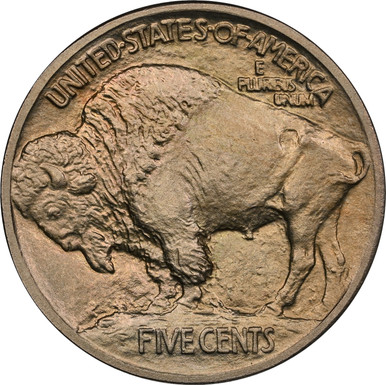
The reverse featured a massive American bison, modeled after "Black Diamond," a famous resident of the Central Park Zoo. Fraser later recalled that Black Diamond was a "contrary" model who refused to stand sideways, making the sketching process a challenge! Despite the zoo setting, Fraser depicted the bison on a grassy plain, emphasizing a sense of wild freedom.
The Buffalo nickel history and design wasn't without drama. The Hobbs Manufacturing Company, which made vending machines, launched a formal protest, claiming the new design would cause their slug-rejectors to fail. This "Hobbs affair" delayed production until February 1913, when Secretary MacVeagh finally overruled the objections, famously noting that the company's devices didn't work particularly well anyway.
Technically, the coin maintained the standard five-cent specifications:
- Composition: 75% copper and 25% nickel.
- Weight: 5.00 grams.
- Diameter: 21.21 mm.
- Edge: Plain.
The series ran from 1913 until 1938, when it was replaced by the Jefferson Nickel. Under the Coinage Act of 1890, designs could be changed without Congressional approval after 25 years, and the Mint was eager to move toward a design that was easier to strike and more durable in circulation.
The Evolution of Type 1 and Type 2 Reverses
If you look closely at a 1913 five cents buffalo coin, you might notice something different about the ground the bison stands on. This is because there are two distinct versions from that first year: Type 1 and Type 2.
In the original "Type 1" design, the bison stands on a raised mound. Within weeks of the coin's release, Mint officials realized this was a mistake. Because the denomination "FIVE CENTS" was located on the highest point of that mound, it was the first thing to wear away in circulation.
Chief Engraver Charles Barber, who had been skeptical of Fraser’s artistic design from the start, stepped in to "fix" the issue. He flattened the mound into a straight line and recessed the denomination below it. This "Type 2" or 5 Cents "Buffalo Nickel" flat ground design became the standard for the remainder of the series. While Barber’s changes helped protect the denomination, they also smoothed out some of Fraser's original artistic detail, a move that frustrated the designer but pleased the production staff.
| Feature | Type 1 (Early 1913) | Type 2 (Late 1913-1938) |
|---|---|---|
| Reverse Base | Raised mound/hill | Flat ground / straight line |
| Denomination | On top of the mound | Recessed in a protected area |
| Wear Pattern | Wears off quickly | More durable against circulation |
| Mints | P, D, S | P, D, S |
Key Dates, Rarities, and the "Three-Legged" Variety
Over the 25-year run, the Mint struck over 1.2 billion Buffalo nickels. However, not all years are created equal. Economic shifts meant that in some years—specifically 1922, 1932, and 1933—no Buffalo nickels were minted at all.
For the serious collector, the "Key Dates" are the holy grail. The 1926-S is the undisputed king of the regular strikes, with a mintage of only 970,000. Another scarce date is the 1931-S; while its final mintage reached 1.2 million, it remains a favorite for those building a complete set.
Then there are the "error" varieties that occurred due to mishaps at the Mint. The most legendary is the 1937-D 3-legged Buffalo. This wasn't a design change, but a mistake. A pressman at the Denver Mint, trying to remove "clash marks" (damage caused by dies hitting each other without a coin in between), over-polished the reverse die. He accidentally polished away the bison's front right leg! Thousands were struck and released before the error was caught.
Other notable rarities include:
- 1918/7-D Overdate: A rare instance where a 1918 die was impressed with a 1917 hub.
- 1914/3 Overdate: Similar to the 1918/7, though some experts believe this may be the result of a damaged die rather than a true overdate.
- 1916 Doubled Die: Look for distinct doubling on the Indian's profile and the date.
- 1938-D: While 7 million were minted, many were saved in uncirculated rolls because collectors knew the series was ending. This makes the 1938-D one of the most beautiful and affordable "Mint State" coins available today.
Collecting, Grading, and Authentication Tips
Collecting the five cents buffalo coin is a journey through American history, but it requires a keen eye. One of the most common issues with this series is the "No Date" nickel. Because the date was placed on a raised portion of the Indian’s shoulder, it was prone to wearing off completely.
While some people use a chemical called ferric chloride (often sold as "Nic-A-Date") to etch the date back into the metal, we strongly advise against this for valuable coins. Chemical restoration is considered damage by professional graders; it leaves a dark, grainy spot on the coin and significantly lowers its numismatic value. A "No Date" Buffalo nickel is generally worth only about $0.06 to $0.10, often used for jewelry or "hobo nickels"—coins artistically carved by itinerant workers during the Great Depression.
If you are looking for modern tributes, the design's popularity led the U.S. Mint to reuse it for the 2001 Silver Commemorative Dollar and the 2006 American Buffalo Gold Bullion coin.
Grading and Pricing Your Five Cents Buffalo Coin
When grading, focus on the "high points" of the design. On the obverse, check the cheekbone and the hair near the horn of the buffalo. On the reverse, look at the bison's shoulder and the tip of the tail.
According to the Buffalo Five Cents (1913-1938) | Coin Explorer | NGC, strike quality is just as important as wear. Many San Francisco (S) mint coins were "weakly struck," meaning they lack detail even if they have never been circulated.
Value ranges can be vast:
- Common Circulated: $1 - $5
- Common Uncirculated (MS60): $30 - $50
- Rare Varieties (e.g., 1937-D 3-Legs): $500 to $50,000+ depending on grade.
- Condition Rarities: A 1938-D 5C Buffalo (Regular Strike) in MS68 grade can fetch over $20,000 at auction!
Where to Buy an Authentic Five Cents Buffalo Coin
Because of the high value of key dates and varieties like the 3-legged buffalo, counterfeits are a real concern. Unscrupulous people sometimes "add" a mint mark or "remove" a leg with a tool.
We always recommend buying certified specimens—coins that have been authenticated and "slabbed" by reputable third-party grading services. If you are buying "raw" (unprotected) coins, ensure you are dealing with a reputable seller who offers a solid return policy. Building a collection is an investment in history, and we want to ensure your investment is protected.
Frequently Asked Questions about the Buffalo Nickel
Why do many Buffalo nickels have no date?
The date was positioned on the highest part of the Indian's shoulder. Because this area was raised, it took the brunt of the friction as the coin passed through thousands of hands. Over time, the numbers simply rubbed away. While these coins are great for crafts, they hold very little value for collectors.
What is a "3-legged" Buffalo nickel?
It is a famous 1937-D variety where the bison appears to have only three legs. This was caused by a Mint employee over-polishing a damaged die. To verify an authentic 3-legged buffalo, look for a "puddle" of metal under the belly and "pepper-like" spots on the hind leg—these are markers of the specific damaged die.
What replaced the Buffalo nickel in 1938?
The Jefferson Nickel, designed by Felix Schlag, replaced the Buffalo design. The transition happened because the Buffalo nickel was notoriously difficult to mint (it broke dies frequently) and the 25-year mandatory period had expired.
Conclusion
The five cents buffalo coin remains a masterpiece of American art. Its rugged, imperfect beauty captures a specific era of our nation's history, making it a "must-have" for any serious collector. From the "Black Diamond" bison to the tragic beauty of the composite Indian portrait, every coin tells a story.
At Coins Online LLC, we’ve been helping collectors find these stories since 1999. With over 5,000 products in stock, competitive prices, and a 14-day return policy, we make it easy to build a collection you can be proud of. Whether you're looking for a rare 1926-S or just a beautiful 1938-D to start your journey, we have you covered with low shipping and expert service.
Stampede to our full inventory of Buffalo Nickels today and find the perfect addition to your collection! If you want to learn more about our commitment to the numismatic community, check out more info about our services.
Recent Posts
-

Walking Liberty Half Dollar Value Guide: Key Dates, the 1921 Problem, and What Yours Is Really Worth
Ask a room full of collectors to name the most beautiful U.S. coin and the Walking Liberty half doll
-
The 2026 Semiquincentennial Proof Set: What's in It, Why It Costs $107, and Whether to Buy One
On October 6 at noon Eastern, the U.S. Mint puts the 2026 Semiquincentennial Proof Set on sale at $1