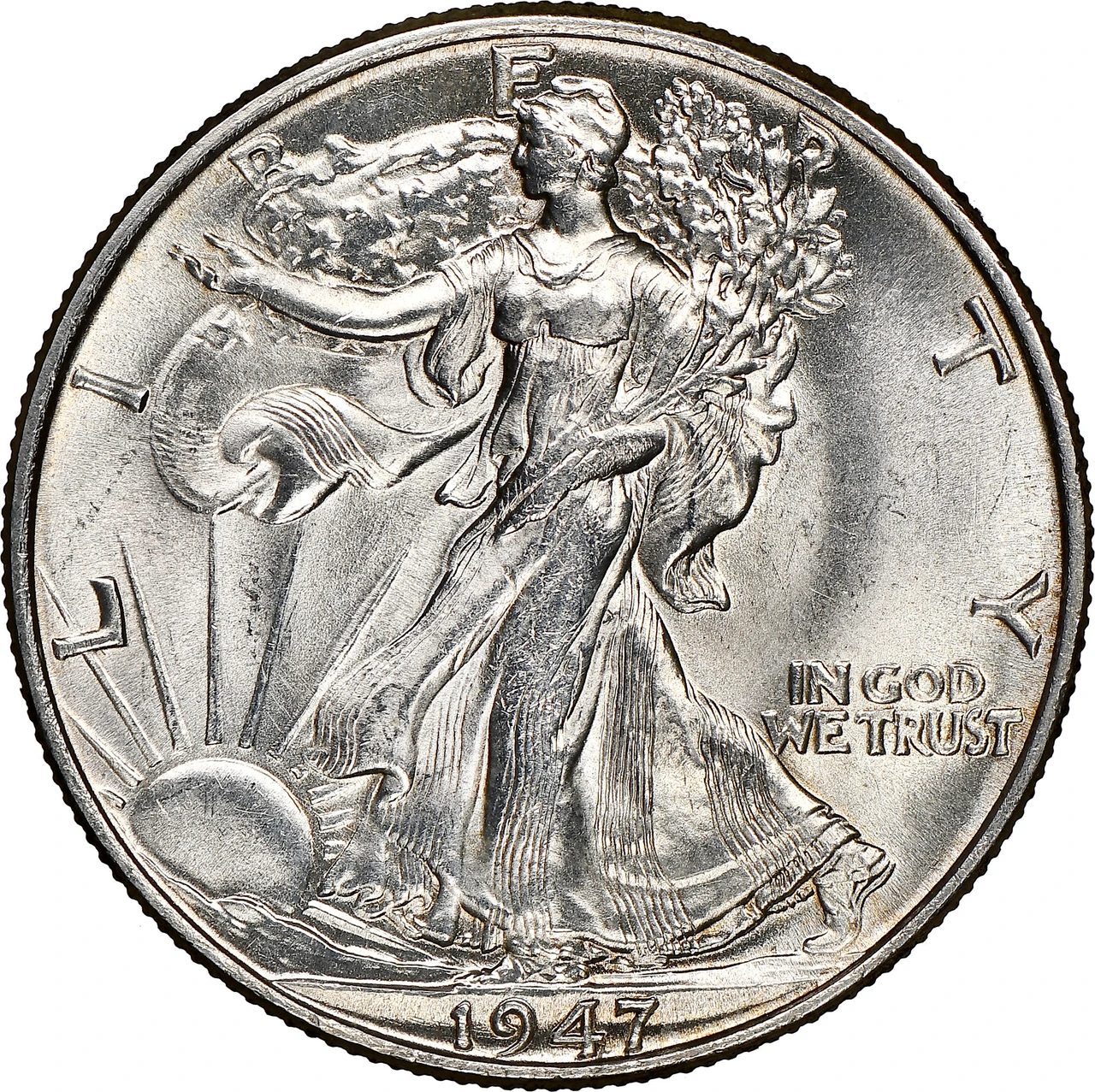
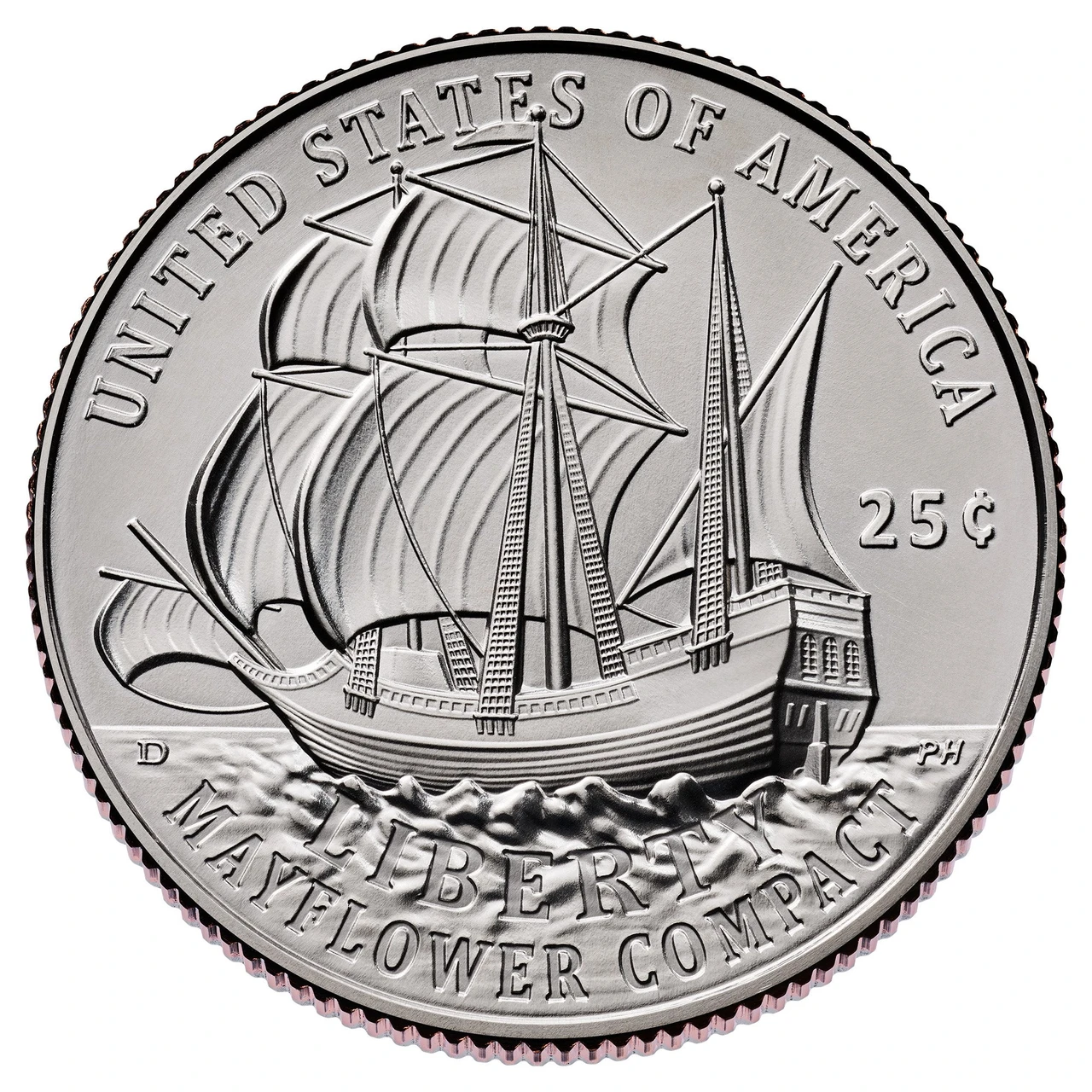
From Kennedy to Franklin: A Guide to Iconic Half Dollars
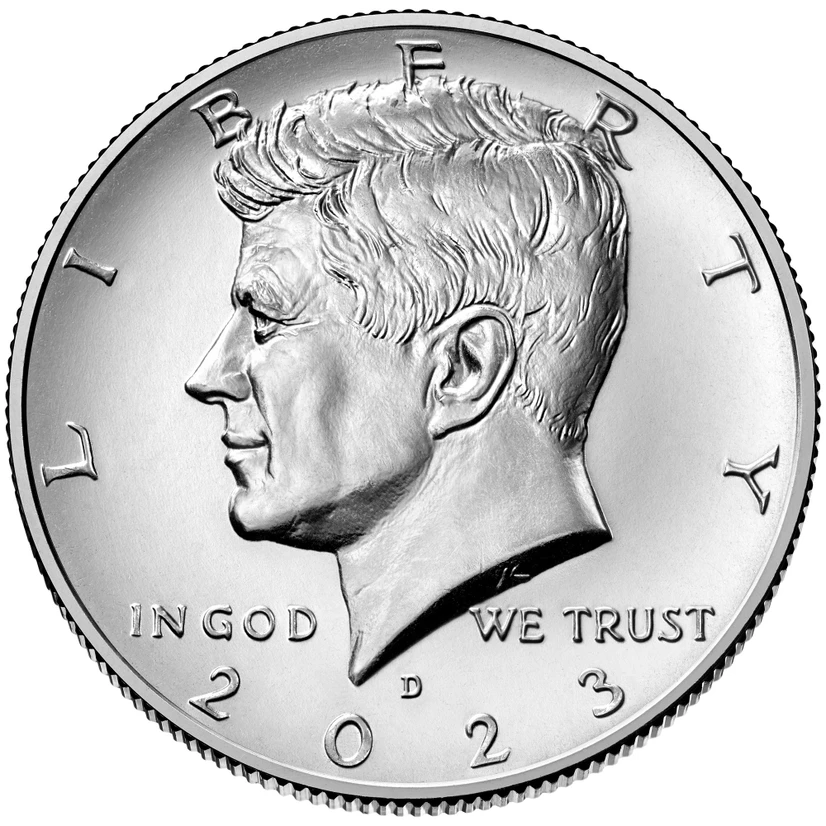
Why Kennedy Half Dollars Are Among the Most Collected U.S. Coins
Kennedy half dollars are 50-cent coins minted by the United States Mint from 1964 to the present day, created to honor the memory of President John F. Kennedy following his assassination on November 22, 1963. You can find a wide selection of these in our Kennedy Half Dollar category.
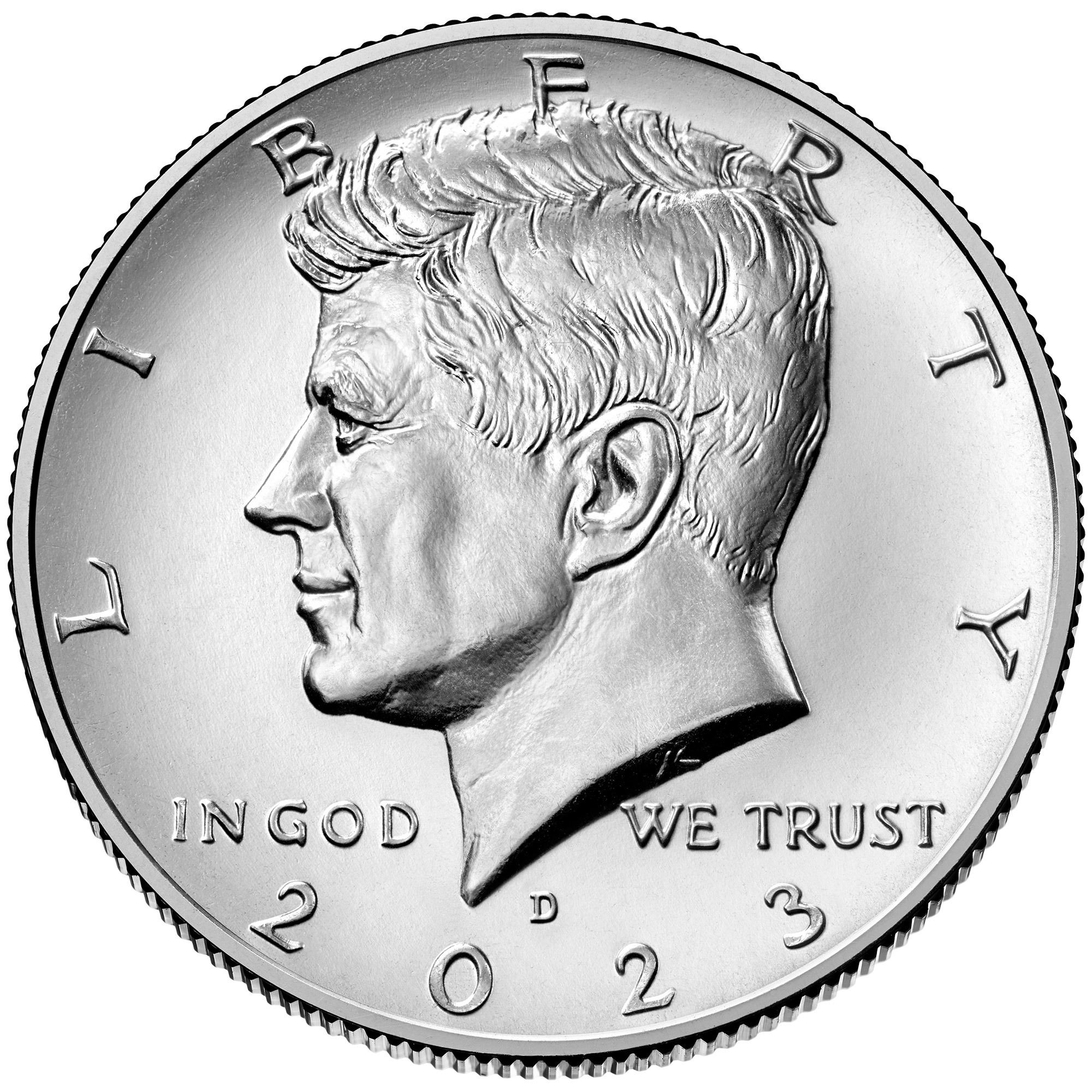
Here's what you need to know at a glance:
| Feature | Details |
|---|---|
| First minted | 1964 |
| Authorized by | Public Law 88-256 |
| Obverse designer | Gilroy Roberts |
| Reverse designer | Frank Gasparro |
| Silver content | 90% (1964), 40% (1965–1970), none (1971–present) |
| Key date | 1970-D (2.1 million mintage) |
| Total struck by 1979 | More than 2.5 billion |
| Special 2026 design | Semiquincentennial — Statue of Liberty / Liberty torch |
Congress moved fast. Public Law 88-256 was passed just over a month after Kennedy's death, authorizing the new coin to replace the Franklin half dollar. Striking began at the Denver Mint as early as January 30, 1964, with coins reaching the public in March of that year.
The response was extraordinary. Nearly 430 million 1964-dated coins were struck — more than the entire 16-year run of the Franklin half dollar combined. Yet almost none stayed in circulation. Americans hoarded them as mementos, and speculators held onto the 90% silver coins as silver prices climbed.
That tension between massive mintage and genuine scarcity is what makes this series so fascinating to collect — and so rewarding to understand.
The History and Design of Kennedy half dollars
The creation of the Kennedy half dollar was a race against time and a labor of love. Within days of the assassination, Mint Director Eva Adams contacted Chief Engraver Gilroy Roberts to begin planning the tribute. To speed up the process, the Mint used existing designs from the Kennedy presidential medal, which the President himself had approved shortly before his death.
Jacqueline Kennedy and Robert F. Kennedy were deeply involved in the approval process. While the family supported the design, the First Lady requested subtle changes to the hair details to ensure the portrait truly captured her husband’s likeness.
The Kennedy half dollar history is marked by two primary artists:
- Gilroy Roberts: Designed the obverse, featuring a dignified profile of JFK.
- Frank Gasparro: Designed the reverse, which depicts the Presidential Seal (the eagle holding an olive branch and arrows) based on the Great Seal of the United States.
When the coins were first released in March 1964, the public's appetite was insatiable. In New York, the famous Gimbels department store faced crowds so large they had to ration the coins. Despite the Mint striking hundreds of millions of coins, they vanished as quickly as they were released. This marked the beginning of the coin’s status as a "circulating memorial" that rarely actually circulated.
The "Accented Hair" Variety and Design Modifications
During the initial production of the 1964 Proof sets, a small number of coins were struck using the original dies before modifications were made. This resulted in the famous "Accented Hair" variety.
Jacqueline Kennedy felt that the hair details above the ear were too heavy and "messy." At her request, the dies were modified to smooth out these lines.
- Accented Hair: Features deep, incised lines in the hair above the ear. The "I" in "LIBERTY" also has a truncated lower left serif.
- Standard Hair: The hair lines are softer and less defined, and the serif on the "I" is complete.
Because only about 1% to 3% of 1964 Proof Kennedy halves are the Accented Hair variety, they carry a significant premium for collectors today.
Silver Content and Composition Changes (1964–Present)
One of the most important things for any collector to understand is the changing metal composition of Kennedy half dollars. This series spans the transition from precious metal to base metal, making weight and edge appearance key identification factors.
| Year Range | Composition | Silver Weight (Troy Oz) | Total Weight |
|---|---|---|---|
| 1964 | 90% Silver, 10% Copper | 0.36169 oz | 12.50 grams |
| 1965–1970 | 40% Silver Clad | 0.1479 oz | 11.50 grams |
| 1971–Present | Copper-Nickel Clad | 0.00 oz | 11.34 grams |
The 1964 issue was the last year the U.S. Mint produced a 90% silver half dollar for general circulation. As silver prices rose, the Half Dollar specifications were changed in 1965 to a "silver-clad" composition, where the outer layers were 80% silver and the core was 21% silver, resulting in a net 40% silver content. By 1971, silver was removed entirely from circulating issues, replaced by the same copper-nickel clad composition used on quarters and dimes.
Identifying Silver Kennedy half dollars
If you are sorting through a roll of coins, there are three quick ways to tell if you have found silver:
- The Edge Test: Look at the reeded edge. A 90% silver coin will be solid silver in color. A clad coin will show a distinct copper stripe in the center. A 40% silver coin (1965-1970) will often look "greyer" than a clad coin but won't show the bright copper stripe.
- The Sound Test: Gently tap the coin. Silver has a high-pitched, melodic ring, while clad coins have a duller "thud."
- The Weight: Using a digital scale is the most accurate method. A 1964 silver coin weighs 12.5 grams, while a modern clad coin weighs 11.34 grams.
For more technical details on the 40% silver era, you can check the ½ Dollar "Kennedy Half Dollar" (40% Silver) - Numista entry.
Key Dates, Rarities, and Collector Varieties
While billions of Kennedy half dollars have been minted, certain years and varieties are much harder to find. Understanding these "keys" is essential for building a valuable collection.
- 1970-D: This is the "King" of the series. With a mintage of only 2.1 million, it was never released for circulation and was only available in official U.S. Mint Sets.
- 1987-P and 1987-D: Like the 1970-D, these were only issued in Mint Sets and are highly sought after in uncirculated condition.
- 1998-S Matte Finish: This coin was part of a special two-coin set honoring Robert F. Kennedy. With a mintage of roughly 62,000, it is the lowest mintage coin in the entire series.
- Special Mint Sets (SMS): From 1965 to 1967, the Mint did not produce Proof sets. Instead, they made SMS coins with a satin-like finish. The 1964 SMS Kennedy is an ultra-rarity, with some specimens selling for tens of thousands of dollars.
Collectors should also keep an eye out for errors. The 1972-D Doubled Die and the "No FG" variety (where Frank Gasparro’s initials are missing from the reverse due to over-polishing of the die) are popular targets. For current market pricing on these rarities, we recommend visiting the Kennedy Half Values & Prices | Greysheet guide.
Special Issues: Bicentennial, Gold, and the 2026 Semiquincentennial
The Kennedy half dollar has been the canvas for some of the most beautiful commemorative designs in U.S. history.
In 1975 and 1976, the Mint celebrated the nation's 200th birthday. These Bicentennial Kennedy half dollars carry the dual date "1776-1976" and feature a special reverse design by Seth G. Huntington depicting Independence Hall. Over 521 million of these were struck, making them a common but beloved find in change.
In 2014, to mark the 50th anniversary of the series, the U.S. Mint released a special 0.9999 fine gold Proof coin. Weighing 0.75 troy ounces, it featured the original 1964 high-relief portrait. You can explore these and other official releases at the Kennedy Half Dollar Coins | US Mint portal.
The 2026 Semiquincentennial Design
As we approach 2026, the Mint is preparing for the "Enduring Liberty" Semiquincentennial. This will be a one-year-only design change:
- Obverse: A close-up of the Statue of Liberty.
- Reverse: Liberty passing a torch, accompanied by the James Madison quote: "Knowledge is the only guardian of true liberty."
This 2026 issue is expected to be one of the most popular coins in decades. The classic Kennedy portrait is slated to return in 2027.
Collecting Modern NIFC and Circulation Strikes
Between 2002 and 2020, the Mint stopped producing half dollars for general circulation. These coins are known as NIFC (Not Intended for Circulation) and were only sold in rolls and bags directly to collectors. However, due to a coin shortage during the COVID-19 pandemic, the Federal Reserve ordered millions of half dollars for circulation again starting in 2021. This means you might actually find a brand-new 2021, 2022, or 2023 Kennedy half in your bank rolls!
Building Your Collection and Market Values
Starting a collection of Kennedy half dollars is one of the most accessible entry points into numismatics. Because many dates are still available at face value, you can build a significant set without a huge investment.
A complete date and mint set (including the P, D, and S mints) consists of 96 coins. An uncirculated set of this caliber typically has a market value of around $225.00, though high-grade Proofs and silver issues can drive that price much higher.
Storage and Care Tips:
- Self-Seal Flips: Great for budget-friendly organization (available in our coin collecting supplies section).
- Lighthouse Slabs: Excellent for protecting high-value uncirculated or Proof coins.
- Custom Folders: A fun way to visualize your progress as you fill in the dates.
If you are looking for specific key dates or need help grading your finds, we invite you to Contact our experts for collection advice. We love helping collectors find that perfect 1970-D or 1964 Accented Hair to complete their albums.
Why are Kennedy half dollars rarely seen in circulation?
It is a common question: "If they made billions of them, where are they?"
- Hoarding: Initial issues were kept as mementos of a beloved president.
- Silver Value: People pulled out the 1964–1970 coins because the silver was worth more than 50 cents.
- Vending Machines: Most vending machines and parking meters were never designed to accept the large half dollar.
- Public Habit: Since people didn't see them, they stopped using them, and banks stopped ordering them.
Interestingly, casinos were one of the last places where the half dollar was a "workhorse," used for slot machines and table games before being replaced by digital credits and chips.
Conclusion
At Coins Online LLC, we have been helping collectors navigate numismatics since 1999. The Kennedy half dollar remains one of our most popular series because it combines historical tragedy, artistic beauty, and the thrill of the hunt. Whether you are searching for a 90% silver 1964 or looking forward to the 2026 Semiquincentennial, this series offers something for everyone.
With over 5,000 products in stock and a commitment to competitive pricing, we are here to support your hobby. Start your Kennedy half dollar collection today and own a piece of American history that spans from the 1960s into the future.
Recent Posts
-

Walking Liberty Half Dollar Value Guide: Key Dates, the 1921 Problem, and What Yours Is Really Worth
Ask a room full of collectors to name the most beautiful U.S. coin and the Walking Liberty half doll
-
The 2026 Semiquincentennial Proof Set: What's in It, Why It Costs $107, and Whether to Buy One
On October 6 at noon Eastern, the U.S. Mint puts the 2026 Semiquincentennial Proof Set on sale at $1