Finding the Wheat Among the Chaff in Your Penny Jar
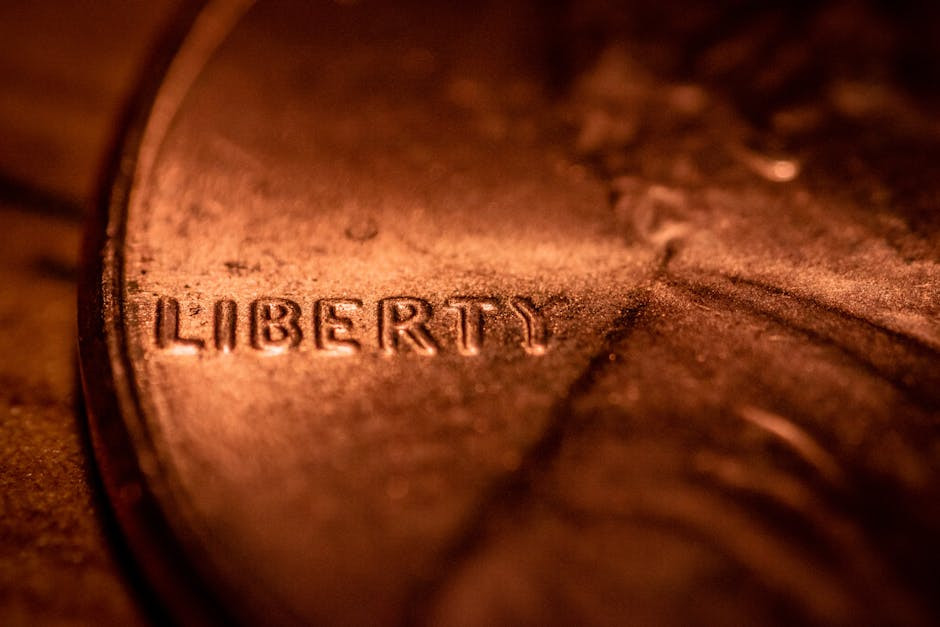
What Are Lincoln Wheat Penny Values Worth Today?
Lincoln wheat penny values range dramatically — from just a few cents for common dates to over $1,000,000 for the rarest errors. Here's a quick snapshot to help you gauge what you might be holding:
| Coin | Condition | Approximate Value |
|---|---|---|
| Common date (1940s-50s) | Circulated | $0.10 - $0.50 |
| 1931-S | Good | $60+ |
| 1909-S VDB | Good | $400 - $650 |
| 1914-D | Uncirculated | $1,500+ |
| 1922 No D | MS BN | $415 - $98,000 |
| 1955 Doubled Die | MS BN | $1,018 - $30,375 |
| 1943 Bronze (error) | Any | $1,000,000+ |
The good news? Even the most common wheat penny is worth at least a few cents above face value to dealers, simply because collector demand never really fades.
Here's the thing most people don't realize: that jar of old pennies on your shelf could contain a coin worth hundreds — or even thousands — of dollars. The Lincoln Wheat Cent, minted from 1909 to 1958, spans nearly 50 years of American history and hundreds of distinct varieties. Some are genuinely common. Others are extraordinarily rare.
The difference between a $0.10 coin and a $10,000 coin can come down to a single letter under the date, a tiny minting error, or simply whether the coin was ever circulated.
In this guide, we break down exactly what drives wheat penny values — from key dates and mint marks to grading, color designations, and famous errors — so you know what to look for before you sell, buy, or trade.
Historical Significance and Design of the Lincoln Cent
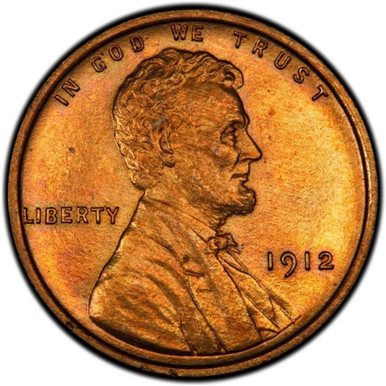
The story of the Lincoln Wheat Cent begins with a radical shift in American coinage. Before 1909, United States coins did not feature the portraits of real people. It was considered "monarchical" to put a leader's face on money—a sentiment held over from the days of the American Revolution. However, as the 100th anniversary of Abraham Lincoln’s birth approached, President Theodore Roosevelt decided it was time for a change.
Roosevelt was on a mission to improve the aesthetic quality of U.S. currency. He commissioned Victor David Brenner, a talented sculptor and medalist, to design the new penny. Brenner had previously created a plaque of Lincoln that caught Roosevelt's eye. The resulting design became the first U.S. circulating coin to feature a president.
The obverse (front) of the coin features a dignified profile of Lincoln, while the original reverse (back) featured two stylized stalks of durum wheat framing the words "ONE CENT" and "UNITED STATES OF AMERICA." These wheat stalks symbolized the nation's prosperity and agricultural heritage, giving the coin its famous nickname: the "Wheat Penny."
One of the most famous controversies in numismatic history occurred right at the launch. Brenner included his full initials, "V.D.B.," at the bottom of the reverse. The public and Mint officials felt the initials were too prominent, almost like an advertisement. Production was halted, and the initials were removed, creating the legendary "1909-S VDB" rarity. The initials didn't return until 1918, when they were placed in tiny letters on the shoulder of Lincoln’s bust.
Determining Lincoln Wheat Penny Values: Key Dates and Rarities
When we talk about lincoln wheat penny values, we aren't just looking at the age of the coin. In coin collecting, rarity is driven by mintage numbers (how many were made) and survival rates (how many still exist in good condition).
The "Big Three" Key Dates
If you are hunting through a collection, these are the "Holy Grails" you want to find:
- 1909-S VDB: This is the king of the series. Only 484,000 were struck at the San Francisco Mint before the initials were removed. Today, even a heavily worn example can be worth hundreds of dollars, while a pristine Red (RD) Mint State example can reach values between $2,500 and $180,000.
- 1914-D: Minted in Denver, this coin had a relatively low mintage of 1,193,000. It is highly sought after because many were lost to circulation. A 1914-D in uncirculated condition is valued around $1,500, though auction records for top-tier specimens go much higher.
- 1931-S: Though it hails from the later years of the early era, only 866,000 were made. It is considered a "semi-key" date. You can expect a 1931-S to start at roughly $60 in Good condition and climb to $150 or more in uncirculated grades.
The Mystery of the 1922 "No D"
In 1922, only the Denver Mint produced pennies. However, due to overused and clogged dies, the "D" mint mark was sometimes faint or completely missing. The "1922 No D Strong Reverse" is a major rarity. Depending on the sharpness of the details, these can be worth anywhere from $415 to a staggering $98,000 for high-grade specimens.
Mint Marks Matter
Where your coin was born makes a huge difference. You can find the mint mark just below the date on the obverse:
- No Mint Mark: Philadelphia Mint (The most common).
- D: Denver Mint.
- S: San Francisco Mint (Often the lowest mintage and highest value).
Grading, Color, and Market Trends
Understanding lincoln wheat penny values requires a basic grasp of coin grading. Most collectors use the Sheldon Scale, which ranges from 1 (barely identifiable) to 70 (perfect).
For a quick "at-home" check, look at the reverse of the coin. Examine the parallel lines at the top of the wheat stalks. If those lines are clearly visible and sharp, your coin is likely in "Fine" condition or better. If the lines are worn smooth, it is considered "Good" or "Very Good."
| Date Range | Common Circulated Value | Uncirculated (MS64) Value |
|---|---|---|
| 1909 - 1920 | $0.50 - $5.00 | $25.00 - $150.00 |
| 1921 - 1939 | $0.15 - $2.00 | $15.00 - $60.00 |
| 1940 - 1958 | $0.05 - $0.25 | $1.00 - $15.00 |
Professional grading by services like NGC or PCGS is highly recommended for any key date or high-condition coin. Graded coins almost always sell for a higher premium because the grade is guaranteed. You can learn more about how we handle these treasures at Coins Online LLC.
How Condition and Color Impact Lincoln Wheat Penny Values
Because wheat pennies are made of copper, they react to oxygen over time. This creates three distinct color designations that drastically change the price:
- Brown (BN): The coin has oxidized completely. Most circulated pennies are BN.
- Red-Brown (RB): The coin still retains some of its original orange-red mint luster, usually between 5% and 95%.
- Red (RD): The "holy grail" of color. The coin looks like it was minted yesterday, retaining 95% or more of its original red color.
An RD designation can make a coin ten times more valuable than a BN version of the same year and grade. For example, a 1909-S VDB in MS65 BN might be worth $5,500, but in MS67 RD, that same date could fetch $165,000.
Current Market Trends for Lincoln Wheat Penny Values
The market for wheat pennies is currently very active, especially for high-grade Proof coins from the 1950s. Proofs are coins made specifically for collectors using polished dies and blanks.
- A 1958 Proof Lincoln Cent in PF69 RD condition recently sold for around $289.98.
- Earlier proofs from the 1950s (1952-1954) in top grades can range from $40 to nearly $800.
Collector demand for "set fillers"—the common dates needed to complete a 1909-1958 collection—remains steady. Even "average" uncirculated coins from 1958 are currently valued at $0.12 to $0.15, which is a 1,200% increase over face value!
Notable Errors and Composition Changes
One of the most fascinating aspects of the Lincoln Cent is how it changed during World War II. In 1943, copper was desperately needed for shell casings and war materials. To help the war effort, the U.S. Mint switched the penny's composition to zinc-coated steel.
The 1943 "Steelies" and the Million-Dollar Error
While billions of steel pennies were made (and are generally worth about $0.10 to $0.50 today), a few bronze planchets from 1942 were accidentally left in the hoppers. This created the 1943 Bronze Lincoln Cent. This is one of the most famous errors in history. If you find a 1943 penny that sticks to a magnet, it’s steel (common). If it doesn't stick to a magnet, you might be looking at a coin worth over $1,000,000!
Conversely, in 1944, the Mint switched back to copper (using recycled shell casings), but a few steel blanks were left over. A 1944 Steel Penny is also a major rarity, with values reaching $100,000 or more.
The 1955 Doubled Die Obverse
This is perhaps the most famous "die variety" in American numismatics. Due to a misalignment during the hubbing process, the entire date and lettering on the front of the coin appear doubled. It is so prominent that you can see it with the naked eye.
- Value: Even in Brown (BN) condition, a 1955 Doubled Die can fetch between $1,000 and $30,000 depending on the grade.
Frequently Asked Questions about Wheat Pennies
What is the most valuable Lincoln Wheat Penny ever found?
The 1943-D Bronze penny is widely considered the most valuable, with one example selling for over $2,000,000 in a private sale. In terms of regular issues, the 1909-S VDB in the highest possible Red Mint State (MS67+) holds the record for standard strikes, often valued near $180,000.
Where is the mint mark located on a Lincoln Wheat Penny?
The mint mark is located on the obverse (front) of the coin, directly below the date. If there is no letter, it was minted in Philadelphia. A "D" stands for Denver, and an "S" stands for San Francisco.
Why did the U.S. Mint make steel pennies in 1943?
During World War II, copper was a strategic metal used for manufacturing ammunition and other military equipment. The U.S. Mint transitioned to zinc-coated steel for one year to conserve copper for the war effort. These coins are often called "Steelies."
Conclusion
At Coins Online LLC, we have been helping collectors find the "wheat among the chaff" since 1999. Whether you are looking to complete a high-grade set of proofs or just starting your journey into numismatics, the Lincoln Wheat Cent offers a lifetime of discovery.
Building a collection is more than just a hobby; it's a way to preserve American history. Because lincoln wheat penny values continue to show resilience and growth in the market, they remain a favorite for both new collectors and seasoned investors looking for portfolio diversification.
Ready to find your next key date? We invite you to browse our selection of over 5,000 products, all backed by our 14-day return policy and competitive shipping. Start your collection today at usstatequarters.com and see what treasures you can find in your own penny jar!
Recent Posts
-

Susan B. Anthony Dollar Value: Why Most Are Worth $1 — and the Few That Aren't
Somewhere in a drawer, a coin jar, or an inherited collection, almost every American family has a fe
-
Roosevelt Dime Value: Silver Years, Key Dates, and What Your Dimes Are Really Worth
Most Roosevelt dimes are worth exactly ten cents, and anyone who tells you otherwise is selling some