A Bison in Your Pocket: The History of the Indian Head Nickel
What Is an Old Five Cents Buffalo — and Why Do Collectors Love It?
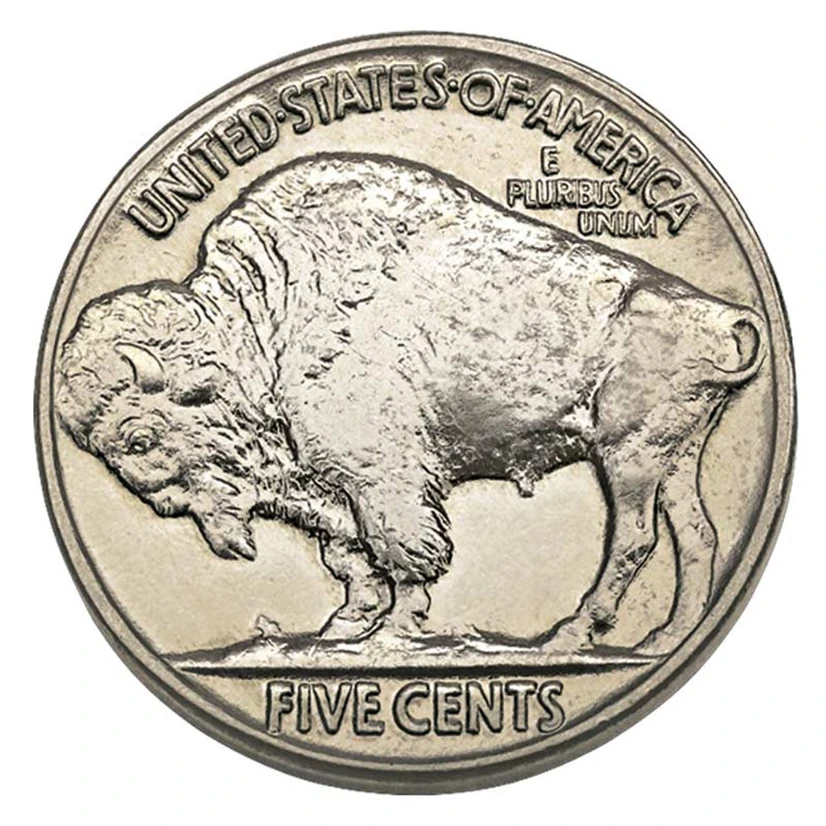
The old five cents buffalo — officially called the Buffalo Nickel or Indian Head Nickel — is one of the most iconic coins ever made in the United States. It was minted from 1913 to 1938 at three facilities: Philadelphia, Denver, and San Francisco.
Here's a quick overview of the key facts:
| Feature | Details |
|---|---|
| Official Name | Buffalo Nickel / Indian Head Nickel |
| Years Minted | 1913–1938 |
| Designer | James Earle Fraser |
| Composition | 75% copper, 25% nickel |
| Weight | 5 grams |
| Diameter | 21.2 mm |
| Total Minted | Over 1.2 billion coins |
| Rarest Date | 1926-S (only 970,000 minted) |
| Most Famous Error | 1937-D 3-Legged Buffalo |
Sculptor James Earle Fraser designed the coin to feel completely American — something that could never be mistaken for a coin from any other country. The result was a portrait of a Native American on the front and a bison on the back. It was bold, artistic, and unlike anything the U.S. Mint had produced before.
The coin circulated for exactly 25 years before being replaced by the Jefferson Nickel in 1938. Today, Buffalo Nickels are a favorite among collectors worldwide — from common dates worth a few dollars to rare error coins worth thousands.
Whether you're just getting started or looking to add a key date to your set, you can browse our Buffalo Nickel collection at Coins Online LLC to find coins across a wide range of grades and price points.
The Origin and Design of the Old Five Cents Buffalo
The story of the old five cents buffalo begins with a push for artistic excellence in American coinage. During the early 20th century, President Theodore Roosevelt sought to transform U.S. currency into works of art. He tapped renowned sculptor James Earle Fraser, a former apprentice to Augustus Saint-Gaudens, to reimagine the five-cent piece.
Fraser wanted a design that was uniquely American. He moved away from the classical "Liberty" figures that looked like Greek goddesses and instead focused on the rugged beauty of the American West. On March 4, 1913, the first Buffalo Nickels were distributed to the public and even presented to Native American chiefs during a groundbreaking ceremony for a memorial in New York. You can read more about the History of the Buffalo nickel to see how it transitioned from a bold idea to a pocket-change staple.
At Coins Online LLC, we often tell our customers that this coin represents the spirit of a bygone era. If you are curious about how this fits into the larger story of American currency, check out more info about our coin collection.
The Three Models for the Native American Portrait
One of the most frequent questions we hear is: "Who is the man on the nickel?" Unlike previous coins that used a single model, Fraser created a composite profile. He wanted to capture the essence of the Native American spirit rather than a single individual.
Fraser identified three primary models for the portrait:
- Iron Tail: An Oglala Sioux chief who was a star in Buffalo Bill’s Wild West show.
- Two Moons: A Cheyenne chief who had fought in the Battle of the Little Bighorn.
- Big Tree: A Kiowa chief who later became a popular figure at coin conventions.
By blending the features of these three men, Fraser achieved a level of artistic realism that had never been seen on a circulating five-cent piece.
Black Diamond: The Bison on the Reverse
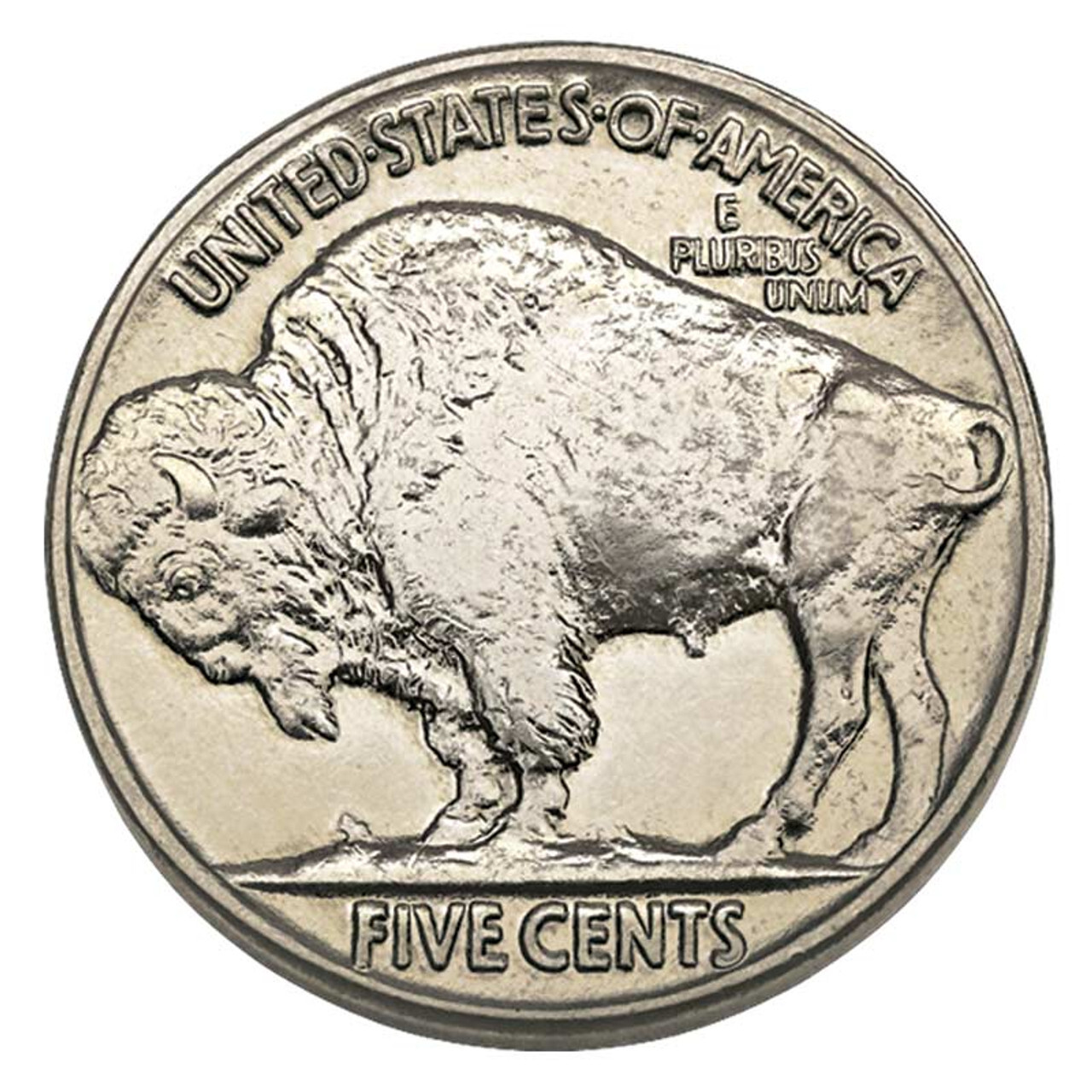
The reverse of the coin features a massive American Bison, often mistakenly called a buffalo. While many people assumed the animal represented the wild herds of the Great Plains, the model was actually a resident of the New York Zoological Park (Central Park Zoo) named Black Diamond.
Black Diamond was a massive bull, weighing nearly 1,550 pounds. Fraser reportedly had a difficult time sketching him because the "contrariest animal" refused to stand still or show his side profile. Despite the bison's stubbornness, Fraser successfully captured a Wild West motif that remains a masterpiece of American numismatics.
Technical Specifications and Production Varieties
Every old five cents buffalo follows a strict set of technical standards. These coins were struck on planchets weighing 5 grams with a diameter of 21.2 mm. The composition is a mix of 75% copper and 25% nickel. However, while the metal stayed the same, the design had to evolve quickly due to production issues. For a deep dive into these differences, collectors often consult the Buffalo Five Cents VarietyPlus Guide or our Buffalo Nickel inventory.
The 1913 Type 1 vs. Type 2 Design Change
If you find a 1913 nickel, the first thing you should check is the ground beneath the bison's feet.
- Type 1 (Raised Mound): The bison stands on a raised mound of dirt. The words "FIVE CENTS" are embossed directly on this mound. Because the letters were at the highest point of the coin, they wore away almost instantly.
- Type 2 (Recessed Ground): To fix the wear issue, Barber modified the die. He flattened the mound into a straight line and recessed the "FIVE CENTS" into a protected area (an exergue) below the ground line.
Because Type 1 coins were only minted for a few months in 1913, they are highly sought after by collectors looking for a "first-year" type coin.
Key Dates and Rare Mint Errors
While over 1.2 billion Buffalo Nickels were minted, not all are created equal. Some years saw very low production, while others are famous for "minting mishaps" that created valuable rarities.
| Rare Variety | Why It’s Special |
|---|---|
| 1937-D 3-Legged Buffalo | Caused by a Mint employee over-polishing a die, accidentally removing the bison's front leg. |
| 1918/7-D Overdate | A rare error where a 1918 date was punched over a 1917 die at the Denver Mint. |
| 1926-S | The lowest mintage in the series at only 970,000 coins. |
| 1916 Doubled Die | Features a clear "doubling" effect on the date and the Native American's chin. |
Determining the Value of an Old Five Cents Buffalo
Valuing an old five cents buffalo is part science and part art. The three biggest factors are the Date, the Mint Mark, and the Condition (Grade). A common 1936 nickel might be worth a dollar in well-worn condition, but a 1913-S Type 2 in uncirculated condition can fetch hundreds or even thousands of dollars. To get a better idea of current market trends, you can explore Buffalo Nickel values and prices or browse our Buffalo Nickel collection.
Identifying Mint Marks and the 'F' Initial
To find where your coin was made, look at the reverse side. Just below the words "FIVE CENTS," you might see a small letter:
- No Mark: Minted in Philadelphia.
- D: Minted in Denver.
- S: Minted in San Francisco.
Don't confuse the mint mark with the small 'F' located on the obverse. The 'F' is found right under the date and stands for the designer, James Earle Fraser. Every authentic Buffalo Nickel should have this initial, though it can wear away on heavily circulated coins.
Why Some Nickels Have No Date
It is incredibly common to find a Buffalo Nickel where the date is completely missing. This happened because Fraser placed the date on the Native American's shoulder—one of the highest points on the coin. As the coin rubbed against other nickels in people's pockets, the date was the first thing to disappear.
Collectors call these "No-Date Buffaloes." While they are still fun to own, they generally carry very little numismatic value (often just a few cents over face value). Some people use a chemical called ferric chloride (marketed as "Nic-A-Date") to reveal the date, but we generally advise against this. The chemical leaves a permanent etch on the coin, and most professional collectors consider chemically restored coins to be damaged.
Frequently Asked Questions about the Old Five Cents Buffalo
What makes an old five cents buffalo rare?
Rarity is usually driven by low mintage figures. For example, the 1926-S is the "king" of the regular issues because only 970,000 were made. Compare that to 1936, where over 118 million were produced! Beyond mintage, "condition rarity" matters too. Many Buffalo Nickels were saved in worn condition, so finding one in "Uncirculated" (Mint State) condition with a sharp strike is quite rare. You can browse our rare coin inventory to see examples of high-grade strikes.
How can I tell if my old five cents buffalo is a 3-legged error?
The famous 1937-D 3-Legged Buffalo was born when a Denver Mint pressman accidentally polished a die too aggressively. To identify a real one, check the bison's right front leg. It should be entirely missing, but the hoof should still be visible on the ground. Additionally, look for a "puddle" of metal (die erosion) flowing from the bison's belly. Be careful—many people try to "create" this error by filing down the leg of a normal nickel. Always look for professional authentication for this specific coin.
Why was the Buffalo Nickel discontinued in 1938?
Under the Coinage Act of 1890, the Treasury could change a coin's design after it had been in use for 25 years without needing Congressional approval. The Buffalo Nickel reached that 25-year mark in 1938. By then, the design was considered difficult to strike, and the Mint wanted a design that was easier to produce and honored a founding father. This led to the introduction of the Jefferson Nickel, featuring Thomas Jefferson and his home, Monticello.
Conclusion: Building Your Collection
The old five cents buffalo is more than just metal; it is a piece of American history you can hold in your hand. Whether you are hunting for the elusive 3-legged error or simply want to complete a set of Philadelphia strikes, the journey of collecting these coins is incredibly rewarding.
At Coins Online LLC, we have been helping collectors since 1999. We pride ourselves on offering competitive pricing, low shipping rates, and a 14-day return policy to ensure you are happy with every addition to your "herd." With over 5,000 products in stock, we are ready to help you find that perfect bison for your pocket or your display case.
Ready to start your numismatic journey? Contact us to start your collection today, and let’s find the right coins for your goals!
Recent Posts
-

Walking Liberty Half Dollar Value Guide: Key Dates, the 1921 Problem, and What Yours Is Really Worth
Ask a room full of collectors to name the most beautiful U.S. coin and the Walking Liberty half doll
-
The 2026 Semiquincentennial Proof Set: What's in It, Why It Costs $107, and Whether to Buy One
On October 6 at noon Eastern, the U.S. Mint puts the 2026 Semiquincentennial Proof Set on sale at $1