The Case of the Missing Mint Mark: Sacagawea Coin No Date Explained
The Mystery of the Sacagawea Coin No Date, Solved in Seconds
If you've found a sacagawea coin no date on its face, here's the short answer:
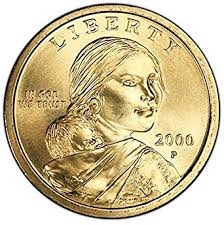
Most "no date" Sacagawea dollars are not errors. Starting in 2009, the U.S. Mint intentionally moved the date and mint mark off the face of the coin (as seen in the 2026 design above) and onto its edge. So the date is still there — you just have to look sideways to find it.
Quick answer by coin type:
| Your Coin | Where Is the Date? | Is It an Error? |
|---|---|---|
| 2000–2008 Sacagawea dollar | On the obverse (front face) | No date on face = possibly an error |
| 2009–present Native American dollar | On the edge (incuse lettering) | No date on face = intentional design |
| Any year, smooth edge with no lettering | Missing edge lettering | Possibly a valuable mint error |
So if your coin looks golden, shows Sacagawea on the front, and has no date — tilt it and check the edge first before assuming it's rare.
That said, there are genuine no-date errors out there. And there's a lot of confusion (and misleading listings online) about what these coins are actually worth.
This guide walks you through everything: what caused the design change, how to spot a true error, and what your coin is realistically worth.
Why Your Sacagawea Coin Has No Date on the Face
If you are holding a golden dollar and scratching your head because the space next to Sacagawea’s shoulder is blank, you aren't alone. At Coins Online LLC, we frequently hear from collectors who think they’ve struck gold with a rare mint error. However, the "disappearance" of the date was a calculated move by the United States government.
The shift occurred due to the Native American $1 Coin Act of 2007. This legislation required the Sacagawea Golden Dollar Coin to undergo a significant makeover starting in 2009. While the iconic obverse (front) featuring Sacagawea and her son Jean Baptiste Charbonneau remained, the reverse (back) began featuring a new design every year to celebrate the important contributions made by Indian tribes and individual Native Americans to the history of the United States.
To make more room for these beautiful new reverse designs by artists like Thomas Rogers and others, Congress decided to move the "clutter." They took the date, the mint mark, and the motto E Pluribus Unum and moved them to the edge of the coin. This gave the designers a larger "canvas" on both the front and back of the coin, but it created a decade of confusion for casual handlers who thought they had a sacagawea coin no date error.
Identifying the Sacagawea Coin No Date Design Change
To determine if your coin is "normal" or a potential rarity, you first need to identify which series it belongs to.
- The Original Series (2000–2008): These coins feature the soaring eagle on the back. On these issues, the date and mint mark (P, D, or S) should be clearly visible on the right side of the front face, just behind Sacagawea’s head. If a 2000–2008 coin has a blank face, you might actually have a rare error.
- The Native American Series (2009–Present): These coins feature rotating reverses, such as the 2009 Three Sisters agriculture design or the 2010 Great Law of Peace design. For all of these coins, the face is supposed to be dateless.

If you have a coin from 2009 or later, the lack of a date on the face is standard operating procedure. It is a feature, not a bug!
How to Find the Date and Mint Mark on the Edge
So, where exactly is the information hiding? It is located on the "third side" of the coin—the edge. This is known as incuse lettering, meaning the characters are pressed into the metal rather than raised above it.
When you rotate a post-2008 dollar on its side, you should see the year, the mint mark, and E Pluribus Unum. Because of how the coins are minted, you might find the lettering in two different orientations:
- Position A: The edge lettering is "upside down" when the Sacagawea side is facing up.
- Position B: The edge lettering is "right side up" when the Sacagawea side is facing up.
Neither position is rarer than the other; they occur randomly based on how the coin entered the edge-lettering machine. If you want to dive deeper into why this change happened, you can read more about Why Is There No Date On The Sacagawea Dollar Coin? and how it modernized the look of U.S. currency.
Rare Errors and the Value of a Sacagawea Coin No Date
While most "no date" coins are just modern designs, there are genuine "Missing Edge Lettering" errors. These occur when a coin completely bypasses the edge-lettering machine at the Mint. These coins will have a perfectly smooth, plain edge with no date, no mint mark, and no mottos anywhere on the coin.
These are legitimate numismatic rarities. According to Sacagawea - PCGS CoinFacts, these errors are highly sought after by collectors. However, you must be careful. A coin that has been heavily circulated might have its edge lettering worn down until it's nearly invisible, making it look like an error when it's actually just "tired."
Is Your Sacagawea Coin No Date a Valuable Mint Error?
Before you start planning a vacation with your "error" coin, we recommend a simple three-step authentication process:
- Check the Date: Is it a 2000–2008 coin? If so, and the face is blank, it's a major error. If it's a 2009+ coin, it must have a smooth edge to be an error.
- Inspect for Alterations: Some unscrupulous people use machine shops to grind down the edges of coins to simulate an error. A genuine error will usually weigh the standard 8.1 grams. If the coin is significantly lighter, someone may have tampered with it.
- Look for "Ghost" Letters: Use a magnifying glass. If you can see even a faint trace of a letter, it’s likely just circulation wear, not a mint error.
| Feature | Standard Modern Dollar | Genuine Missing Edge Error |
|---|---|---|
| Face Date | None (Post-2009) | None (Post-2009) |
| Edge Texture | Incuse Lettering | Completely Smooth |
| Weight | ~8.1 Grams | ~8.1 Grams |
| Value | $1.00 (Face Value) | $50 - $500+ (Depending on Grade) |
High-Value Varieties Beyond the Missing Date
If you are hunting for truly valuable Sacagawea dollars, the "no date" mystery is just the tip of the iceberg. Several other varieties command thousands of dollars:
- The Cheerios Dollar: In 2000, the Mint partnered with General Mills to put 5,500 Sacagawea dollars in Cheerios boxes. Years later, collectors realized these were "prototype" coins with much more detail in the eagle's tail feathers. These can sell for $5,000 to $25,000.
- The Wounded Eagle: A 2000-P variety where a die crack runs through the eagle's belly, looking like a spear or arrow.
- The Mule Error: Perhaps the most famous modern error, where a Washington Quarter front was paired with a Sacagawea Dollar back. These are incredibly rare and have sold for over $100,000.
- 2000-W Gold: There are 12 22kt gold Sacagawea dollars that actually flew on the Space Shuttle Columbia. They are currently stored at Fort Knox and are not available to the public, but they remain a legendary part of the series history.
For a deeper dive into these high-value strikes, check out the Sacagawea Dollar (2000-Date) | CoinWeek guide.
Debunking High-Price Listings on Etsy and eBay
We often see customers come to us after seeing a sacagawea coin no date listed on eBay or Etsy for $500, $1,000, or even $5,000. It is important to understand that asking price is not selling price.
Many of these listings are misleading. They often use titles like "Rare No Mint Mark" for a 2000-P dollar. In the coin world, "P" stands for Philadelphia. On the original 2000-2008 Sacagawea dollars, the "P" is right there under the date. If a listing claims a coin is rare because it has "no date on the face" but it’s a 2010 coin, they are simply describing a normal coin and hoping an uneducated buyer will take the bait.
In reality, a standard circulated Sacagawea or Native American dollar is worth exactly one dollar. Even in "Uncirculated" (MS60) condition, common dates usually only fetch a small premium. Don't let the "get rich quick" listings fool you!
How to Handle and Grade Your Sacagawea Dollars
If you truly believe you have a sacagawea coin no date error or a high-grade specimen, handling is key. Never clean your coins! Cleaning a coin with chemicals or even a soft cloth can create microscopic scratches that ruin its numismatic value.
For coins that appear to be in perfect condition or show a genuine error, we recommend professional grading. Services like PCGS (Professional Coin Grading Service) or NGC (Numismatic Guaranty Company) will verify the coin’s authenticity and assign it a grade on a scale of 1 to 70.
A 2000-D Sacagawea dollar in MS67 (Mint State 67) is significantly more valuable than one in MS63. Because the Mint produced hundreds of millions of these coins in 2000, only the absolute "best of the best" carry a high price tag.
At Coins Online LLC, we’ve been helping collectors navigate these waters since 1999. We offer a wide range of supplies to keep your treasures safe. You can learn more about our services and how we support the collecting community from our base in New Orleans.
Frequently Asked Questions about Sacagawea Dollars
Why is there no date on my 2010 or 2011 Sacagawea dollar?
As part of the Native American $1 Coin Act, all dollar coins minted from 2009 onward have the date, mint mark, and mottoes moved to the edge of the coin. This was done to allow for larger, more intricate designs on the front and back.
Are Sacagawea coins with no date worth thousands of dollars?
Only if they are genuine "Missing Edge Lettering" errors on post-2009 coins, or "Missing Obverse Date" errors on 2000-2008 coins. Most coins without a date on the face are simply normal modern issues worth $1. Always check the edge!
How can I tell if my coin is a genuine U.S. Mint issue or a replica?
Genuine U.S. Mint dollars are made of a copper core clad in manganese brass. They should weigh exactly 8.1 grams and have a diameter of 26.5 mm. Replicas often feel "off" in weight or have a "mushy" look to the details of Sacagawea’s face.
Conclusion
The mystery of the sacagawea coin no date usually has a very simple, topographical explanation: you’re just looking at the wrong side! While the move to edge lettering in 2009 caused plenty of confusion, it also opened up a new era of beautiful Native American designs that celebrate the diverse history of our continent.
Whether you are a seasoned numismatist or just found a golden coin in your change, understanding the "why" behind these design changes makes the hobby much more rewarding. If you have more questions or are looking to add a certified error or a high-grade Sacagawea dollar to your collection, Coins Online LLC is here to help. We pride ourselves on competitive prices and a massive inventory of over 5,000 products.
Feel free to contact us for more information or to browse our latest arrivals. Happy hunting!
Recent Posts
-

Walking Liberty Half Dollar Value Guide: Key Dates, the 1921 Problem, and What Yours Is Really Worth
Ask a room full of collectors to name the most beautiful U.S. coin and the Walking Liberty half doll
-
The 2026 Semiquincentennial Proof Set: What's in It, Why It Costs $107, and Whether to Buy One
On October 6 at noon Eastern, the U.S. Mint puts the 2026 Semiquincentennial Proof Set on sale at $1