Don't Spend It Yet! A Guide to Sacagawea Dollar Coin Value
What Are Sacagawea Dollar Coin Values Right Now?
Sacagawea dollar coin values range from face value ($1) for common circulated examples all the way to $200,000+ for the rarest error varieties. Here's a quick breakdown:
| Coin Type | Typical Value (April 2026) |
|---|---|
| Common circulated (any year) | $1 (face value) |
| Uncirculated MS-65 strike | $3 - $12 |
| 2000-P MS-69 high grade | ~$5,100 |
| 2000-D MS-69 high grade | ~$10,000 |
| 2000-P Wounded Eagle MS-68 | ~$6,000 |
| 2000-P Cheerios Dollar (certified) | $4,000 - $33,000 |
| 2000-P Mule (Quarter obverse) | $96,000 - $204,000 |
So before you spend that golden dollar sitting in your change jar — it's worth a closer look.
Most people assume all Sacagawea dollars are worth exactly one dollar. And for the vast majority, that's true. Over a billion have been minted since 2000, which keeps common strikes firmly at face value.
But a small number of these coins are genuinely extraordinary.
The 2000-P "Cheerios" Dollar was distributed inside cereal boxes as a promotional giveaway. It features a subtly different eagle reverse — a prototype design — and only around 60-70 verified examples exist. Certified specimens regularly sell for thousands of dollars.
Then there's the 2000-P Mule error: a coin accidentally struck with a Washington Quarter obverse instead of Sacagawea's portrait. Only 18 examples are known. One sold for over $144,000 at auction.
The difference between a $1 coin and a $100,000+ coin can come down to a single design detail you might miss with the naked eye.
This guide will show you exactly what to look for — and whether the Sacagawea dollar in your hand is worth spending or saving.
History and Composition: Is There Real Gold?
When the United States Mint released the first Sacagawea dollars in January 2000, the public was immediately struck by their brilliant, "golden" appearance. However, we often have to clear up a common misconception: these coins do not contain any real gold.
The Value of Gold Sacagawea One Dollar Coins is actually derived from their numismatic rarity and condition, not their metal content. The coin is made of a pure copper core clad in layers of manganese brass. This specific alloy consists of 77% copper, 12% zinc, 7% manganese, and 4% nickel. The manganese gives the coin its signature golden hue, but it also causes the coin to tarnish or "darken" quickly when exposed to the oils on human hands.
The series was born from the United States Dollar Coin Act of 1997. The goal was to replace the Susan B. Anthony dollar, which many consumers confused with the Washington quarter due to its similar size and silver color. To avoid this "vending machine confusion," the new dollar was required to have a golden color and a smooth edge.
The design is a tribute to American history. The obverse, designed by artist Glenna Goodacre, features Sacagawea, the Shoshone guide who was vital to the Lewis and Clark expedition. She is depicted carrying her infant son, Jean-Baptiste Charbonneau, in a papoose. Interestingly, because no contemporary portraits of Sacagawea exist, Goodacre used a modern Shoshone student, Randy’L He-dow Teton, as her model. The original reverse, designed by Thomas D. Rogers, features a soaring bald eagle surrounded by 17 stars. You can view high-resolution images of these Sacagawea dollars in our online gallery.
Understanding Sacagawea Dollar Coin Values
As of April 2026, the market for these coins remains polarized. On one hand, you have the billions of coins minted for general circulation in 2000 and 2001. On the other, you have the collector-only years (2002–2008) and the high-value error varieties.
To get a sense of the current market, it helps to look at Sacagawea Dollar Prices | Ungraded, PCGS & NGC Values. While a coin you find in your pocket is almost certainly worth just $1, uncirculated rolls or professionally graded "Mint State" (MS) coins can command a premium.
Factors That Drive Sacagawea Dollar Coin Values
What makes one 2000-P dollar worth $1 and another worth $5,000? It usually comes down to these three pillars:
- Condition (Grade): We use the Sheldon Scale (1–70). A coin graded MS-60 is technically uncirculated but might have many "bag marks" from being jostled at the Mint. A coin graded MS-69 or MS-70 is virtually flawless. For modern coins like these, a single point in grade can mean a difference of thousands of dollars.
- Certification: High-value coins should be authenticated by professional services like PCGS or NGC. This guarantees the grade and ensures the coin isn't a clever counterfeit or an altered specimen.
- Strike Quality and Eye Appeal: Sometimes a coin is "technically" perfect but lacks the luster or "pop" of another. Collectors pay a numismatic premium for coins with exceptional strike depth and original mint luster.
Where to Sell Your Collectible Dollar Coins
If you believe you’ve found a rare variety or a high-grade specimen, we recommend taking a cautious approach. You can find more info about Sacagawea dollar services on our main site, but generally, your options include:
- Professional Appraisals: For a fee, a numismatist can give you a formal valuation.
- Auction Houses: The best route for "Mule" errors or high-grade Cheerios dollars.
- Reputable Dealers: Fast and convenient, though you will typically receive a "wholesale" price so the dealer can make a profit.
- Online Marketplaces: Good for common uncirculated coins, but beware of high fees and the risk of returns.
Top Rare Varieties and Error Coins to Look For
This is where the real treasure hunting begins. While most Sacagawea dollars are common, a few "mistakes" at the Mint created some of the most valuable coins of the 21st century. You can browse our Sacagawea dollar inventory to see examples of these designs.
Identifying the Rare 2000-P Cheerios Sacagawea Dollar Coin Values
In early 2000, the Mint partnered with General Mills to include 10 million newly minted pennies and 5,500 Sacagawea dollars in boxes of Cheerios. Years later, collectors discovered that some of these "Cheerios Dollars" were struck with a prototype reverse die.
To identify one, you need a magnifying glass. Look at the eagle’s tail feathers on the reverse. The rare "Cheerios" variety (FS-902) has crisp, detailed veins in the feathers and a prominent central shaft. The standard 2000-P dollar has much smoother, less detailed feathers. Because only about 60 to 70 of these have been officially verified, they are incredibly valuable. High-grade specimens have sold for between $11,500 and $33,000.
The 2000-P Wounded Eagle and Other Die Errors
Another popular variety is the "Wounded Eagle." This was caused by a die gouge—a physical crack or scratch on the minting die itself. This gouge resulted in what looks like two raised spears or arrows piercing the eagle’s breast on the reverse.
An MS-68 "Wounded Eagle" can sell for roughly $6,000. While not as rare as the Cheerios dollar, it is much more likely to be found in original 2000-P mint rolls or even very light circulation. Other errors to watch for include:
- Speared Eagle: Similar to the wounded eagle, showing a distinct line through the bird's body.
- Planchet Errors: Coins struck on the wrong metal blanks (like a 2000-P struck on a Susan B. Anthony planchet, which sold for over $16,000).
- Edge Lettering Mistakes: Specifically on coins from 2009 and later, where the date and mint mark are missing from the edge.
The Native American $1 Coin Program (2009–Present)
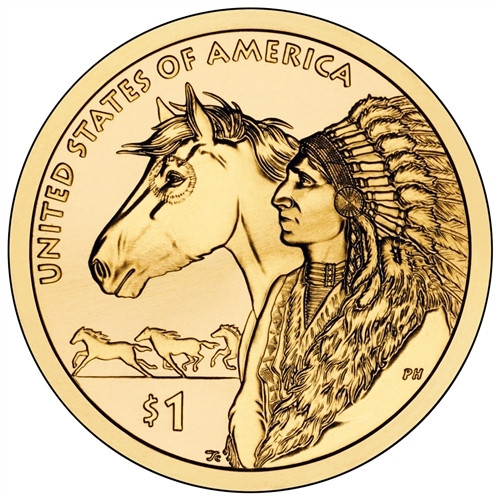
In 2009, the series evolved. While the obverse still features Glenna Goodacre’s portrait of Sacagawea, the reverse now changes every year to honor different Native American contributions to U.S. history. This was mandated by the Native American $1 Coin Act of 2008.
One major change collectors should note: starting in 2009, the date, mint mark, and the motto E Pluribus Unum were moved from the face of the coin to the edge (edge-incused inscriptions). This has led to many "missing edge lettering" errors which are highly sought after.
According to the Sacagawea Dollars (2000-Date) | Price Guide & Values | NGC, modern years like the 2025 release (honoring Mary Kawena Pukui) or the 2026 releases generally have lower mintages because they are no longer produced for general circulation—they are only made for collectors. This means that while they aren't "rare" in the sense of an error, they are harder to find than the 2000-P versions. We offer a variety of these Native American $1 coins for collectors looking to fill gaps in their albums.
Frequently Asked Questions About Sacagawea Dollars
Are Sacagawea dollars made of real gold?
No. Despite their bright yellow appearance, they contain zero gold. They are composed of a copper core with a manganese brass outer layer. If they were made of solid gold, they would be worth significantly more than their $1 face value just for the melt weight!
Which Sacagawea dollar is worth the most money?
The "King" of the series is the 2000-P Sacagawea / Washington Quarter Mule. This is a coin struck with the head of a quarter and the tail of a dollar. Only 18 are known to exist, and they have sold for as much as $204,000 at auction. Following that is the 2014-D Presidential Dollar Mule, which is currently a one-of-a-kind discovery.
Can I still find rare Sacagawea coins in pocket change?
It is possible, but very difficult. Most high-value errors like the Cheerios dollar or the Mule were identified by collectors years ago. However, varieties like the "Wounded Eagle" or "Missing Edge Lettering" still occasionally turn up in bank rolls or change from vending machines. It always pays to check the tail feathers on any 2000-P dollar you find!
Conclusion
At USSQ, we have been helping collectors navigate numismatics since 1999. Whether you are looking for the latest 2026 Native American dollar release or trying to hunt down a rare 2000-P variety, understanding sacagawea dollar coin values is the first step toward building a successful collection.
Most of these coins are worth exactly $1, but the "lottery tickets" are out there. Keep your eyes peeled for those extra tail feathers and edge lettering errors! If you're ready to start your collection today, we offer a wide range of graded coins and supplies to keep your treasures safe.
Have a question about a specific coin in your collection? Contact our team for more information. We’re always happy to help a fellow collector distinguish a common dollar from a numismatic rarity.
Recent Posts
-

Walking Liberty Half Dollar Value Guide: Key Dates, the 1921 Problem, and What Yours Is Really Worth
Ask a room full of collectors to name the most beautiful U.S. coin and the Walking Liberty half doll
-
The 2026 Semiquincentennial Proof Set: What's in It, Why It Costs $107, and Whether to Buy One
On October 6 at noon Eastern, the U.S. Mint puts the 2026 Semiquincentennial Proof Set on sale at $1