Standing Liberty Quarter Value Guide: The 1916 Key, the 1918/7-S Overdate, Full Head, and Dateless Coins
The Standing Liberty quarter lasted only fifteen years, from 1916 to 1930, and it packs more collector drama into that span than most series manage in a century: a first-year mintage of 52,000, a design change that legend blames on public complaint, a date that wore off so fast the Mint had to redesign it again, and an overdate that ranks among the great twentieth-century rarities. It is also a series where a worn coin with no visible date is worth its silver and not much more. This guide sorts the valuable from the ordinary, and tells you what to look for before you assume you have either.

The design and the two types
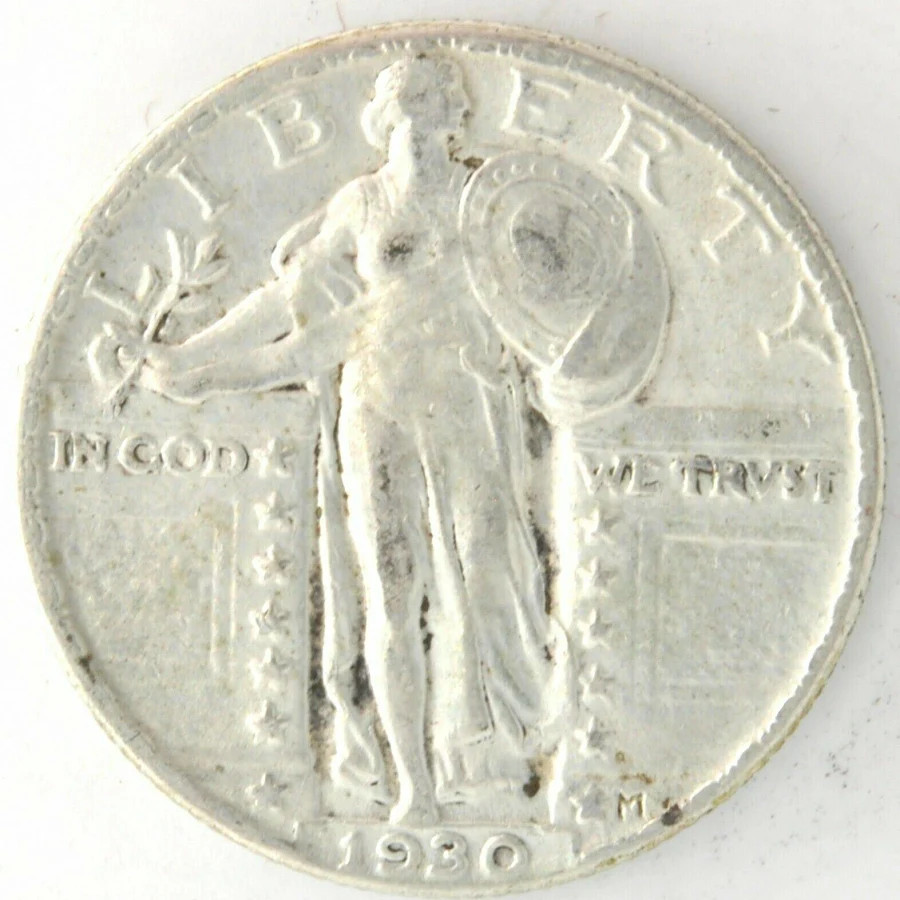
Hermon MacNeil's Liberty stands in a gateway holding a shield in one hand and an olive branch in the other, stepping toward the viewer. On the 1916 and early 1917 coins her right breast is bare. Whether or not the public really objected as loudly as legend says, the Mint revised the design partway through 1917, covering Liberty in chain mail and moving three of the reverse stars beneath the eagle. Collectors call the bare-breast coins Type 1 and the chain-mail coins Type 2, and 1917 exists in both types from all three mints. Every coin in the series is 90% silver with about 0.18 troy ounces of the metal, which sets a floor: no Standing Liberty quarter is worth face value, and a jar of worn ones is silver.
The key dates
1916
The Mint struck only 52,000 quarters in the last days of 1916, and this is the coin the series is famous for. Even in low circulated grades it sells for four figures according to the grading-service price guides, and uncirculated examples run far higher. Two warnings. The date on a worn 1916 is often faint, and because the 1917 Type 1 uses the same design, unscrupulous sellers alter 1917 dates to read 1916. Buy this coin only in a PCGS or NGC holder. If you think you have found one raw, have it authenticated before you celebrate.
1918/7-S overdate
A 1917-dated die at San Francisco was repunched with a 1918 date, and the 7 shows clearly beneath the 8. Only a small number were struck and few survived, so this is a four-figure coin even heavily worn and one of the most expensive twentieth-century U.S. coins in mint state. Every 1918-S deserves a look under magnification. Counterfeits and altered dates exist, so the certification rule applies here too.
1921 and 1923-S
Post-war coinage cutbacks left Philadelphia striking just under 2 million quarters in 1921, and San Francisco struck about 1.4 million in 1923. Both are semi-keys worth a healthy premium in any grade, and both are scarce with a full date because they circulated hard during the years when the date wore fastest.
1927-S
Mintage of 396,000, the lowest of any regular issue after 1916. Circulated examples are affordable but far above common-date money, and in uncirculated grades it is one of the toughest coins in the series.
The 1917 Type 1 coins and the 1919 mint marks
The 1917 Type 1 issues are worth a solid premium over the Type 2 coins because collectors want one example of the original design, and because they were struck for only part of the year. The 1919-D and 1919-S are semi-keys that are notoriously hard to find well struck.
The dateless problem
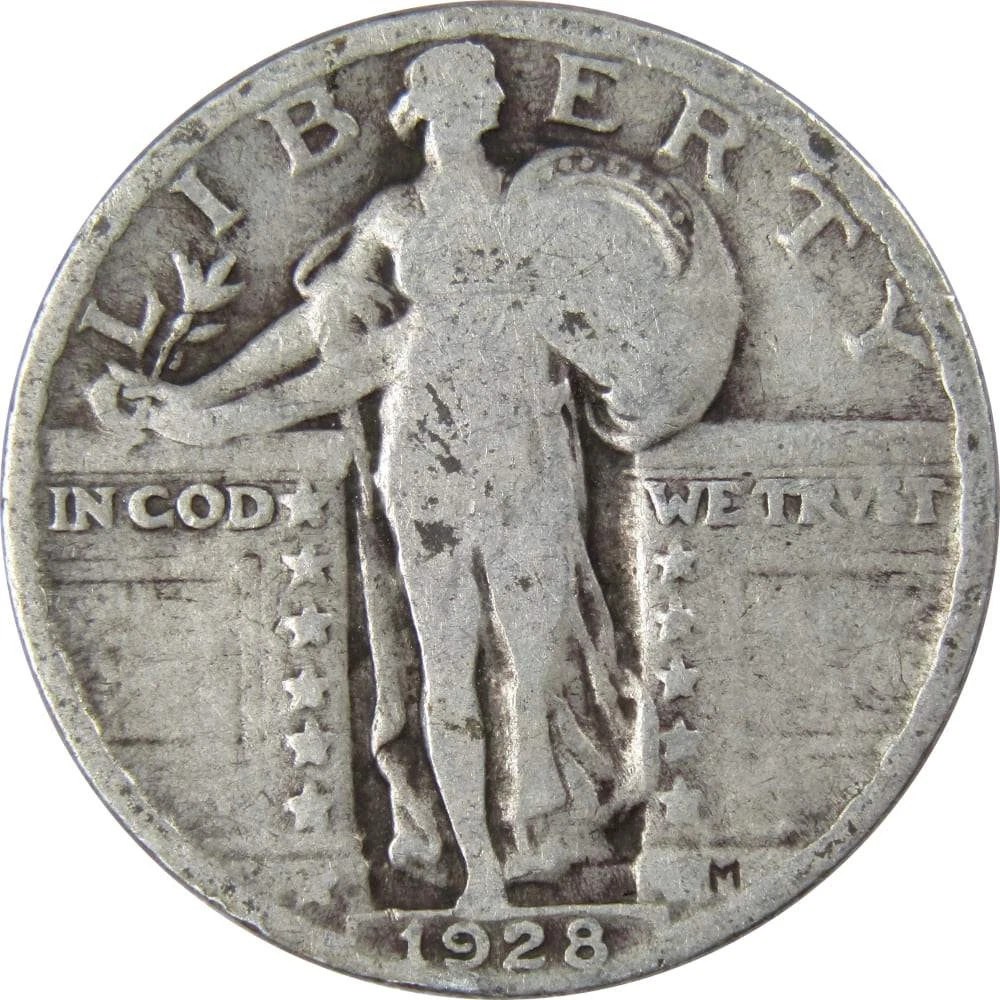
On coins struck from 1916 through 1924, the date sits on a raised pedestal that was the highest point of the design, so it was the first thing to wear away. Millions of Standing Liberty quarters circulated until the date was gone entirely. A dateless coin cannot be attributed to a year, so it is worth its silver content plus a small premium as a type coin, no matter what it might once have been. In 1925 the Mint recessed the date into the pedestal, and from then on the dates survive. That is why the 1925 to 1930 coins dominate what you find in old accumulations with dates still readable, and why they are the common dates of the series.
Full Head: the designation that multiplies value
Look at Liberty's head. On a sharply struck coin you can see three full leaves on her cap, a complete hairline down to the ear, and a distinct ear hole. Grading services call this Full Head (FH), and on many dates a Full Head uncirculated coin is worth several times the price of the same coin with a flat head. The 1920s San Francisco and Denver issues are notoriously weak here, which is why an FH 1926-D or 1926-S can cost more than a much scarcer date without it. When you are comparing prices online, check whether the listing says FH; it is often the whole explanation for a gap between two coins that look alike.
Grading what you have
Wear shows first on Liberty's right knee, her breast and the shield's center, and on the eagle's breast feathers. A Good-4 coin has a full rim and a readable date but the figure is a silhouette. Very Fine shows the shield rivets and some gown lines. Extremely Fine keeps most of the detail with light wear on the knee and breast. Cleaned coins, with hairline scratches, an unnatural bright surface or a dull grey haze, lose most of their premium, and grading services will not assign them a numerical grade.
Building a set
A complete set is 38 date-and-mint combinations including both 1917 types and the 1918/7-S overdate. Most collectors build the 1925 to 1930 dates first in a consistent grade, add the 1917 to 1924 dates with full dates as budget allows, and treat the 1916 and 1918/7-S as long-term goals or leave them out. We keep individual dates by grade in our Standing Liberty quarters category, alongside the Barber quarters that preceded them and the early silver Washington quarters that followed. If you like the era, the two other 1916 designs are covered in our Mercury dime and Walking Liberty half dollar value guides.
The honest summary
Check every coin for 1916, 1918-S with a 7 under the 8, 1921, 1923-S and 1927-S. A 1917 with a bare-breasted Liberty is a Type 1 and worth more than it looks. Anything dateless is silver. Everything else is worth its silver plus a premium that depends on grade and, above all, on whether the head is full. The Mint's 2026 Best of the Mint series revived MacNeil's design as a gold coin and silver medal this year, which is a nice tribute, but it has not changed the values of the originals; for those, use the price guides at PCGS and NGC.
Recent Posts
-

DC & U.S. Territories Quarters (2009): Complete Set Guide
If you collected 50 State Quarters and wondered what came next, the answer arrived in 2009: six quar
-
Are 2023 Coins Worth Money? What to Keep and What to Spend
Search for "2023 coins worth money" and you will find plenty of headlines promising a fortune in you