
The Definitive Guide to State Quarters by Year and Order
The Complete 50 State Quarters List by Release Year
The 50 State Quarters Program was a monumental undertaking by the United States Mint. To understand the state quarters list, one must look at the "birthdays" of the states. The Mint didn't just pick names out of a hat; they followed the chronological order in which each state ratified the U.S. Constitution or was admitted into the Union.
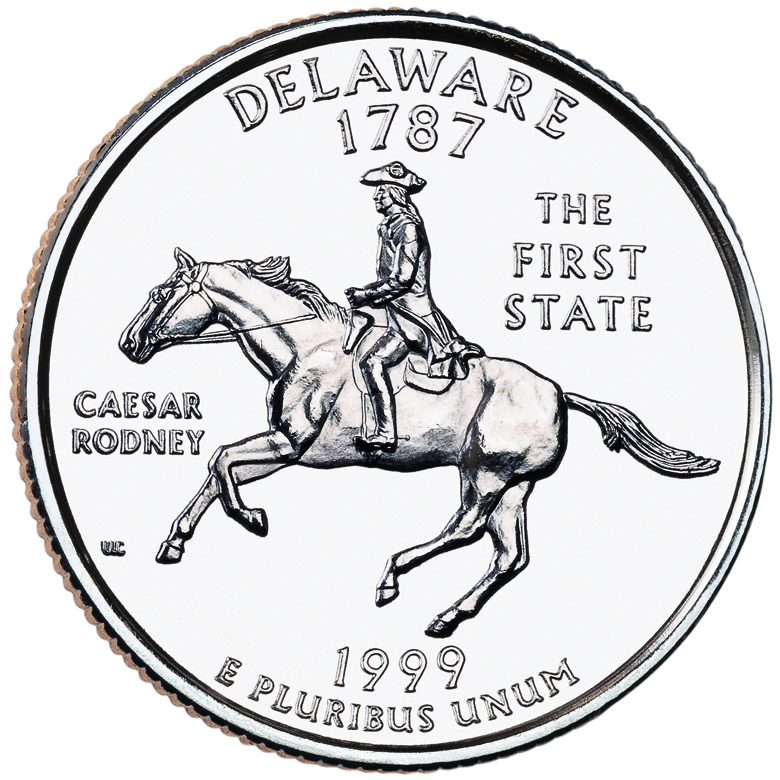
This means Delaware, the "First State," kicked things off in 1999, and Hawaii, the 50th state, closed the primary program in 2008. During this ten-year span, five new designs were released every ten weeks. This steady drumbeat of new pocket change turned millions of us into casual hunters, checking our palms every time we received change at the grocery store.
| State | Release Date | Statehood Order |
|---|---|---|
| Delaware | Jan 4, 1999 | 1st |
| Pennsylvania | Mar 8, 1999 | 2nd |
| New Jersey | May 17, 1999 | 3rd |
| Georgia | Jul 19, 1999 | 4th |
| Connecticut | Oct 12, 1999 | 5th |
| Massachusetts | Jan 3, 2000 | 6th |
| Maryland | Mar 13, 2000 | 7th |
| South Carolina | May 22, 2000 | 8th |
| New Hampshire | Aug 7, 2000 | 9th |
| Virginia | Oct 16, 2000 | 10th |
| New York | Jan 2, 2001 | 11th |
| North Carolina | Mar 12, 2001 | 12th |
| Rhode Island | May 21, 2001 | 13th |
| Vermont | Aug 6, 2001 | 14th |
| Kentucky | Oct 15, 2001 | 15th |
| Tennessee | Jan 2, 2002 | 16th |
| Ohio | Mar 11, 2002 | 17th |
| Louisiana | May 20, 2002 | 18th |
| Indiana | Aug 2, 2002 | 19th |
| Mississippi | Oct 15, 2002 | 20th |
| Illinois | Jan 2, 2003 | 21st |
| Alabama | Mar 17, 2003 | 22st |
| Maine | Jun 2, 2003 | 23rd |
| Missouri | Aug 4, 2003 | 24th |
| Arkansas | Oct 20, 2003 | 25th |
| Michigan | Jan 26, 2004 | 26th |
| Florida | Mar 29, 2004 | 27th |
| Texas | Jun 1, 2004 | 28th |
| Iowa | Aug 30, 2004 | 29th |
| Wisconsin | Oct 25, 2004 | 30th |
| California | Jan 31, 2005 | 31st |
| Minnesota | Apr 4, 2005 | 32nd |
| Oregon | Jun 6, 2005 | 33rd |
| Kansas | Aug 29, 2005 | 34th |
| West Virginia | Oct 14, 2005 | 35th |
| Nevada | Jan 31, 2006 | 36th |
| Nebraska | Apr 3, 2006 | 37th |
| Colorado | Jun 14, 2006 | 38th |
| North Dakota | Aug 28, 2006 | 39th |
| South Dakota | Nov 6, 2006 | 40th |
| Montana | Jan 29, 2007 | 41st |
| Washington | Apr 11, 2007 | 42nd |
| Idaho | Jun 4, 2007 | 43rd |
| Wyoming | Sep 4, 2007 | 44th |
| Utah | Nov 5, 2007 | 45th |
| Oklahoma | Jan 28, 2008 | 46th |
| New Mexico | Apr 7, 2008 | 47th |
| Arizona | Jun 2, 2008 | 48th |
| Alaska | Aug 25, 2008 | 49th |
| Hawaii | Nov 3, 2008 | 50th |
1999 to 2003: The Early Years of the State Quarters List
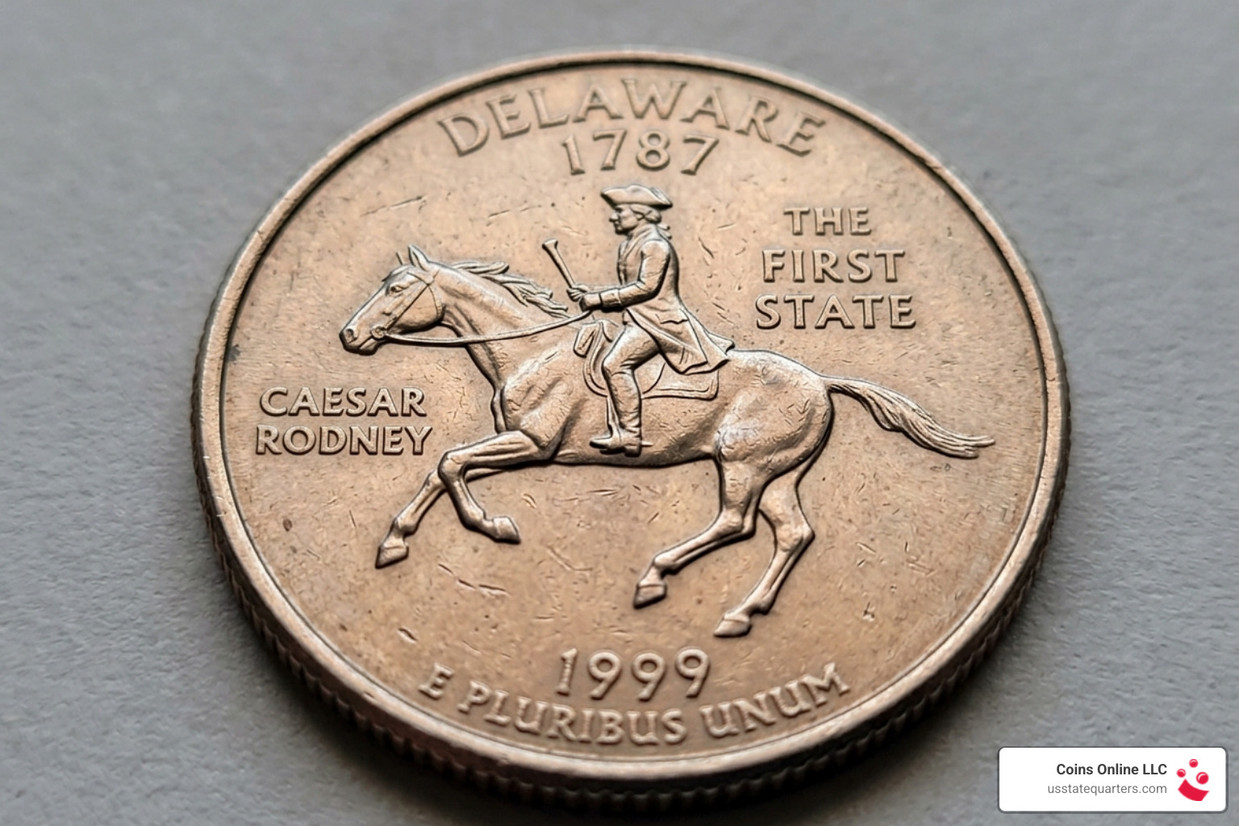
The first five years of the program were characterized by massive public enthusiasm and equally massive mintage numbers. In 1999, the Delaware quarter featured Caesar Rodney on his historic 1776 horseback ride to cast a deciding vote for independence. This "Spitting Horse" variety (which we'll discuss later) became an early collector favorite.
During this era, mintages were often at their peak. For example, Virginia (released in 2000) holds the record for the highest mintage in the entire state quarters list, with nearly 1.6 billion coins produced. Other highlights included the Louisiana State Quarter | U.S. Mint featuring a Pelican and the outline of the Louisiana Purchase territory, and Missouri's 2003 design showcasing the Gateway Arch and Lewis and Clark returning to St. Louis.
We also saw some design drama during these years. New Hampshire's "Old Man of the Mountain" design became a poignant tribute after the actual rock formation collapsed just a few years after the coin's release. North Carolina and Ohio both claimed the "Birthplace of Aviation" (First Flight), leading to a friendly rivalry on the faces of our currency.
2004 to 2008: Completing the State Quarters List
As the program moved into its second half, the fervor remained high, but the economic landscape began to shift. You might notice that if you look at a List of State Quarters with mintage data, the numbers start to drop significantly toward the end.
While Virginia saw 1.59 billion coins, Oklahoma (released in 2008) saw only 416.6 million. This makes the later years, particularly 2008, slightly harder to find in high-grade circulated condition.
The designs in this period were some of the most beautiful. California (2005) featured naturalist John Muir and Yosemite Valley, while South Dakota (2006) showcased the iconic Mount Rushmore. The program concluded with Hawaii in 2008, featuring King Kamehameha I stretching his hand toward the eight main islands. It was a fitting, regal end to a decade of numismatic history.
Beyond the 50 States: DC and U.S. Territories
Many people think the program ended with Hawaii, but in 2009, a special one-year extension was authorized. This added six more designs to the state quarters list to honor the District of Columbia and the five inhabited U.S. territories.
The 2009 District of Columbia quarter is particularly famous among collectors for featuring jazz legend Duke Ellington, making him the first African American to appear solo on a circulating U.S. coin.
The 2009 Territory Quarters included:
- District of Columbia: Duke Ellington at the piano.
- Puerto Rico: A historic sentry box and hibiscus flower (the first U.S. coin to feature Spanish text: "Isla del Encanto").
- Guam: An outline of the island and a Proa boat.
- American Samoa: An ava bowl and whisk.
- U.S. Virgin Islands: The three main islands and a Yellow Breast bird.
- Northern Mariana Islands: A latte stone and a Carolinian canoe.
Following this, the Mint launched the America the Beautiful Quarters® Program, which ran from 2010 to 2021. This series honored 56 national sites, including national parks and forests, further expanding quarter collecting for us all.
Rare and Valuable State Quarters to Watch For
While most state quarters are worth exactly 25 cents, a few "treasure coins" exist due to minting errors or unique varieties. According to the State Quarters | Guide to the 50 State Quarters Program, these are the heavy hitters we recommend looking for:
- 2004-D Wisconsin "Extra Leaf": This is the "King" of state quarter errors. Some quarters feature a small extra line on the ear of corn that looks like a leaf. There are two versions: "High Leaf" and "Low Leaf." These can sell for anywhere from $50 to over $1,000 depending on the condition.
- 1999 Delaware "Spitting Horse": A die crack on the reverse makes it look like a line of "spit" is coming out of the horse's mouth. It's a fun variety that carries a modest premium.
- 2005-P Kansas "In God We Rust": This is a classic "grease strike" error. Grease filled the letter "T" in "TRUST," leaving the coin with the somewhat rebellious motto "IN GOD WE RUST."
- 2005-P Minnesota "Extra Tree": A doubled die error on the reverse creates what looks like an extra spruce tree next to the main design.
If you think you've found one of these, we suggest looking at it under a 10x magnifying glass. For high-value errors like the Wisconsin Extra Leaf, professional grading is often worth the investment to verify its authenticity and preserve its value.
Collecting Guide: Mint Marks and Specifications
To be a savvy collector, you need to know what you're looking at on the "heads" (obverse) side of the coin. Every state quarter shares a modified version of John Flanagan's 1932 George Washington portrait, updated by Mint sculptor-engraver William Cousins.
Where to find the Mint Mark: The mint mark is located to the right of Washington's ponytail.
- P (Philadelphia): Most common in the Eastern U.S.
- D (Denver): Most common in the Western U.S.
- S (San Francisco): These are "Proof" coins, specially struck for collectors with a mirror-like finish. They weren't meant for general circulation, though they sometimes show up in the wild!
Technical Specifications:
- Composition: A "clad" sandwich of 75% copper and 25% nickel (outer layers) over a pure copper core.
- Silver Proofs: The Mint also issued 90% silver proof versions for collectors. These have a distinct "ring" when dropped and no copper stripe on the edge.
- Weight: 5.67 grams.
- Diameter: 24.3 mm.
- Edge: Reeded (119 reeds).
Frequently Asked Questions about State Quarters
Which state quarter has the lowest mintage?
The 2008-D Oklahoma quarter holds the title for the lowest mintage in the 50-state series, with just 194.6 million coins from the Denver mint (416.6 million total between P and D). This was largely due to the economic slowdown in 2008, which reduced the demand for new coinage. By comparison, the early years often saw mintages double or triple that amount per state.
How were the designs for each state chosen?
It was a very democratic process! Each state's governor was responsible for submitting 3 to 5 design concepts to the U.S. Treasury. Most governors formed committees or held statewide contests involving school children and local artists. The Mint's Artistic Infusion Program then refined these concepts into workable coin designs. Final approval rested with the Secretary of the Treasury, though the public often got the final say through statewide votes.
What is the total value of a complete state quarter set?
If you simply pulled 50 quarters from your pocket (one for each state), the set is worth its face value of $12.50. However, a complete "Date and Mint" set (100 coins, featuring both P and D mints) in uncirculated condition typically sells for $50 to $150. Silver proof sets are the most valuable; the 1999 Silver Proof Set is particularly prized because it was the first year and had a relatively low production run compared to later years, often fetching $300 to $600 today.
Conclusion
The 50 State Quarters Program did more than just change the look of our change; it revitalized the hobby of numismatics for a whole new generation. At Coins Online LLC, we’ve seen how these coins serve as a gateway into the fascinating world of history and geography. Whether you are looking for a rare Wisconsin Extra Leaf or just trying to fill that last hole in your map, we are here to help.
With over 5,000 products and a deep passion for the industry since 1999, we pride ourselves on offering competitive prices and a 14-day return policy to ensure you’re happy with every addition to your collection. You can explore more about these coins and find supplies to protect your treasures at https://www.usstatequarters.com/. Happy hunting!
Recent Posts
-

2026 American Innovation Dollars: Steve Jobs, the Cray-1, and Two More Designs Worth Watching
The American Innovation dollar program doesn't get the attention the quarter series do, and that's e
-
Eisenhower Dollar Value: Which Ike Dollars Are Worth Money (and Which Aren't)
Pull an Eisenhower dollar out of a dresser drawer and the first question is always the same: is this

