Wheat Penny Condition Census and the Hunt for Mint State Perfection
Why the Wheat Penny Condition Census Is the Hidden Language of Serious Collectors
The wheat penny condition census is the ranking of the finest known examples of each Lincoln Wheat Cent date and mint mark combination, based on certified grades, population data, and auction appearances. If you want a quick answer to what it means and why it matters, here it is:
What a wheat penny condition census tells you at a glance:
| Element | What It Means |
|---|---|
| Date + Mint Mark | Identifies the specific issue (e.g., 1955-S, 1909-S VDB) |
| Grade (MS60–MS68) | Measures preservation on the Sheldon scale |
| Color (BN / RB / RD) | Indicates how much original red copper survives |
| Population (PCGS / NGC) | Shows how many examples exist at each grade level |
| Top Pop | The highest grade currently certified for that issue |
| Auction Record | The most a certified example has sold for at public sale |
For a broader foundation before using census data, start with our wheat penny pillar guide, or browse collectible examples in our Shop Wheat Back Pennies category.
Here is what makes this topic so compelling: a coin does not have to be rare in mintage terms to be rare in condition. The 1955-S Lincoln Cent had a mintage of over 44 million pieces, yet only 2 examples have ever been graded MS68 Red by PCGS. Meanwhile, just 673 examples have reached MS67 Red — a grade considered extraordinary for most other coins in the series. That gap between what was made and what survived in near-perfect condition is exactly what the condition census measures.
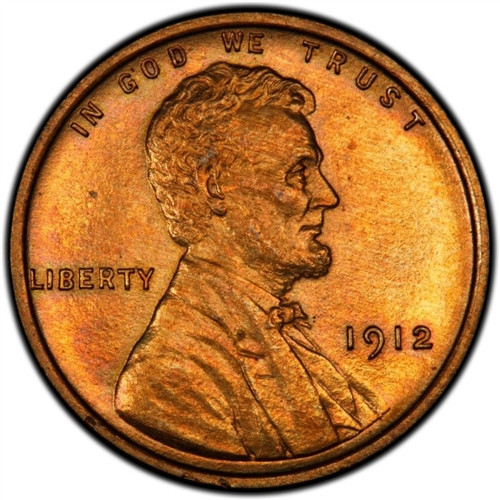
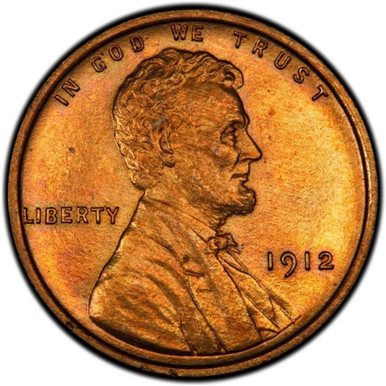
Because condition-census research depends on exact attribution, coin images should be used only when they accurately show the Lincoln Wheat Cent design, copper color, or specific variety diagnostics being discussed. Generic coin photos should never be used to authenticate a date, mint mark, or doubled die.
For collectors chasing Mint State perfection — whether for a registry set or pure collecting joy — understanding population reports, color designations, and auction benchmarks is not optional. It is the difference between paying the right price and overpaying by a wide margin.
This guide breaks down every layer of the wheat penny condition census, from how grades are assigned to which dates are genuinely rare at the top of the population.
What a Wheat Penny Condition Census Means for Collectors
A condition census is a finest-known list. For wheat pennies, it ranks the best certified examples of each date and mint mark in the 1909-1958 Lincoln Wheat Cent series.
For example, a 1955-S cent in circulated condition is not hard to find. A 1955-S in MS68RD is a different animal entirely. That coin lives at the top of the grade mountain, where there are very few seats and everyone wants one.
A wheat penny condition census matters because it helps collectors answer three important questions:
- Is this coin rare overall, or only rare in high grade?
- How many similar coins have been certified?
- Does the asking price match actual market evidence?
Condition census information gives buyers and sellers more confidence. It also helps serious collectors understand why two wheat pennies with the same date can have wildly different values.
A basic circulated wheat penny may be worth a few cents to a few dollars. A certified top-pop Red example can bring hundreds, thousands, or, for famous rarities, far more.
How a Wheat Penny Condition Census Is Built
A condition census is not created by one single source. It is built from several layers of evidence:
- Third-party grading results from services such as PCGS and NGC
- Population reports showing how many coins are certified at each grade
- Auction records showing public market prices
- Registry set data showing collector demand
- Pedigree history for famous coins
- Reappearances of the same coin in different holders or sales
The Lincoln Cents, Wheat Reverse NGC Census is one useful reference because it organizes certified examples by grade. Price guides such as the NGC Lincoln Wheat Cent Price Guide add another layer by showing guide values by issue and grade.
But there is a catch: population reports are not perfect. Coins can be resubmitted, crossed from one grading service to another, cracked out of holders, or upgraded. That means a census is best viewed as a market map, not an exact head count of every surviving coin.
Why Condition Rarity Can Beat Mintage Rarity
Mintage tells us how many coins were originally struck. Condition rarity tells us how many survived in exceptional condition.
Those are very different things.
A low-mintage coin may have been saved in large numbers. A high-mintage coin may be almost impossible to find with full red color, strong luster, clean fields, and no distracting carbon spots.
This is especially true for copper coins. Copper changes color. It spots. It tones. It reacts to moisture, fingerprints, paper, album materials, and bad storage. In other words, copper has trust issues.
That is why some wheat pennies are famous as condition rarities. The 1926-S is often discussed this way because high-grade Red examples are extremely difficult. Many early San Francisco issues also suffer from weak strikes, heavy circulation, and poor long-term preservation.
Classic key dates still matter, of course. The 1909-S VDB, 1914-D, and 1931-S are always important. But in the condition census world, a common-date coin in MS68RD can be more condition-rare than a famous key in lower Mint State.
Circulated Scarcity vs Mint State Scarcity
Collectors often use the word “rare” too broadly. There are really two kinds of scarcity:
| Type of Scarcity | What It Means | Example |
|---|---|---|
| Circulated scarcity | Hard to find in any collectible grade | 1909-S VDB, 1914-D |
| Mint State scarcity | Available circulated, scarce in top grades | 1926-S, many early S-mints |
| Extreme-grade scarcity | Common overall, rare in MS67RD or MS68RD | 1955-S, 1951-S, 1944 |
| Variety scarcity | Valuable because of a die variety or error | 1955 Doubled Die, 1922 No D |
The MS65 level is often where wheat cents begin to attract stronger Mint State premiums. MS66 is better. MS67 is Superb Gem territory. MS68 is the tiny penthouse apartment at the top of the building.
For registry collectors, that one-point difference can be enormous.
How Wheat Pennies Are Graded: MSBN, MSRB, MSRD, and the Mint State Ladder
Wheat pennies are graded on the Sheldon scale from 1 to 70. Circulated coins show wear. Mint State coins, labeled MS60 through MS70, show no wear from circulation but can still have marks, spots, weak strike, or dull luster.
Copper coins get an extra layer of description: color.
The main copper color designations are:
- BN: Brown
- RB: Red-Brown
- RD: Red
These letters can change the value dramatically. A 1909-S VDB in MS65BN, MS65RB, and MS65RD may technically share the same numeric grade, but the market will not treat them the same.
What MSBN, MSRB, and MSRD Mean
Here is the simple version:
| Label | Meaning | What Collectors See |
|---|---|---|
| MSBN | Mint State Brown | Mostly brown copper surfaces |
| MSRB | Mint State Red-Brown | A mix of original red and mellowed brown |
| MSRD | Mint State Red | Mostly original red mint color |
For modern grading, RD generally means a coin retains a very high percentage of original red copper color. Many collectors use “95% red” as the practical rule of thumb, though final designation depends on the grading service’s judgment.
MSRD coins usually command the highest premiums, especially for early dates. But Red copper is fragile. A coin can be RD today and mellow over time if stored poorly. That is why careful storage matters so much.
Mint State Grade Breaks That Matter Most
Not all Mint State grades create the same price jump. These are the levels collectors watch most closely:
| Grade | Common Meaning | Why It Matters |
|---|---|---|
| MS63 | Choice Mint State | Attractive but usually has visible marks |
| MS64 | Near-Gem | Better surfaces, still not quite Gem |
| MS65 | Gem | Major value threshold for many dates |
| MS66 | Premium Gem | Strong luster and fewer distractions |
| MS67 | Superb Gem | Very scarce for many wheat cents |
| MS68 | Elite condition rarity | Top-pop or near top-pop for most issues |
A coin does not need to be perfect to reach MS67, but it must be exceptional. For wheat pennies, graders look closely at:
- Luster
- Contact marks
- Strike sharpness
- Carbon spots
- Fingerprints
- Planchet flaws
- Rim marks
- Color originality
- Eye appeal
On the reverse, collectors often check the wheat lines for sharpness. On the obverse, Lincoln’s cheek and coat are common focal areas.
Eye Appeal, Strike, and Surface Quality Beyond the Number
The grade is important, but the coin still has to look good.
Two MS66RD wheat cents can sell for different prices because one has blazing luster and clean fields while the other has dull color or a distracting spot. Eye appeal is the reason auction prices sometimes run above price guide estimates.
Positive traits include:
- Original copper “skin”
- Strong cartwheel luster
- Clean fields
- Sharp strike
- Even color
- No major carbon spots
- No fingerprints
Negative traits include:
- Dark stains
- Carbon flecks
- Artificial color
- Scratches
- Rim nicks
- Lamination problems
- Dull or washed-out surfaces
Woodgrain toning can be attractive on some copper coins, but it depends on the pattern and market taste. A beautiful coin is still a beautiful coin. A blotchy coin is still a blotchy coin, even if the label tries to cheer it up.
Rarest and Most Valuable Wheat Penny Condition Census Coins
The most valuable wheat pennies usually fall into one of three groups:
- Famous key dates
- Major varieties or errors
- Common dates in extreme Mint State grade
Here are wheat penny dates where top-grade rarity matters most:
- 1909-S VDB
- 1909-S
- 1914-D
- 1922 No D
- 1924-D
- 1926-S
- 1931-S
- 1943 bronze cents
- 1944 steel cents
- 1955 Doubled Die Obverse
- 1955-S in MS67RD and MS68RD
For broader year-by-year pricing, our lincoln wheat penny values guide is a helpful starting point.
The Wheat Penny Condition Census Leaders by Date and Mint Mark
Some wheat cents are famous because they are rare in any grade. Others are famous because almost none survive at the top of the grading scale.
Important condition census leaders include:
| Coin | Why It Matters |
|---|---|
| 1909-S VDB | Classic key date with strong demand in all grades |
| 1914-D | Low mintage and heavily circulated issue |
| 1922 No D | Famous missing-mintmark variety |
| 1926-S | Major condition rarity in high-grade Red |
| 1931-S | Low mintage key date, often saved but still desirable |
| 1955 Doubled Die | One of the best-known doubled die wheat cents |
| 1955-S MS68RD | Extreme top-pop condition rarity |
| 1943 bronze | Legendary wrong-planchet rarity |
| 1944 steel | Rare wartime transitional error |
The doubled die wheat penny category deserves special attention because variety attribution can add value beyond grade alone.
Common Dates That Become Expensive in Extreme Grade
The 1955-S is one of the best examples of condition rarity versus mintage rarity. It had a mintage of 44,610,000, and many were saved. PCGS estimates about 14,000 examples survive in MS65 or better condition.
That sounds like a lot. But the population narrows quickly at the top:
| 1955-S Lincoln Cent RD Grade | Reported PCGS Population |
|---|---|
| MS65RD | 5,007 |
| MS66RD | 9,949 |
| MS67RD | 673 |
| MS68RD | 2 |
This is the “population cliff” collectors talk about. A date can be common in MS65 but suddenly rare in MS67 or MS68.
The 1951-S is another issue often available in attractive Mint State. Research data shows NGC auction-related examples in MS66RD are not rare compared with tougher issues, while lower grades such as MS64RD also appear in meaningful numbers. That availability can make it a good coin for learning how grade, color, and price interact without jumping straight into five-figure territory.
Notable High-Grade Examples and Records
The 1955-S MS68RD is one of the clearest condition census examples. PCGS reports only 2 examples at MS68RD, while MS67RD has hundreds. One MS68 example has been reported with an auction record of $7,475 from a 2002 public sale.
Other notable high-end wheat cent examples include:
- 1909-S VDB in Superb Gem Red grades, where demand is intense because it combines key-date status with top-tier preservation
- 1926-S in high-grade Red, famous because attractive Mint State survivors are extremely difficult
- 1955 Doubled Die examples, where variety fame can outweigh ordinary date rarity
- 1943 bronze cents, which are wrong-planchet rarities and among the most famous U.S. error coins
- 1944 steel cents, another wartime transitional error category with very small confirmed populations
For proof wheat cent specialists, historic sales such as the Louisiana Lagniappe Collection have shown how advanced collectors pursue elite Lincoln cent material. See this discussion of the Louisiana Lagniappe Collection of Proof Wheat cents for an example of how specialized Lincoln cent collections attract attention.
Reading NGC and PCGS Population Reports Without Overpaying
Population reports are powerful tools, but they can also tempt collectors into overpaying. A low number on a report does not automatically mean a coin is undervalued. It means you should investigate further.
Useful population references include the Lincoln Wheat Cent NGC Census and the NGC Lincoln Wheat Cent Price Guide. General references such as Wheat Pennies | Learn the Value of These Cents and Complete Wheat Penny Value Chart: Know What Your Coin Is Worth - PICCC can help newer collectors understand the larger value landscape.
How NGC and PCGS Reports Influence Perceived Rarity
NGC and PCGS population reports influence the market because they show how many coins have been certified at each grade level. When collectors see that only a few coins exist at the top grade, demand often increases.
Population reports influence:
- Registry set competition
- Dealer asking prices
- Auction estimates
- Collector confidence
- Liquidity
- Perceived rarity
The phrase “top pop” means the coin is tied for the highest grade certified by that grading service. Top-pop coins can bring large premiums, especially when the date is popular and the color is RD.
Population Data vs True Survival Numbers
Population data does not always equal true survival numbers.
Why?
- Some coins are submitted more than once.
- Some coins are crossed between grading services.
- Some raw coins remain hidden in old collections.
- Some original rolls have never been searched.
- Some Red coins may turn Red-Brown over time.
- Census updates can lag behind the market.
- Coins may be conserved, regraded, or reholdered.
This is why we never recommend buying based only on population. The better approach is to combine population data with auction results, photos, grade quality, and current demand.
Auction Records vs Price Guide Values
Price guides are helpful. Auction records are evidence. Recent comparable sales are usually the strongest guide to fair market value.
| Data Source | What It Tells You | Limitation |
|---|---|---|
| Population report | How many certified examples exist by grade | May include resubmissions |
| Price guide | Estimated retail value | May lag fast markets |
| Auction record | What a buyer actually paid | One sale may be unusual |
| Recent comps | Current market range | Requires careful comparison |
| Dealer offer | Wholesale or inventory-based value | Usually below retail |
An auction record can be higher than a price guide when two collectors aggressively chase the same coin. It can also be lower if the coin has weak eye appeal, poor photos, or sells during a quiet market.
In thin markets, one bidder can change everything. That is why we like to see several comparable sales before calling a value “real.”
Buying and Selling High-Grade Wheat Pennies at Fair Market Value
High-grade wheat pennies are exciting, but they require discipline. A shiny Red coin can make even experienced collectors forget their budget. We have all been there. The coin smiles, the wallet cries.
Before buying, compare the coin to recent sales and population data. Our guide on how to buy wheat pennies covers practical buying basics for collectors building sets.
What to Check Before Buying a Condition Census Candidate
Before buying a high-grade wheat cent, check:
- Certification number
- Grading service population
- Color designation
- Recent auction history
- Photos under good lighting
- Obverse and reverse surfaces
- Carbon spots or fingerprints
- Rim damage
- Signs of artificial color
- Return policy
For major varieties, authentication matters. A 1955 Doubled Die should show strong doubling on the date, LIBERTY, and IN GOD WE TRUST. A questionable coin should be treated as questionable until certified.
Use extra caution with:
- 1909-S VDB cents
- 1914-D cents
- 1922 No D cents
- 1943 copper-looking cents
- 1944 steel-looking cents
- 1955 Doubled Die cents
Counterfeits, altered dates, added mint marks, and plated coins exist. If the value is significant, certification is not optional.
When to Submit a Wheat Penny for Professional Grading
Not every wheat penny should be graded. Grading fees, shipping, insurance, and time matter.
Consider professional grading when the coin is:
- A key date
- A major variety
- A suspected 1943 bronze cent
- A suspected 1944 steel cent
- A strong 1955 Doubled Die
- A high-grade Red coin
- A coin that appears MS66 or better
- A coin with strong resale potential
For common circulated wheat cents, grading usually does not make sense. For a bright, original, sharply struck Red coin from an old roll, grading may be worthwhile.
If you are sorting inherited coins or building a collection, a wheat penny coin book can help you organize dates before deciding what deserves certification.
How to Sell Without Leaving Money on the Table
Selling high-grade wheat pennies well takes planning.
Good selling steps include:
- Verify the certification number.
- Research recent comparable sales.
- Note the population at the grade.
- Photograph the coin clearly.
- Describe color, spots, and surfaces honestly.
- Decide between auction, fixed price, or dealer sale.
- Use insurance for valuable shipments.
- Avoid rushed sales unless you need fast liquidity.
Auction can work well for true condition census pieces because competition can lift the price. Fixed-price selling can work better if the market is thin and you are willing to wait.
For date-specific research, our 1944 wheat penny value guide is useful when evaluating common wartime bronze cents and potential error confusion.
At USSQ, we have served collectors since 1999 with a large online selection of collectible coins and supplies, competitive prices, low shipping, and a 14-day return policy. We ship within the United States and Canada, which helps collectors buy with more confidence.
Frequently Asked Questions About Wheat Penny Condition Census Coins
What is a wheat penny condition census?
A wheat penny condition census is a ranking of the finest known examples of a specific Lincoln Wheat Cent date and mint mark. It uses certified grades, population reports, auction results, and sometimes pedigree history to identify the best surviving coins.
For example, if only two 1955-S cents are certified MS68RD by PCGS, those coins sit at the top of that issue’s condition census for that grading service.
Are MSRD wheat pennies always worth more than MSRB or MSBN coins?
Usually, yes, but not always in every practical buying situation.
MSRD wheat pennies generally bring the highest prices because they retain the most original red copper color. MSRB coins are typically worth less, and MSBN coins usually bring the lowest prices within the same numeric grade.
However, eye appeal can change the result. A gorgeous MS66RB with smooth surfaces may be more desirable than an MS66RD with distracting carbon spots. Also, some early dates are so rare in any attractive Mint State grade that collectors will compete strongly for BN or RB examples.
Should I buy the highest-grade wheat penny I can afford?
Only if it fits your collecting goal.
If you are building a registry-quality set, buying the highest-grade certified coin you can afford may make sense. If you are building a balanced date-and-mint collection, you may be happier buying attractive mid-grade key dates instead of spending your full budget on one common-date MS67RD.
Ask yourself:
- Is this a key date or a common date?
- Is the premium justified by population?
- Are recent sales close to the asking price?
- Is the color stable and attractive?
- Would I still like this coin if registry points did not exist?
That last question is surprisingly useful.
Conclusion
The wheat penny condition census is where history, grading, rarity, and collector psychology meet. It explains why a coin with a huge mintage can become valuable in MS68RD, and why a famous key date can become legendary when it survives with original Red color.
The smartest collectors do not rely on one number. They compare grade, color, population, eye appeal, auction records, and long-term demand. They also respect copper. Red wheat cents are beautiful, but they need proper storage and careful handling.
If you are ready to build or upgrade your collection, browse our Shop Wheat Back Pennies page. And if you are organizing a growing set, use a wheat penny coin book to organize your set before chasing condition census coins.
Mint State perfection is fun. Paying fair value for it is even better.
See our Indian Head pennies for current prices.
Recent Posts
-

Mercury Dime Value Guide: Key Dates, Full Bands, and Why Weinman's Design Is Back in 2026
The U.S. Mint just put Adolph Weinman's Winged Liberty back on a coin. The 2026-W Palladium Eagle, r
-
The 2026 Trump Dollar Sold Out in Hours: What Happened and What It Means for Value
It took one business day. The United States Mint opened sales on the 1776–2026 President Donald J. T