Top Washington Statehood Quarter Collectibles for Your Album
The 2007 Washington Statehood Quarter: America's Most Collected Coin Series
The washington statehood quarter is one of the most recognized coins from the landmark 50 State Quarters Program (1999–2008) — and a must-have for any serious collector's album.

Here's a quick overview of what you need to know:
| Feature | Details |
|---|---|
| Release Date | April 2, 2007 |
| Series Position | 42nd coin in the program |
| Reverse Design | King salmon leaping before Mount Rainier |
| Designer | Charles Vickers |
| Mint Marks | P (Philadelphia), D (Denver), S (San Francisco) |
| Total Mintage | ~545,200,000 circulation coins |
| Face Value | $0.25 |
| Collector Value | $0.40 (circulated) up to $3,000+ (MS68) |
The program ran for a decade and became the most popular U.S. coin series ever issued — with an estimated 147 million Americans actively collecting state quarters at its peak. When production ended on December 31, 2009, the coins became even more desirable to collectors.
Whether you're hunting for a circulated example to fill an album slot or chasing a high-grade PCGS-certified MS68, this guide covers everything you need to build a strong Washington quarter collection.
History and Design of the 2007 Washington Statehood Quarter
The washington statehood quarter made its grand debut on April 2, 2007. As the 42nd coin released in the 50 State quarters program, it honors the "Evergreen State," which joined the Union on November 11, 1889.
The design of this coin is a beautiful tribute to the Pacific Northwest. If you look at the reverse, you'll see a majestic King Salmon leaping from the water, with the iconic Mount Rainier towering in the background. Mount Rainier is a fitting choice for the design; locals often refer to it simply as "The Mountain," and it is covered in more than 35 square miles of snow and ice. Surrounding the central image are lush evergreen forests, reinforcing the state’s famous nickname.
The Official Washington State Quarter design details reveal that the reverse was both designed and engraved by Charles Vickers. The selection process was truly a community effort. Washington residents submitted over 1,500 design concepts, which were eventually whittled down to a final few—including an image of an apple within the state outline—before the salmon and mountain design won the popular vote.
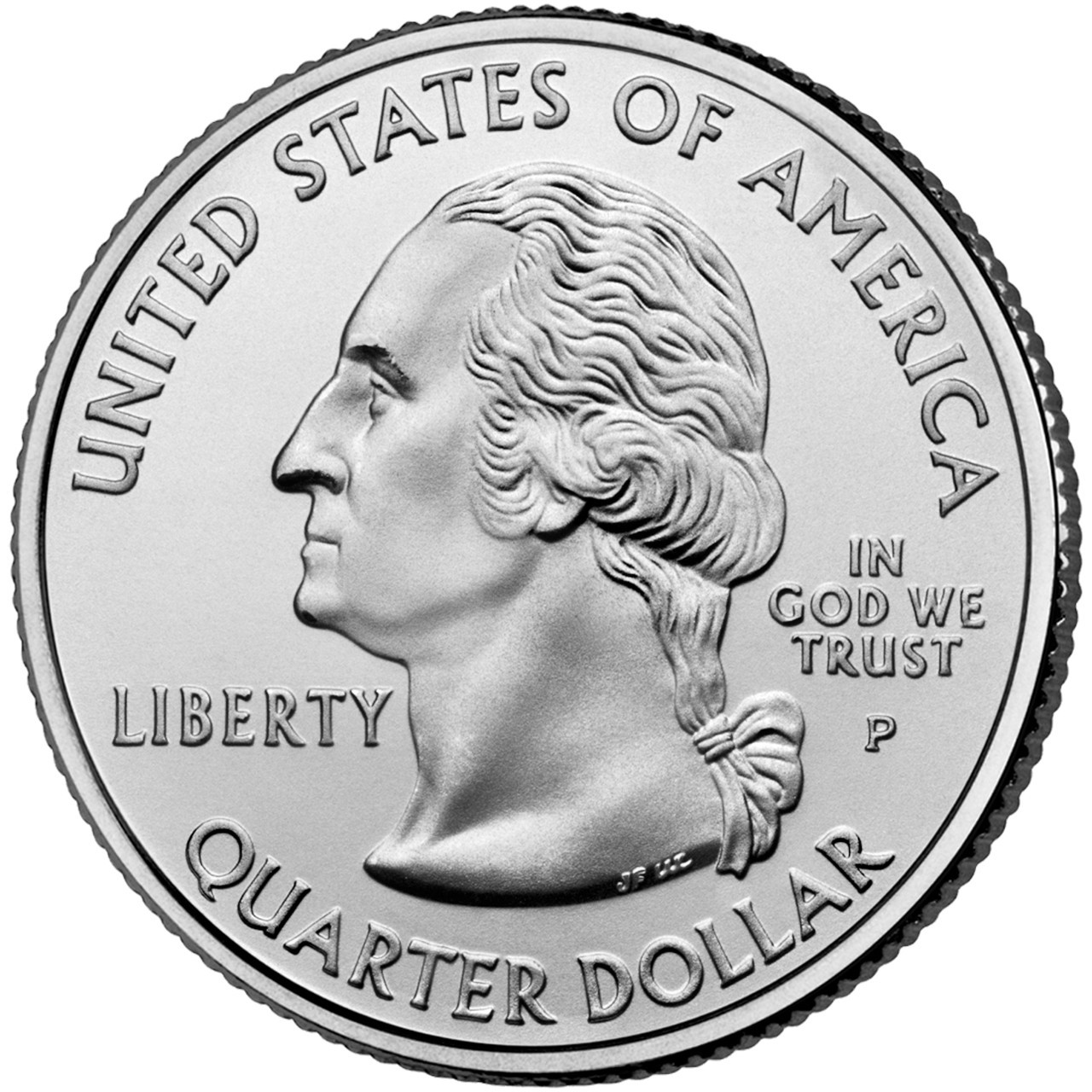
On the obverse (the "heads" side), we see the familiar portrait of George Washington. While this image has been a staple of the American quarter since 1932, it was slightly modified for the statehood series. The original 1932 design by John Flanagan was updated by William Cousins to make room for the new inscriptions required by the program. It’s a bit of a "double Washington" coin—featuring the first President on one side and the state named after him on the other!
Identifying a Genuine Washington Statehood Quarter
When you are sorting through your pocket change or looking at a potential purchase, you want to make sure you have the real deal. A genuine washington statehood quarter will feature the following elements:
- Obverse Inscriptions: You will find "United States of America" at the top and "Quarter Dollar" at the bottom. To the left of Washington's bust is "Liberty," and to the right is the motto "In God We Trust."
- Reverse Inscriptions: The top of the coin reads "Washington" with the statehood year "1889" directly below it. The right side features the caption "The Evergreen State." At the bottom, you’ll see the year of minting, "2007," and the national motto "E Pluribus Unum."
- The Edge: Like all standard U.S. quarters, it features a reeded edge. For the tech-curious, there are exactly 119 reeds along the rim.
Mint Marks and Production Specifications
To truly understand your washington statehood quarter, you have to look at where it was born. These coins were produced at three different United States Mint locations, each identified by a tiny letter known as a mint mark.
- Philadelphia (P): The Philadelphia Mint produced 265,200,000 quarters for circulation. You can find the "P" mint mark on the obverse, just to the right of Washington’s ponytail.
- Denver (D): The Denver Mint was even busier, striking 280,000,000 coins. These bear the "D" mint mark in the same location.
- San Francisco (S): This mint did not produce coins for general circulation. Instead, it struck high-quality "Proof" versions specifically for collectors.
Technical Specifications:
- Composition (Circulation): A "clad" sandwich of 91.67% copper and 8.33% nickel.
- Composition (Silver Proof): 90% silver and 10% copper. These are much heavier in "melt value" and highly prized by silver stackers.
- Weight: 5.67 grams (standard clad).
- Diameter: 24.26 mm.
- Thickness: 1.75 mm.
The total mintage for circulation reached 545,200,000 coins. While that sounds like a lot (and it is—it's over $136 million in face value!), it actually ranks 21st in mintage volume when compared to the other 49 states. This makes it a middle-of-the-pack coin in terms of commonality.
Market Value: From Face Value to High-Grade Rarities
Most washington statehood quarter examples you find in your spare change are worth exactly 25 cents. However, the current market pricing for statehood quarters shows that condition is everything in numismatics.
Collectors use a scale from 1 to 70 to grade coins. "MS" stands for Mint State, meaning the coin has never been used in commerce. While an MS60 or MS63 coin might only be worth a few dollars, the price skyrockets as you approach the "perfect" grade of MS70.
PCGS Price Guide Values
According to professional price guides, here is how the values break down for high-grade specimens:
| Grade | 2007-P Value | 2007-D Value |
|---|---|---|
| MS66 | $12 | $15 |
| MS67 | $75 | $140 |
| MS68 | $2,250 | $3,000 |
As you can see, finding a "D" mint quarter in MS68 condition is like finding a needle in a haystack—and collectors are willing to pay thousands of dollars for that rarity.
We also see "Satin Finish" varieties from this era. Between 2005 and 2010, the Mint included special satin-finish coins in official Uncirculated Mint Sets. These have a different luster than the shiny coins found in rolls and are tracked as separate varieties by grading services.
Errors and Varieties
While the Washington quarter doesn't have an error as famous as the Wisconsin "Extra Leaf" or the Minnesota "Extra Tree," collectors still keep a sharp eye out for doubled dies (where the design appears doubled) or "mules" (where the wrong front and back dies are used together). While rare for this specific year, any significant minting error can turn a 25-cent coin into a hundred-dollar treasure.
Investing in a High-Grade Washington Statehood Quarter
If you're looking at the washington statehood quarter as an investment, you want to focus on "Population Reports." These reports, issued by companies like PCGS and NGC, tell you exactly how many coins have been graded at a certain level.
Because hundreds of millions were minted, only the absolute highest grades (MS67 and above) have any real investment potential. A coin encapsulated in a plastic "slab" with a certified grade is much easier to sell later on because the buyer doesn't have to guess at the condition. We always recommend professional grading for any coin you suspect might be an MS68 candidate.
Essential Washington Statehood Quarter Collectibles
Building a collection is about more than just checking a box. There are several ways to enjoy the washington statehood quarter:
- Uncirculated Rolls: Many collectors buy original bank-wrapped rolls of 40 quarters. This keeps the coins in "Gem BU" (Brilliant Uncirculated) condition, protecting them from the scratches and oils of human hands.
- Proof Sets: The San Francisco Mint's proof coins are struck twice on polished blanks. They have a mirror-like background and frosted details. They are, quite simply, the most beautiful versions of the coin.
- Silver Proof Sets: For those who love precious metals, the 90% silver version offers a weightier feel and long-term bullion value.
- Colorized Quarters: Some private companies take genuine state quarters and apply a high-tech "colorization" process. While not an official U.S. Mint finish, these are stunning. A colorized washington statehood quarter uses rich, realistic hues to bring the salmon and Mount Rainier to life. They are fantastic for younger collectors or as gift items.
- Collector Panels: These often combine the quarter with a commemorative stamp and a narrative about the state's history.
At Coins Online LLC, we’ve been helping collectors find these treasures since 1999. Whether you need a single Denver-minted coin or a complete 50-state set, we offer a massive inventory of over 5,000 products. Explore our about us page to learn more about our commitment to the hobby.
Frequently Asked Questions about the Washington Statehood Quarter
When was the Washington Statehood Quarter released?
The coin was officially released into circulation on April 11, 2007, though the official launch ceremonies often occurred a few days earlier on April 2. It was the second quarter released in 2007, following Montana and preceding Idaho.
What is the rarest version of the Washington State Quarter?
In terms of mintage, the Silver Proof version is the rarest, with only about 1.3 million struck. However, in terms of market value, a 2007-D in MS68 condition is the "holy grail" for this specific issue due to how difficult it is to find a circulation-strike coin in such perfect condition.
Why does the Washington Quarter feature a salmon?
The King Salmon (Chinook) is a vital part of Washington’s tribal heritage, economy, and natural ecosystem. By placing it alongside Mount Rainier and the "Evergreen State" slogan, the design perfectly encapsulates the three pillars of the state's identity: its waters, its mountains, and its forests.
Conclusion
The washington statehood quarter is more than just a piece of pocket change; it is a miniature work of art that tells the story of the Pacific Northwest. Whether you are a casual hunter looking through your change or a serious numismatist chasing a high-grade registry set, this coin offers something for everyone.
To keep your quarters in top shape, we recommend using archival-quality storage. PVC-free flips, coin folders, or specialized albums are essential for preventing "toning" or environmental damage. Even a fingerprint can lower the grade of an uncirculated coin over time!
If you're looking to fill a gap in your collection or need advice on which grade is right for your budget, contact us for expert assistance. We offer competitive prices, low shipping, and a 14-day return policy to ensure you're happy with every addition to your album. Ready to find your next favorite coin? Browse our full inventory today and see why we've been a trusted name in the industry for over two decades. Happy collecting!
Recent Posts
-

Walking Liberty Half Dollar Value Guide: Key Dates, the 1921 Problem, and What Yours Is Really Worth
Ask a room full of collectors to name the most beautiful U.S. coin and the Walking Liberty half doll
-
The 2026 Semiquincentennial Proof Set: What's in It, Why It Costs $107, and Whether to Buy One
On October 6 at noon Eastern, the U.S. Mint puts the 2026 Semiquincentennial Proof Set on sale at $1