Wheat Pennies 101
The Small Coin That Collectors Can't Stop Hunting
A wheat penny is a one-cent U.S. coin minted from 1909 to 1958, featuring Abraham Lincoln on the front and two wheat stalks framing "One Cent" on the back. Here's a quick overview:
| Feature | Details |
|---|---|
| Official name | Lincoln Wheat Cent |
| Minted | 1909–1958 |
| Designer | Victor David Brenner |
| Composition | 95% copper (except 1943 steel) |
| Common value | $0.05–$1 (circulated) |
| Rarest variety | 1909-S VDB (484,000 minted) |
| Most valuable | 1943 Bronze (sold for over $1 million) |
Over 26 billion wheat pennies were produced across five decades. Most are worth just a few cents. But a handful of rare dates and errors are worth thousands — or even millions. You can find a complete Lincoln Wheat Penny (1909-1958) Value guide to help identify these treasures.
That range is exactly what makes wheat penny collecting so addictive. You could pull a coin from a pocket change jar today and be holding something genuinely valuable.
When the Lincoln cent first launched on August 2, 1909, the public response was remarkable. People lined up outside Treasury facilities, and coins were rationed at 100 per person. Newsboys were reportedly flipping them on the street for five cents each — five times face value — on day one.
More than 100 years later, collectors are still that excited about them.
What is a Wheat Penny? Design and History
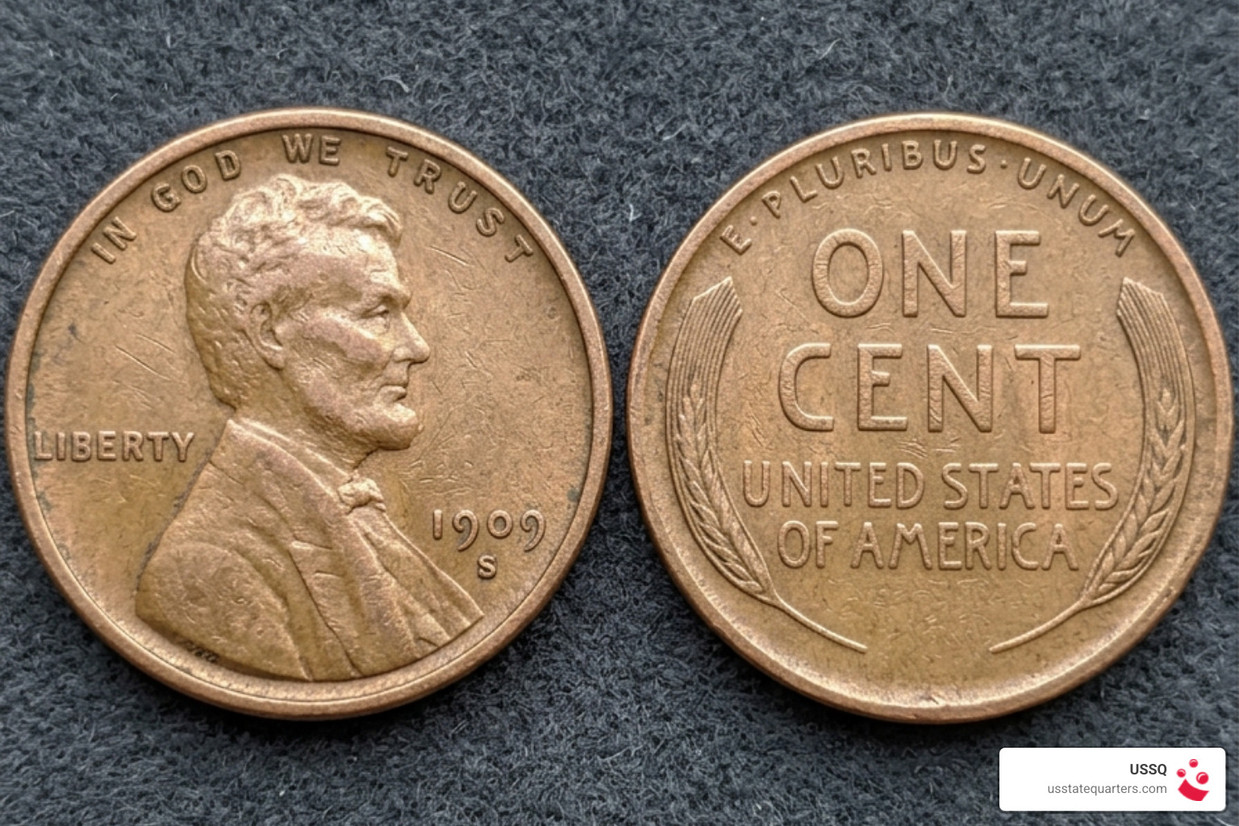
If you have ever looked closely at an old copper coin and seen two curved stalks of durum wheat on the back, you’ve found a wheat penny. Formally known as the Lincoln Wheat Cent, this coin was first issued in 1909 to commemorate the 100th anniversary of Abraham Lincoln’s birth. Before this, U.S. coins typically featured symbolic figures like Liberty. Putting a real person—especially a beloved president—on a circulating coin was a radical break from tradition.
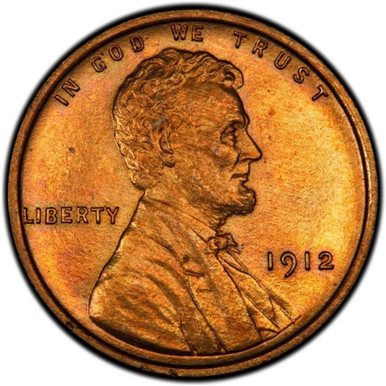
The Wheat cents design was a hit from the start. On the obverse (front), we see the familiar profile of Lincoln, a design so iconic it has remained largely unchanged for over a century. The reverse (back) features the denomination "ONE CENT" and "UNITED STATES OF AMERICA" framed by two stylized wheat stalks. At the top, the Latin motto E Pluribus Unum ("Out of many, one") reminds us of our national unity.
Throughout its 50-year production run from 1909 to 1958, the U.S. Mint produced approximately 26 billion of these coins. They circulated through the Great Depression, two World Wars, and the post-war boom, making them a literal piece of American history you can hold in your hand.
The V.D.B. Controversy and Design Changes
The wheat penny didn't enter the world without a bit of drama. The designer, Victor David Brenner, was so proud of his work that he placed his initials, "V.D.B.," at the bottom of the reverse side. Today, we’d call that branding, but in 1909, the public and Treasury officials called it "advertising."
The outcry was so loud that the Mint stopped production just days after the release to remove the initials. This created an instant rarity: the 1909-S VDB. Only 484,000 were struck at the San Francisco Mint before the change, making it the "Holy Grail" for many collectors. If you want to see how this affects Lincoln Wheat Penny (1909-1958) Value, just look at the price gap between a VDB and a non-VDB 1909 penny! It wasn't until 1918 that Brenner’s initials were restored to the coin, this time tucked away much more subtly on the truncation of Lincoln’s shoulder.
Historical Significance in U.S. Numismatics
The introduction of the wheat penny changed the face of American money forever. Before 1909, the Indian Head penny had been the standard for decades. President Theodore Roosevelt was the driving force behind the change, as he wanted U.S. coinage to have more artistic merit and historical weight.
By choosing Lincoln, the Mint created a connection between the public and their currency that had never existed before. The wheat design served us well until 1959, when it was replaced by the Lincoln Memorial design to mark the 150th anniversary of Lincoln's birth. Today, finding Lincoln Wheat Pennies for Sale (1909-1958) is a favorite pastime for those of us who appreciate the artistry of the "old school" Mint.
Key Dates and Rare Wheat Penny Varieties
When we talk about "key dates," we mean the years where low production numbers or high demand make a coin particularly valuable. For the wheat penny, the list starts and ends with the 1909-S VDB. With a mintage of only 484,000, it is the rarest regular-issue Lincoln cent by date and mint mark.
Other major key dates include the 1914-D (only 1.19 million minted) and the 1931-S (866,000 minted). These coins are consistently in demand, and even in lower grades, they command high prices. If you are building a Valuable Lincoln Wheat Pennies List (1909-1958), these are the ones you'll likely save for last!
Identifying the Rarest Wheat Penny Errors
Sometimes, the Mint makes a mistake, and for us collectors, those mistakes are pure gold. The 1955 Doubled Die Obverse is perhaps the most famous error in American history. Due to a misalignment during the hubbing process, the date and lettering appear clearly doubled. Roughly 20,000 to 24,000 were produced, and they are easily spotted with the naked eye.
Another legendary error is the 1922 "No D" penny. In 1922, only the Denver Mint was supposed to produce pennies. However, a pair of dies became so worn and filled with grease that the "D" mint mark simply didn't transfer to the coin. These "plain" 1922 cents are highly sought after. You can also look for the 1919 D Wheat Penny Value to see how even common years can have valuable varieties if they are in exceptional condition.
Mint Marks and Production Facilities
Where was your wheat penny born? You can tell by looking at the small letter (or lack thereof) just below the date:
- No Mint Mark: Philadelphia Mint. This was the main facility and usually produced the highest volume of coins.
- D: Denver Mint.
- S: San Francisco Mint.
Historically, the San Francisco Mint produced fewer pennies than the other two, which is why "S" mint marks often carry a premium. Knowing these Wheat Pennies (1909 to 1958) Values helps us narrow down which coins are worth a closer look and which are common "fillers" for a basic set.
World War II and the 1943 Steel Cent
World War II changed everything in America, right down to the change in people's pockets. Copper was a critical war material used for shell casings, radio wires, and equipment. To save copper for the troops, the U.S. Mint famously switched the composition of the penny in 1943 to zinc-plated steel.
These "steelies" were unique but unpopular. They were often mistaken for dimes, and because they were made of steel, they tended to rust and corrode quickly once the thin zinc coating wore off. Over 1.09 billion were minted, so they aren't rare today, but they are a fascinating piece of wartime history. They are also magnetic—the only U.S. cent that will stick to a magnet!
The Million-Dollar 1943 Bronze Wheat Penny
While the steel penny is common, the 1943 Bronze penny is a legend. During the transition from copper to steel in early 1943, a few dozen copper planchets (blank coins) from 1942 were left in the hopper. These were struck with the 1943 date, creating a "transitional error."
Fewer than 20 examples are known to exist. One famously sold for over $1 million! If you find a 1943 penny that looks like copper, the first thing we suggest is the magnet test. If it sticks, it’s just a copper-plated steel cent (a common fake). If it doesn't stick and weighs exactly 3.11 grams, you might want to sit down—you've found a fortune. You can find More info about Wheat Penny values to help you distinguish between these errors and common coins.
Shell Casing Pennies of 1944-1946
By 1944, the public's dislike of the steel penny and the availability of spent brass shell casings from military training led to another change. From 1944 to 1946, pennies were made from these recycled shell casings. While they returned to a "copper" look, the alloy was slightly different (95% copper and 5% zinc, leaving out the tin). These coins often have a slightly yellower hue than pre-war pennies. Check our Valuable Lincoln Wheat Pennies List to see which of these wartime survivors are most prized by collectors today.
How to Grade and Authenticate Your Collection
When we look at a wheat penny, we aren't just looking at the date; we’re looking at the condition. Numismatists use a 70-point scale to grade coins, ranging from "Poor" (P-1) to "Perfect Uncirculated" (MS-70).
One of the most important factors for copper coins is color. We categorize them into three groups:
- Red (RD): The coin still has its original mint luster and orange-red glow. These are the most valuable.
- Red-Brown (RB): The coin has begun to tone but still shows a good amount of red.
- Brown (BN): The coin has fully oxidized to a chocolate brown color. Most circulated wheat pennies fall into this category.
Authentication Tips for Rare Varieties
Because rare wheat penny dates are so valuable, counterfeits do exist. Some people try to shave a "D" off a 1944-D to make it look like a rare 1944 steel error, or they might try to add an "S" to a 1909 VDB.
To protect yourself, we recommend:
- The Weight Test: A standard copper penny weighs 3.11 grams, while a steel one weighs 2.7 grams.
- The Magnet Test: Steel pennies stick; copper ones don't.
- Magnification: Use a jeweler's loupe to look for seams or marks where a mint mark might have been glued on.
- Certification: For high-value coins, always look for those graded by PCGS or NGC. You can find More info about coin supplies to help you examine your own finds safely.
Storage and Preservation for Collectors
Copper is a sensitive metal. It reacts to humidity, finger oils, and even the air. To keep your wheat penny collection in top shape, never clean your coins! Cleaning removes the original surface (patina) and can slash a coin's value by 90% or more.
We suggest using non-PVC holders or 2x2 cardboard flips with Mylar windows. PVC can cause a green, slimy residue that permanently damages the metal. Store your collection in a cool, dry place to prevent "bronze disease" (corrosion). If you’re unsure how to start, Contact us for collecting advice.
Frequently Asked Questions about Wheat Pennies
How much is a common wheat penny worth?
Most circulated wheat pennies from the 1940s and 50s are worth between 2 and 5 cents. However, their copper melt value is often around 2 cents, so they are always worth more than their face value! Check our Lincoln Wheat Pennies for Sale to see current market prices.
How can I tell if my 1943 penny is the rare bronze version?
The easiest way is the magnet test. If it is attracted to a magnet, it is steel. If it is NOT attracted to a magnet and weighs approximately 3.11 grams, it could be the rare bronze error.
Where is the mint mark located on a wheat penny?
The mint mark is located on the obverse (front) of the coin, directly below the date. If there is no letter, it was minted in Philadelphia.
Conclusion
At USSQ, we believe the wheat penny is the perfect entry point into numismatics. Whether you are "coin roll hunting" through a box of pennies from the bank or searching for that elusive 1909-S VDB to complete your set, these coins offer a tangible link to our nation's past. From the controversy of Brenner's initials to the steel survivors of World War II, every "Wheatie" has a story to tell.
We have been helping collectors find these treasures since 1999, and we invite you to Shop the full collection of Wheat-Back Pennies to find the next piece of history for your collection. Happy hunting!
Recent Posts
-

Mercury Dime Value Guide: Key Dates, Full Bands, and Why Weinman's Design Is Back in 2026
The U.S. Mint just put Adolph Weinman's Winged Liberty back on a coin. The 2026-W Palladium Eagle, r
-
The 2026 Trump Dollar Sold Out in Hours: What Happened and What It Means for Value
It took one business day. The United States Mint opened sales on the 1776–2026 President Donald J. T