Proof Set vs. Mint Set: What's the Difference, and Which Should You Buy?
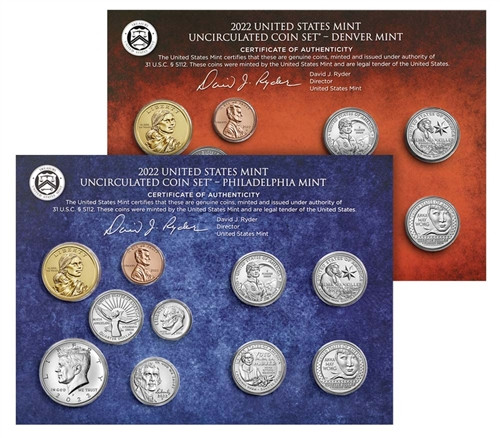
Every year the U.S. Mint sells two annual sets that hold the same denominations and look nearly identical in a catalog photo: the Proof Set and the Uncirculated Coin Set, which nearly every collector still calls the mint set. They are different products made in different ways for different collectors, and in 2026 the gap between them matters more than usual, because one of them is now the only place to get a Philadelphia or Denver cent. Here is how to tell them apart, what each tends to be worth later, and how to decide which one belongs in your collection.
The short answer
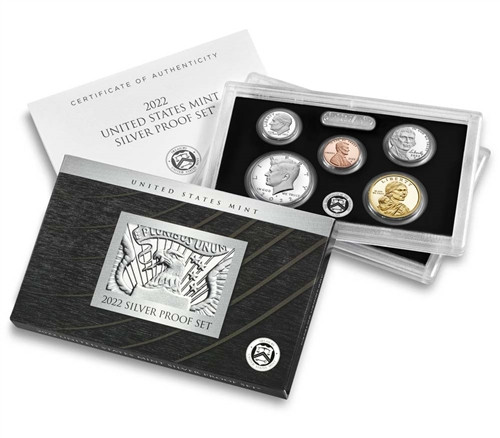
A proof set contains coins struck specifically for collectors at the San Francisco Mint, carrying an S mint mark, using polished dies and polished blanks. The result is a mirror-like background with frosted, sharply detailed design elements. A mint set contains uncirculated examples of the regular coins struck at Philadelphia and Denver, the same coins that go out in bank rolls, packaged so you get one of each from each mint. Proof sets are about eye appeal and presentation. Mint sets are about owning the coins that actually circulated, in the best condition they were made.
| Proof set | Mint set (Uncirculated Coin Set) | |
|---|---|---|
| Where struck | San Francisco (S) since 1968 | Philadelphia (P) and Denver (D) |
| Finish | Mirror fields, frosted designs, struck more than once | Regular business strike (satin finish 2005–2010) |
| 2026 contents | 10 coins, all S | 20 coins, 10 P and 10 D |
| 2026 issue price | $107 clad; $245 silver | $124.50 |
| Silver option | Silver Proof Set every year since 1992 | Only older sets (90% silver through 1964; 40% silver half in 1968–1970) |
| Best for | Display, gifts, eye appeal | Date-and-mint-mark collecting, P and D completeness |
How a proof coin is made
Proof dies are polished to a mirror, and on modern proofs the raised design is frosted so it stands out against that mirror background. The blanks are cleaned and burnished before striking, and each coin is struck at least twice at slower speed and higher pressure, which brings up detail that a high-speed production press never fills completely. The coins are handled individually and sealed in hard plastic lenses with a certificate of authenticity.
Modern proof sets go back to 1936. Philadelphia made them from 1936 to 1942 and again from 1950 to 1964, with none during the war years and none from 1965 to 1967, when the Mint sold satin-finish Special Mint Sets instead. Production moved to San Francisco in 1968, which is why every regular proof set since then carries the S mint mark. The Silver Proof Set became a standard annual product in 1992 with 90% silver coins, switching to .999 fine silver in 2019.
What a mint set actually is
The mint set began in 1947 with two of each circulating coin from each mint, mounted in cardboard. In 1959 the Mint switched to clear cellophane packets so both sides could be seen, and one of each coin was enough. There were no regular mint sets from 1965 to 1967 (the Special Mint Set years) and none in 1982 or 1983. From 2005 through 2010 the coins carried a distinctive satin finish; since 2011 they have returned to a brilliant finish.
The coins themselves are business strikes, the same design and production as the coins in your change, just handled with more care and packaged before they ever see a cash drawer. That makes a mint set the easiest way to get a matched Philadelphia and Denver example of every coin from a given year in solid uncirculated condition.

Coins you could only get from a mint set
Every so often the Mint strikes a coin for sets only, and an ordinary-looking mint set quietly becomes the only source for a date. The 1970-D Kennedy half dollar, still 40% silver that year, was never released for circulation. Neither were the 1987-P and 1987-D Kennedy halves. The 1996 mint set included a West Point dime with a W mint mark, struck for the 50th anniversary of the Roosevelt dime and available nowhere else. These are the sets that hold a premium, because the scarce coin inside props up the whole package.
2026: the year the difference got real
The 2026 Uncirculated Coin Set holds 20 coins: ten from Philadelphia on a blue card and ten from Denver on a red card, each coin encapsulated so both sides show. That covers all five Semiquincentennial quarters, the Enduring Liberty half dollar, the Emerging Liberty dime, the Jefferson nickel, the Native American dollar and the Lincoln cent. The price jumped to $124.50, from $33.25 for the 2025 set, and it still sold 292,204 of its 300,000-set limit in roughly the first day, per Mint sales figures reported by CoinNews. The Mint now lists it as unavailable.
The reason is the cent. The Mint struck its last cent for circulation in November 2025, and the 2026 mint set is the only way to own an uncirculated 2026 cent from Philadelphia or Denver. The proof sets carry a 2026-S proof cent instead. We cover the full story in our guide to what the end of the penny means for collectors.
On the proof side, the clad 2026 Semiquincentennial Proof Set holds ten coins, all with an S mint mark and the dual date 1776~2026, and went on sale October 6 at $107. The Silver Proof Set version at $245 sold out after its June release. Our 2026 proof set guide walks through every coin and whether it is worth the price.
Which one holds its value better?
Honestly, neither is an investment as a rule. Most clad proof sets from the 1970s onward and most modern mint sets trade at or below their original issue price on the secondary market, because the Mint made millions of them and nearly all survive in their original packaging. The exceptions follow a few patterns:
- Silver content. Proof sets through 1964, mint sets through 1964 and every Silver Proof Set carry a melt value floor that clad sets do not.
- A scarce coin or variety inside. Mint-set-only issues like the 1970-D half and 1996-W dime, or proof sets containing a known error such as the 1990 No-S proof cent or the 1983 No-S dime, sell at strong premiums.
- Attractive toning. Older mint sets stored in their original paper and cellophane often tone over decades. Even, colorful toning can earn a real premium from toning collectors, while dark or spotty toning lowers value.
- One-year designs. 2026 is the clearest example in decades. Whether that turns into a lasting premium depends on how many new collectors the anniversary year brings in, which nobody can promise.
One rule applies to both: keep sets in their original government packaging with any certificate. A set broken out of its Mint holder loses much of its resale appeal, even when the coins are untouched.
So which should you buy?
Choose a proof set if you want coins to display or give as a gift, you care most about eye appeal, or you want a silver option. Proof sets photograph beautifully and still feel special when they come out of a drawer decades later.
Choose a mint set if you collect by date and mint mark, you want both the P and D of every coin from a year, or you want coins you cannot find in change, which in 2026 includes the cent.
For birth-year and anniversary gifts, either works. A proof set is the showier gift; a mint set is a better snapshot of what was actually jingling in people's pockets that year. Many older mint sets from the 1970s through the 1990s cost less today than they did new, which makes them an easy, affordable starting point for a younger collector.
Shop proof and mint sets at USSQ
We carry decades of both. Browse our full proof and mint sets section, or go straight to U.S. mint sets (including the classic 1959–1981 sets and the 2025 Uncirculated Coin Set), clad proof sets and silver proof sets. Shopping for a gift? Our birth-year sets are sorted to make that easy. For current Mint offerings and order limits, see the U.S. Mint's annual sets page, and for secondary-market values by year, the price guides at PCGS and NGC are the references we trust.
Recent Posts
-

Coin Gifts for Every Collector: A 2026 Holiday Gift Guide by Budget
Coins make unusually good gifts. They are small, they last forever, they carry real history, and unl
-
Flying Eagle Cent Value Guide: 1856, 1857 and 1858, Large vs. Small Letters, and America's First Small Cent
The Flying Eagle cent lasted barely two years in circulation, but it changed American money for good