
The Definitive Guide to Lincoln Cent Values
What Are US Lincoln Cent Values? (Quick Answer)
US Lincoln cent values range from a few cents for common dates in worn condition to over $100,000 for rare key dates in top grades. Here's a quick snapshot of what your coins might be worth:
| Coin | Condition | Approximate Value |
|---|---|---|
| 1909 VDB (Philadelphia) | MS65 Red | ~$250 |
| 1909-S VDB | Good (G-4) | ~$690 |
| 1909-S VDB | MS66 Red | ~$12,500 |
| 1943 Steel Cent | MS | $0.30 – $3,750 |
| 1955 Doubled Die | MS | Thousands+ |
| Common wheat cent (1930s-50s) | Circulated | $0.10 – $2 |
| Common Memorial cent (1959+) | Circulated | Face value |
Values vary based on grade, color designation, and current market demand.
Lincoln cents are the most produced coin in US history — and yet some of them are worth a small fortune. That's what makes this series so fascinating for collectors at every level.
The series runs from 1909 to the present day, spanning over 115 years of American history. It includes everything from wartime steel cents to rare mint errors that sell for six figures at auction.
Whether you've found an old penny in a jar or you're building a serious collection, knowing how to evaluate your coins correctly makes a real difference. Condition, mint mark, and variety are the three biggest drivers of value — and the difference between a $2 coin and a $2,000 coin can come down to a tiny letter or a microscopic doubling on the die.
This guide walks you through everything you need to know to accurately assess what your Lincoln cents are worth in today's market (as of May 2026).
Understanding US Lincoln Cent Values: Key Factors
When we look at a jar of old pennies, it is easy to think they are all the same. However, in numismatics, tiny details dictate whether a coin is worth its weight in copper or the price of a luxury car. To truly master us lincoln cent values, we have to look past the surface.
There are four primary factors that we use to determine a coin's market price: mintage (how many were made), survival rate (how many still exist), condition (the technical grade), and eye appeal. For example, a 1911 Philadelphia cent had a mintage of over 101 million. Because so many were made, they are readily available in most grades. But a 1909-S VDB had a mintage of only 484,000, making it a "key date" that commands a massive premium.
If you are just starting out, checking a Lincoln Wheat Penny Values chart is a great first step. You'll quickly notice that the older "Wheat" reverse coins (1909–1958) generally hold more value than the modern ones. Every Wheat Penny tells a story of the era it was minted in, from the Great Depression to the post-war boom.
If you're looking to fill holes in your album, you can Shop Lincoln Wheat Cents in our store, where we keep a wide variety of grades in stock for collectors of all budgets.
Grading and Color Designations in US Lincoln Cent Values
In the coin world, "condition is king," but for copper coins like the Lincoln cent, "color is queen." Copper reacts with oxygen over time, changing from a bright, shiny orange to a dull, chocolate brown. Professional grading services like NGC and PCGS use three specific color designations that drastically affect us lincoln cent values:
- RD (Red): The coin retains at least 95% of its original mint orange luster. These are the most prized and expensive.
- RB (Red-Brown): The coin shows a mixture of original red and developing brown patina (typically 5% to 95% red).
- BN (Brown): The coin has turned almost entirely brown. While common for circulated coins, even uncirculated coins can be BN.
The price gap between these designations can be staggering. For instance, a 1909-S VDB in MS66 Red is valued at approximately $12,500. However, high-grade Red examples are incredibly rare for certain years. According to recent data, there are 0 NGC-certified examples of the 1909-S VDB in MSRD condition at certain ultra-high grade levels, making them "population zero" rarities that could fetch six figures if they ever appeared.
To learn how to protect these delicate surfaces, we recommend picking up a Wheat Penny Coin Book to store your finds safely and prevent further oxidation.
The Impact of Mint Marks on US Lincoln Cent Values
A "mint mark" is a tiny letter located just below the date on the obverse (heads) side of the coin. It tells us which United States Mint facility produced the penny:
- No Mint Mark: Philadelphia Mint (The "Mother Mint")
- D: Denver Mint
- S: San Francisco Mint
Historically, the San Francisco Mint produced fewer pennies than Philadelphia or Denver. This lower production often leads to higher us lincoln cent values for "S" mint coins. For example, the 1914-D and 1914-S are both significantly more valuable than the 1914 Philadelphia issue because their mintage figures were much lower.
If you are trying to complete a full run of every year and mint, our Lincoln Cents (1909-Date) Collection page is the perfect place to find those elusive "D" and "S" marks you might be missing.
Rare and Most Valuable Lincoln Cents
Now, let's talk about the "Holy Grails." These are the coins that every collector dreams of finding in a dusty attic or a forgotten coin roll. These rarities drive the top end of us lincoln cent values.
| Rarity | Why It's Special | Estimated Value (High Grade) |
|---|---|---|
| 1943 Bronze Cent | Struck on copper planchets left over from 1942; only a few exist. | $100,000 - $500,000+ |
| 1909-S VDB | Low mintage and the designer's initials were removed shortly after. | $2,000 - $100,000+ |
| 1955 Doubled Die | Massive, visible doubling on the date and lettering. | $1,500 - $50,000+ |
| 1922 "No D" | A die error where the "D" mint mark was polished away. | $500 - $25,000+ |
| 1944 Steel Cent | Struck on leftover 1943 steel planchets by mistake. | $30,000 - $100,000+ |
The 1943 Bronze Lincoln Cent is perhaps the most famous error in American history. During WWII, the mint switched to steel to save copper for the war effort. A few copper blanks were left in the hoppers, resulting in a handful of bronze 1943 pennies. Interestingly, there are 0 NGC-certified examples in MSBN condition for certain specific varieties of this coin, highlighting just how elusive they are.
Another legendary error is the 1955 Doubled Die Obverse. This isn't just a tiny smudge; the date and the words "LIBERTY" and "IN GOD WE TRUST" are clearly stamped twice. It is widely considered the most popular die variety in the U.S. series. You can read more about this specific phenomenon in our guide on the Doubled Die Wheat Penny.
We also can't forget the 1944 Steel Penny. Just like the 1943 bronze error, this happened in reverse: steel blanks from 1943 were accidentally used in 1944. If you think you've found one, check the 1944 Wheat Penny Value guide first—and bring a magnet! (Real steel pennies will stick; copper ones won't).
For those who love the "oops" moments of the U.S. Mint, our Lincoln Cent Error Coins section features some of the most interesting mis-strikes we've encountered.
Wheat Reverse vs. Memorial Reverse Cents
In 1959, the US Mint changed the reverse design of the penny to celebrate the 150th anniversary of Abraham Lincoln's birth. This created two distinct eras for collectors.
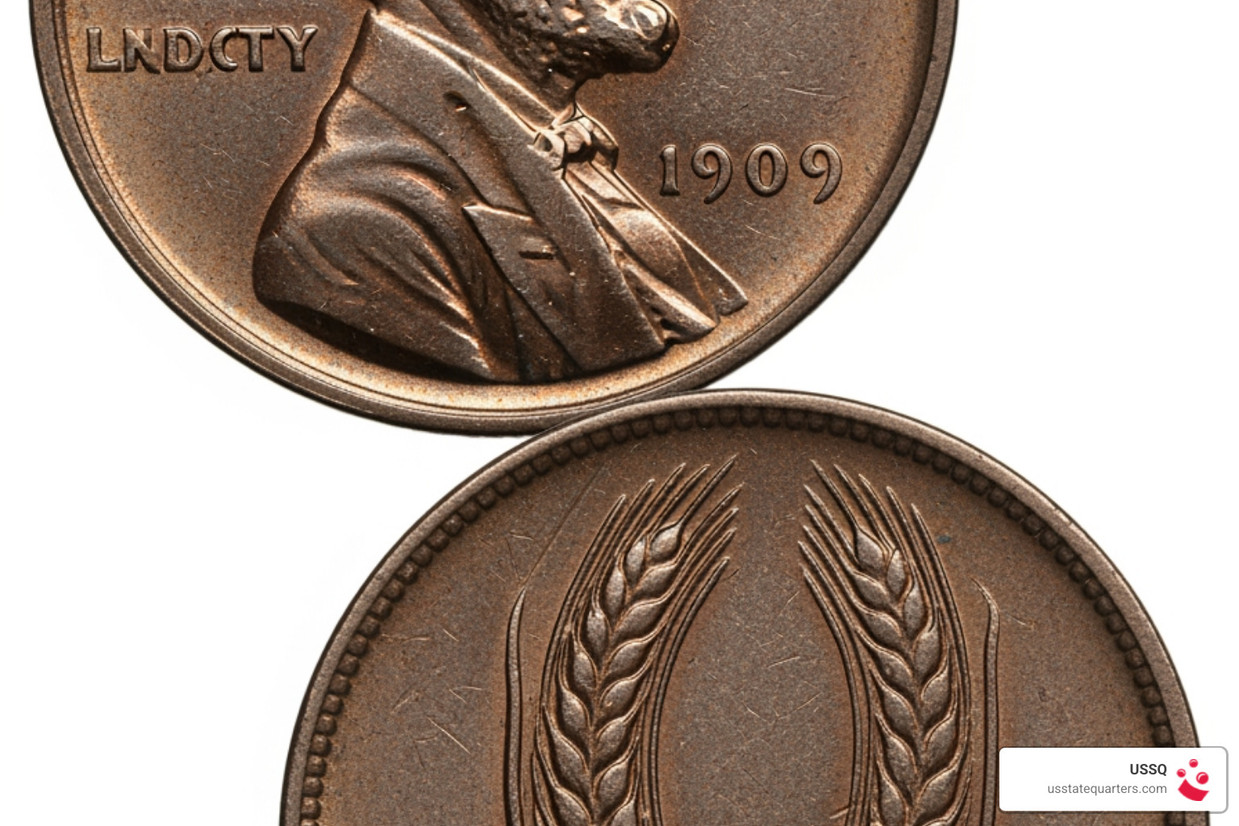
The Wheat Reverse (1909–1958): Designed by Victor David Brenner, these feature two stalks of wheat flanking the words "ONE CENT." These are the classic "Wheat Pennies." Because they haven't been minted in over 65 years, they are almost always worth more than face value.
The Memorial Reverse (1959–2008): Designed by Frank Gasparro, this design depicts the Lincoln Memorial in Washington, D.C. A fun fact: if you look closely at the center of the Memorial, you can see a tiny statue of Lincoln. This makes the Memorial cent one of the few coins to feature the same person on both the obverse and reverse!
While most Memorial cents are only worth a penny if they've been in your pocket, certain modern varieties are worth a lot. For example, the 1990-S "No S" Proof penny can be worth over $4,000. To see which modern pennies to keep an eye out for, check our Penny Values Chart 1959 to 2011.
If you're interested in the later years of the series, we have a dedicated page for Lincoln Memorial Cents (1959-2008) that covers the transition from copper to copper-plated zinc in 1982.
How to Accurately Determine Your Coin's Worth
Determining us lincoln cent values at home requires a bit of detective work. You don't need a PhD in history, but you do need a good eye and the right tools.
- Identify the Date and Mint Mark: Use a magnifying glass or a jeweler's loupe. A small "D" or "S" can change the value from $0.05 to $50.00 instantly.
- Assess the Color: Is it Red, Red-Brown, or Brown? "Red" coins from the early 1900s are extremely rare.
- Check for Varieties: Look for doubling in the eyes, the date, or the ears. Some "doubled die" coins are subtle and require 10x magnification to see.
- Consult a Price Guide: We provide extensive resources, but you can also check the Lincoln Cents, Wheat Reverse (1909-1958) Price Guide for the latest dealer retail prices.
- Look at "Sold" Listings: Don't look at what people are asking for on auction sites; look at what people are actually paying. Market demand fluctuates based on precious metal spot prices and collector trends.
If you're unsure about the technical state of your coin, our Coin Grading Guide explains the difference between "Good," "Fine," and "Mint State" in simple terms. For high-value coins, we always recommend professional authentication to protect your investment.
Frequently Asked Questions about Lincoln Cents
What is the rarest Lincoln cent ever minted?
The 1943 Bronze Cent is widely considered the "King" of Lincoln cent rarities. Only about 20 to 40 examples are known to exist across all mints. It happened because a few bronze planchets from 1942 were stuck in the machinery when the mint switched to zinc-coated steel for the war effort.
How do I identify a 1955 Doubled Die penny?
You won't need a magnifying glass for a true 1955 Doubled Die! The doubling is so severe that the date "1955" looks like it was printed twice, with one set of numbers slightly offset from the other. Beware of "poor man's doubled dies," which are actually just the result of die deterioration and are not worth nearly as much.
Why are 1943 steel pennies valuable in high grades?
While the 1943 steel penny was minted in huge numbers (over a billion total), they were prone to rusting and staining because the steel core was only thinly coated in zinc. Finding one in "Mint State" with its original "zinc bloom" luster is quite difficult. While a common circulated one is worth about 10 to 25 cents, a pristine MS67 example can sell for thousands.
Conclusion
At USSQ (Coins Online LLC), we have been helping collectors navigate numismatics since 1999. Whether you are hunting for a 1909-S VDB or just trying to organize your grandfather's old coin jars, understanding us lincoln cent values is the key to a rewarding hobby.
The Lincoln cent is more than just pocket change; it is a tiny piece of American art and history that you can hold in your hand. From the "Wheat" stalks of the early 20th century to the modern Shield design, these coins reflect the changing face of our nation.
As we move through 2026, the market for high-quality Lincoln cents remains strong. Collectors are increasingly focusing on "eye appeal" and original surfaces. If you have a collection you're looking to grow, or if you're ready to start your very first coin album, we invite you to explore our 5,000+ products. We offer competitive prices, low shipping, and a 14-day return policy to ensure you're happy with every addition to your set.
Ready to find your next treasure? Start your collection today and see why the Lincoln cent remains the most popular coin to collect in the world!
Recent Posts
-

2026 American Innovation Dollars: Steve Jobs, the Cray-1, and Two More Designs Worth Watching
The American Innovation dollar program doesn't get the attention the quarter series do, and that's e
-
Eisenhower Dollar Value: Which Ike Dollars Are Worth Money (and Which Aren't)
Pull an Eisenhower dollar out of a dresser drawer and the first question is always the same: is this

